Pauline Boty’s stained glass self portrait back on display soon at the National Portrait Gallery

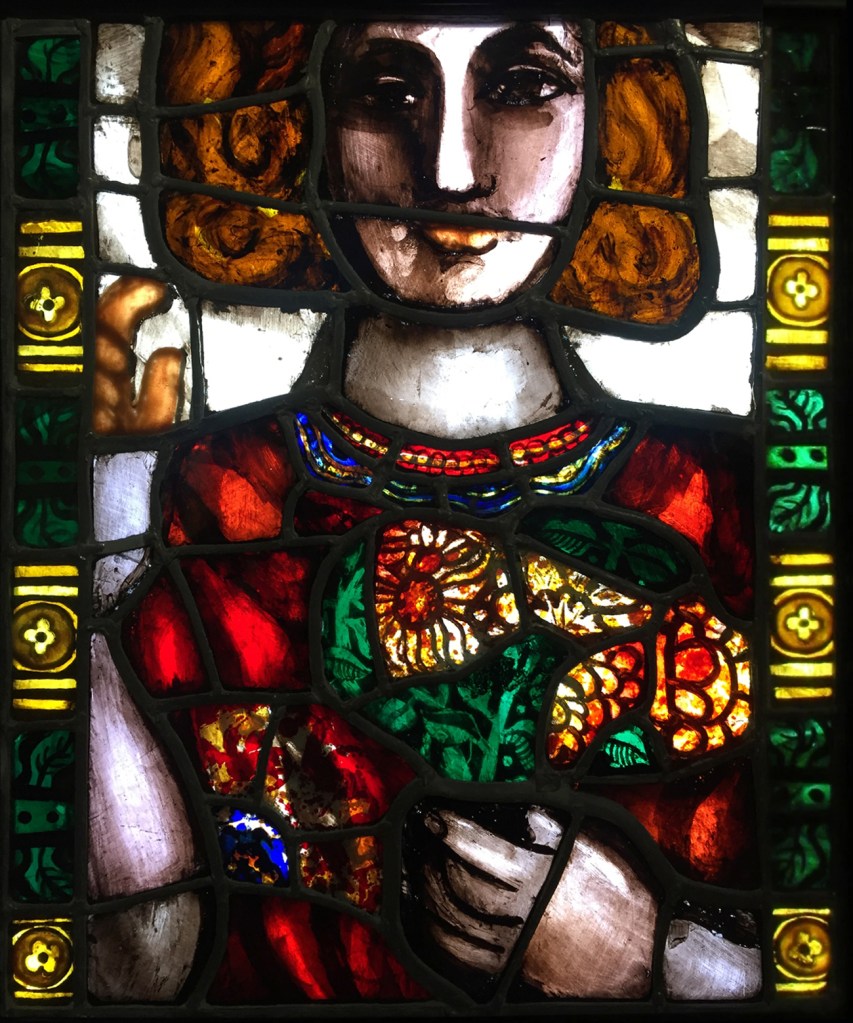
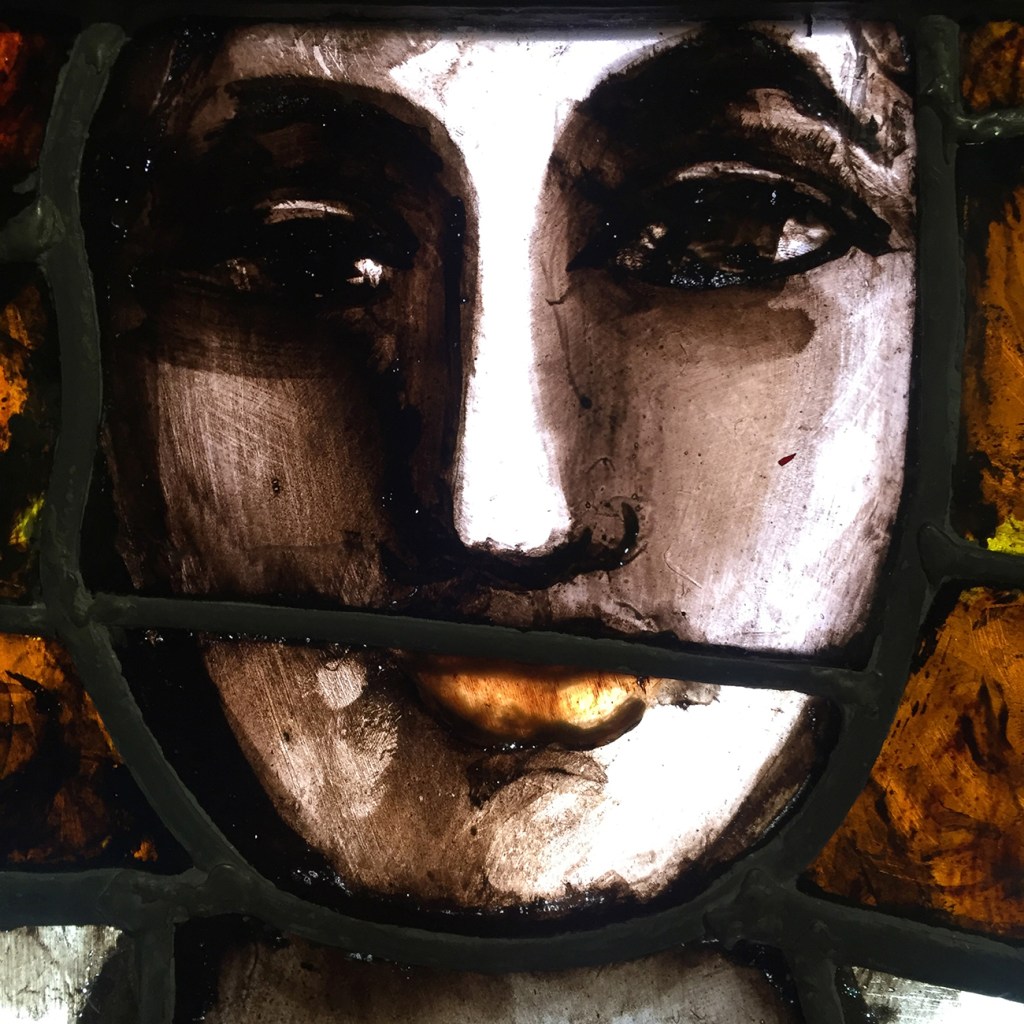
Pauline Boty’s stained glass “Self Portrait”, c.1958 at the National Portrait Gallery. Photo by paulineboty.org

The National Portrait Gallery, closed for extensive refurbishment since 2020, has confirmed that Pauline Boty’s c.1958 stained glass work “Self Portrait” will be on display (in Room 28) when reopening to visitors on 22 June.

“A rare self-portrait in Boty’s oeuvre, this is a beautiful and assured portrait in stained glass, believed to date from 1958 when Boty was a student in the stained glass department at the Royal College of Art. There are conventional borders with floral motifs and quatrefoils. The work incorporates many of the creative techniques associated with the influential stained glass department of the Royal College of Art at that period, including layering, aciding of deep flashed layers, and expressive use of glass painting. The glass leading is experimental, with its eccentric use of arbitrary leads such as the piece cutting across the face of the figure.” [from the NPG’s website]

Detail of Pauline Boty’s stained glass “Self Portrait”, c.1958 at the National Portrait Gallery. Photo by paulineboty.org

The gallery also has a number of portraits of Boty by different photographers including Lewis Morley, Michael Ward and Michael Seymour, which can be viewed on their website at npg.org.uk

Further information is available here: [link]
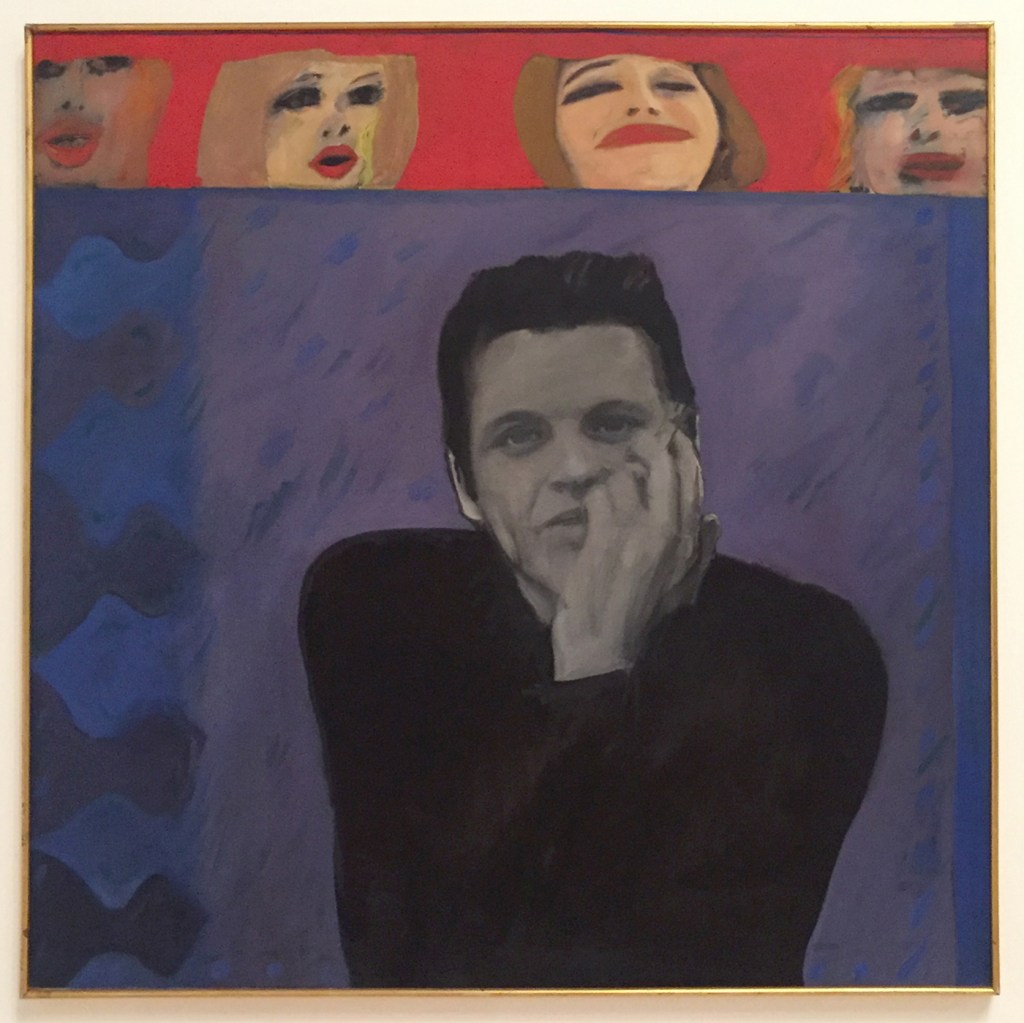
Capturing the Moment exhibition, including Boty’s “Portrait of Derek Marlowe with Unknown Ladies”, opens at Tate Modern on 13 June

Pauline Boty, “Portrait of Derek Marlowe with Unknown Ladies”, oil on canvas, 1963

Subtitled A journey through painting and photography the exhibition runs from 13 June – 28 April 2024. The Tate website explains its subject further, as follows:

“The arrival of photography changed the course of painting forever. In this unique exhibition, we explore the dynamic relationship between the two mediums through some of the most iconic artworks of recent times.

From the expressive paintings of Pablo Picasso and Paula Rego, to striking photographs by Hiroshi Sugimoto and Jeff Wall, you will see how these two distinct mediums have shaped each other over time.

You will also discover how artists have blurred the boundaries between painting and photography, creating new and exciting forms of art, such as Pauline Boty’s pop paintings, Andy Warhol’s silkscreen prints, the photorealist works of Gerhard Richter, or Andreas Gursky’s large-scale panoramic photographs.

In an open-ended conversation between some of the greatest painters and photographers of the modern era, we explore how the brush and the lens have been used to capture moments in time.

The exhibition is realised in collaboration with the YAGEO Foundation, Taiwan. The YAGEO Foundation was founded by Taiwanese collector, entrepreneur, and philanthropist Pierre Chen in 1999.

As well as Boty, other artists and photographers featured in Capturing The Moment include Michael Armitage, Francis Bacon, Georg Baselitz, Lisa Brice, Cecily Brown, Miriam Cahn, George Condo, Njideka Akunyili Crosby, John Currin, Peter Doig, Marlene Dumas, Jana Euler, Lucian Freud, Andreas Gursky, Richard Hamilton, David Hockney, Candida Höfer, Dorothea Lange, Louise Lawler, Marwan (Marwan Kassab-Bachi), Alice Neel, Paulina Olowska, Laura Owens, Pablo Picasso, Pushpamala N., Christina Quarles, Robert Rauschenberg, Paula Rego, Gerhard Richter, Wilhelm Sasnal, Joan Semmel, Lorna Simpson, Thomas Struth, Hiroshi Sugimoto, Salman Toor, Luc Tuymans, Jeff Wall and Andy Warhol

This is Dr. Sue Tate’s assessment of the exhibition: “Still time to catch Capturing the Moment at Tate Modern before it closes on April 28th and see how unquestionably Pauline Boty’s work holds its own in company with major figures Gerhard Richter and Andy Warhol.
As you pass Richter’s Aunt Marianne, 1965, Boty’s Portrait of Derek Marlowe with Unknown Ladies will be in your sight line in the next room. With their shared use of monochrome photorealist reproduction of existing photographs yet very divergent meanings, they are in an equal dialogue. At the far end of the Pop art wall, Andy Warhol’s photo-screen printed Self Portrait echoes the Marlowe portrait. Boty, however, goes further than simple portrayal to offer a complex mix of gender critique (those poor unknown ladies) and object of desire.
Wonderful to see Boty’s work taking and holding its due place in the pantheon of 20th century art.”

Further information, including how to book tickets, is available here: [link]

Map of Pauline Boty’s London now added to site

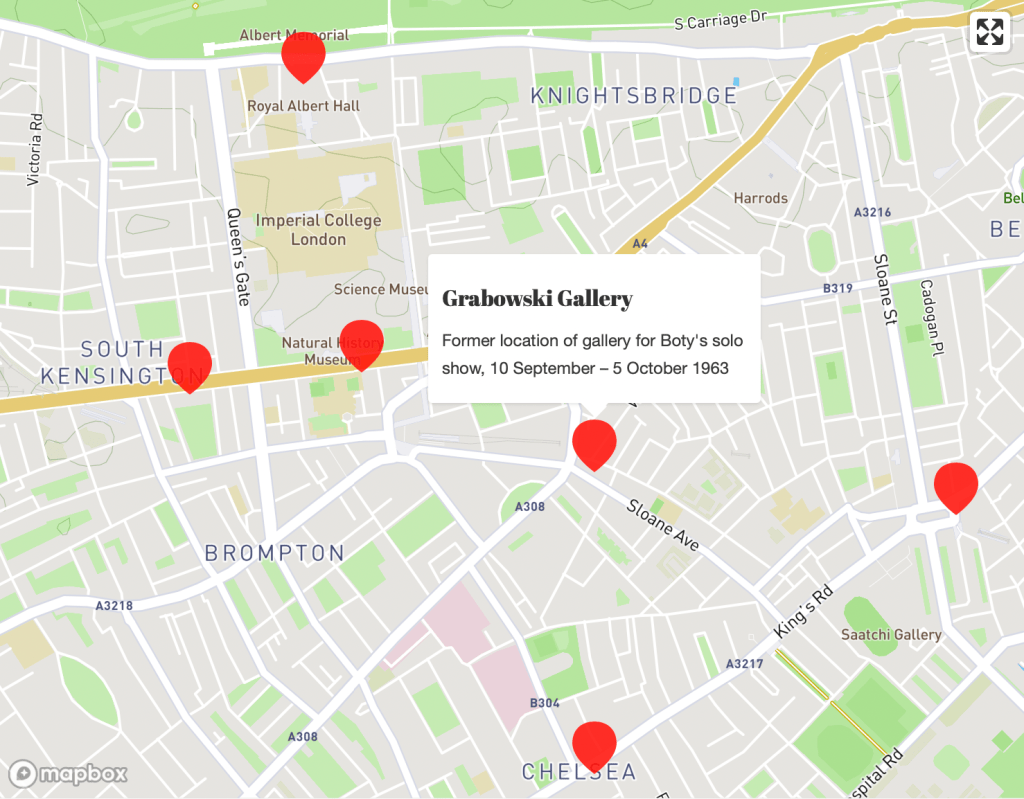
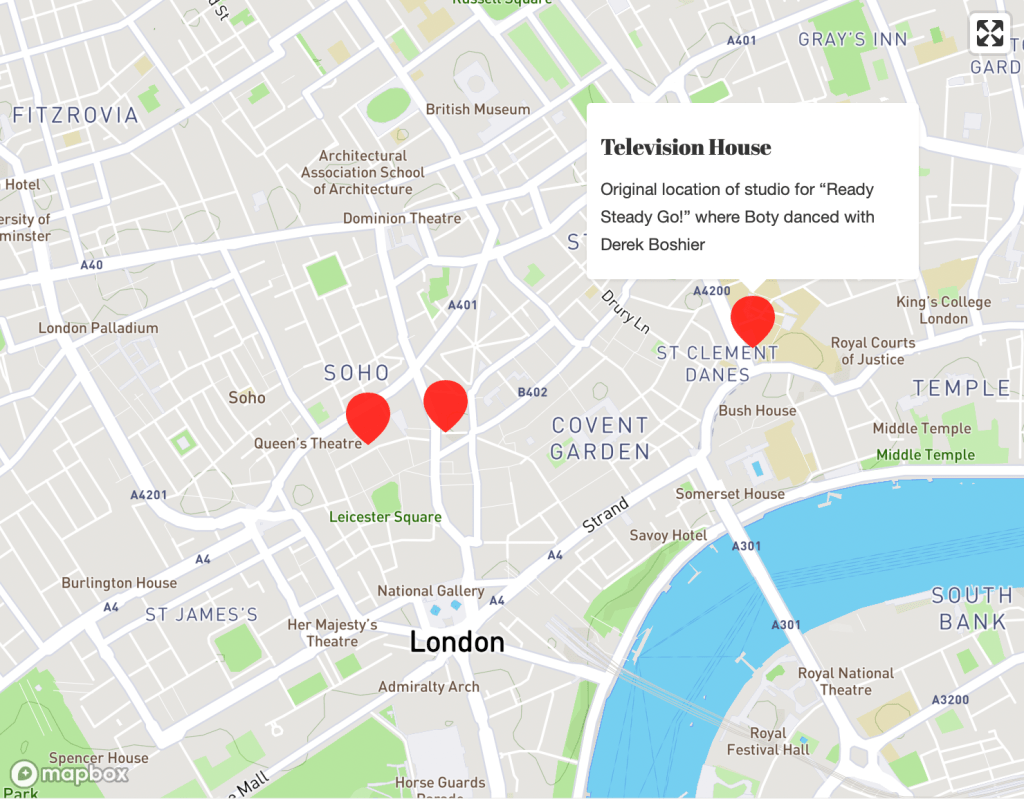
The screen grab below is of a new map containing more than 20 locations in London and its environs associated with Pauline Boty, including where she lived, worked and exhibited and sites shown in Pop Goes the Easel. The map itself with a list of the locations and their relevance below is available here [link]

(Please note: image above is a screen shot only of the map. Please visit the page itself to see all locations.)

Please note, some locations are approximate due to the markers being generated from the post codes of the areas in which they fall. We also welcome feedback including suggested locations to add/corrections required via the Contact form here [link]

(Please note: image above is a screen shot only of the map. Please visit the page itself to see all locations.)

Three Boty works to be sold in Modern British and Irish Art Sales at Christie’s London

The Modern British and Irish Art Evening Sale starting at 6:00pm on 21 March includes Bum from 1966, and the next day on 22 March starting at 1:00pm the Modern British and Irish Art Day Sale includes two early works, Golden nude and Nude on the beach. All three can be viewed at 8 King St, St. James’s, London SW1Y 6QT from 14 March onwards.

The following images and details are all courtesy of Christie’s:

Pauline Boty (1938-1966), BUM, 1966. Pencil, ink, watercolour, gouache and collage on paper. © Christie’s Images Limited 2023

Details
PAULINE BOTY (1938-1966)
BUM
Pencil, ink, watercolour, gouache and collage on paper
19 5/8 x 16 in. (50 x 40.6 cm)
Executed in 1966

Provenance
A gift from the artist to Kenneth Tynan, and by descent

Exhibited
London, Gazelli Art House, “Silver Lining”, March–April 2019, exhibition not numbered

Estimate
GBP 60,000 – GBP 80,000

Auction details
LOT 1
Modern British and Irish Art Evening Sale
21 MARCH 06:00 PM GMT | LIVE AUCTION 21948

Extract from Lot Essay
“Gifted by the artist to Kenneth Tynan in 1966, the present work has remained in his family ever since. Unprecedented in Boty’s limited body of work, this collage is the only known study for a major painting and provides a tantalising insight into her working methods. Executed in the same vibrant colours as the oil painting (sold Christie’s London, 22 November 2017, lot 4), the layers of collage reveal the complexity behind this playful composition.

BUM, a splendid and mature work, was Boty’s very last painting and painted after a diagnosis for cancer that ended her life so prematurely, aged only 28 in 1966. In the face of death, it is a wonderfully vibrant piece painted in colours straight from the tube. Commissioned by Kenneth Tynan for his notorious, erotic cabaret Oh! Calcutta! it places her, to the very end, at the cutting edge of the 60s zeitgeist. The title is a play on the French ‘O, quel cul tu as’ (‘O, what an arse you have’) and in a letter to the impresario, William Donaldson, Tynan outlined a gamut of ideas for the show, one of which was ‘a pop art ballet designed by Pauline Boty, based on paintings that focus on the principal erogenous zones’. BUM, intended as the first of a series, took its cue from the punning title. Within a precisely executed proscenium arch the female bottom is exquisitely and sensuously painted, the flesh has a bloom like a peach and the work could be read as a sensuous celebration of life. Yet the meaning is surely more ambiguous. We have a reified body part, set above the demotic title, BUM, rawly proclaimed in chunky san-serif lettering and revealed ‘on stage’ inviting perhaps a slap or a caning as much as a caress. Certainly, any simple celebration of sexual pleasure has been superseded by something more complex and interesting.

We are very grateful to Dr Sue Tate, author of Pauline Boty: Pop Artist and Woman, Wolverhampton, 2013, for preparing this catalogue entry.”

Further information is available here: [link]
.

Pauline Boty (1938-1966), Golden nude, 1959. Oil on paper. © Christie’s Images Limited 2023

Details
PAULINE BOTY (1938-1966)
Golden nude
Signed and dated ‘BOTY. 59’ (lower right)
Oil on paper
23 1/2 x 17 1/4 in. (59.5 x 44 cm.)
Painted in 1959

Provenance
The artist, and by descent

Estimate
GBP 30,000 – GBP 50,000

Auction details
LOT 140
22 MARCH 01:00 PM GMT | LIVE AUCTION 21949
Modern British and Irish Art Day Sale

Further information is available here: [link]
.

Pauline Boty (1938-1966), Nude on the beach, c.1958-59. Gouache on paper. © Christie’s Images Limited 2023

Details
PAULINE BOTY (1938-1966)
Nude on the beach
Gouache on paper
19 1/2 x 15 3/4 in. (49.5 x 39.5 cm.)
Executed circa 1958-59.

Provenance
The artist, and by descent.

Estimate
GBP 30,000 – GBP 50,000

Auction details
LOT 141
22 MARCH 01:00 PM GMT | LIVE AUCTION 21949
Modern British and Irish Art Day Sale

Further information is available here: [link]
An essay on Boty entitled Pauline Boty: ‘She was beautiful, with this marvellous laugh: clever, very bright, very much the early feminist’ by Jessica Lack is also available here: [link]


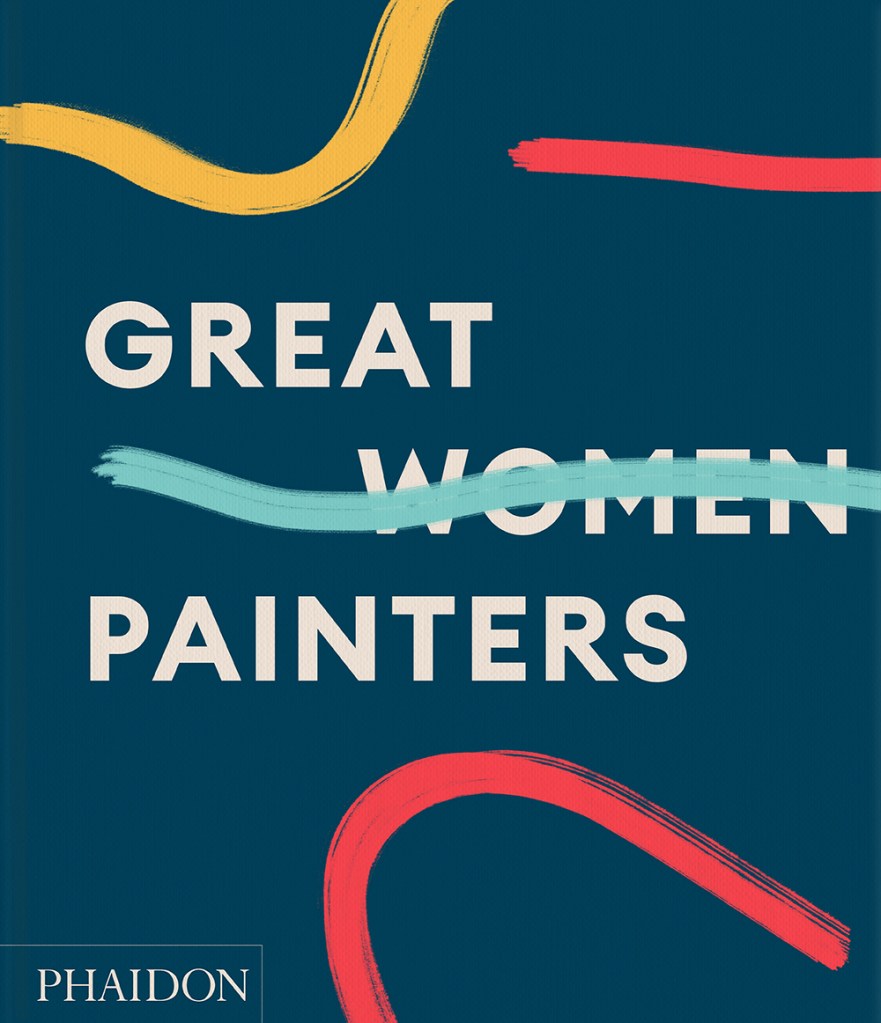
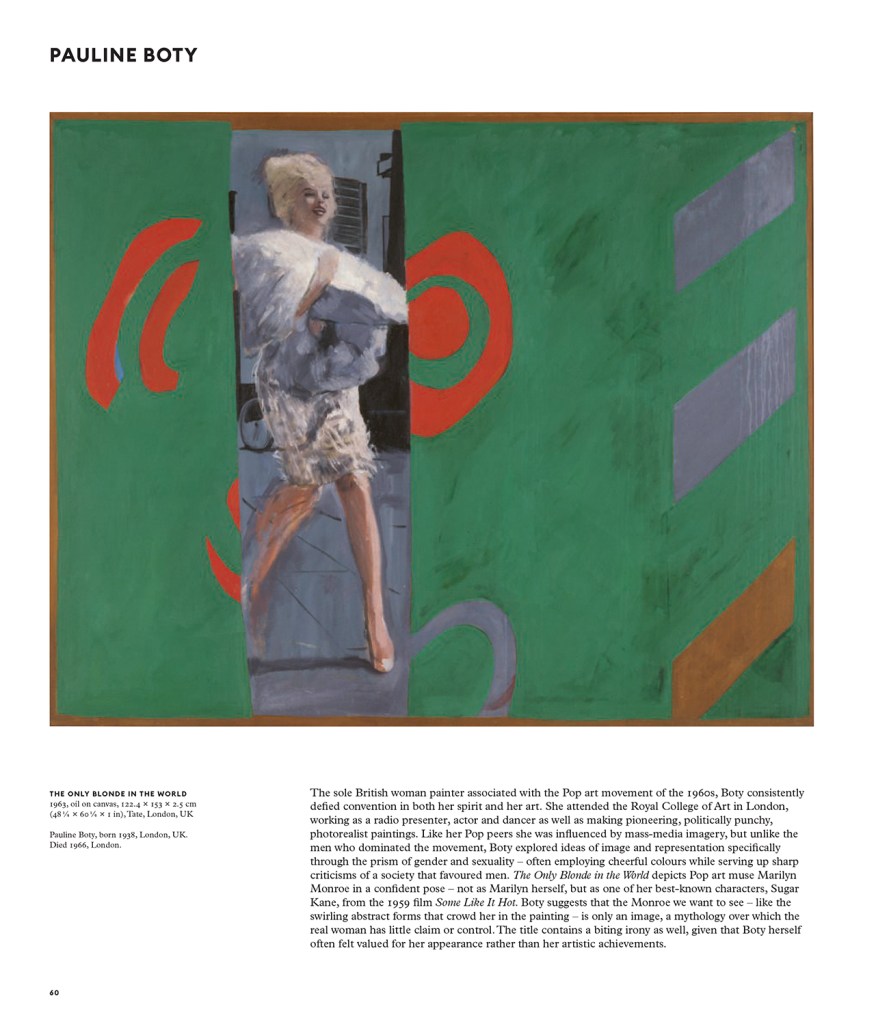
Phaidon’s new book “Great Women Painters” includes Pauline Boty and “The Only Blonde in the World”

“Great Women Painters” published by Phaidon

Phaidon describe the new book as follows: “Great Women Painters is groundbreaking book that reveals a richer and more varied telling of the story of painting. Featuring more than 300 artists from around the world, it includes both well-known women painters from history and today’s most exciting rising stars.

Covering nearly 500 years of skill and innovation, this survey continues Phaidon’s celebrated The Art Book series and reveals and champions a more diverse history of art, showcasing recently discovered and newly appreciated work and artists throughout its more than 300 pages and images.

Other artists featured include: Hilma af Klint, Eileen Agar, Sofonisba Anguissola, Cecily Brown, Leonora Carrington, Mary Cassatt, Elaine de Kooning, Marlene Dumas, Nicole Eisenman, Jadé Fadojutimi, Helen Frankenthaler, Artemisia Gentileschi, Maggi Hambling, Carmen Herrera, Gwen John, Frida Kahlo, Tamara de Lempicka, Agnes Martin, Joan Mitchell, Alice Neel, Plautilla Nelli, Georgia O’Keeffe, Paula Rego, Bridget Riley, Jenny Saville, Dana Schutz, Lee Krasner and Yayoi Kusama.”

SPECIFICATIONS
Format: Hardback
Size: 290 × 250 mm (1138 × 978 in)
Pages: 348 pp
Illustrations: 300 illustrations
ISBN: 9781838663285

More information is available here: [link]
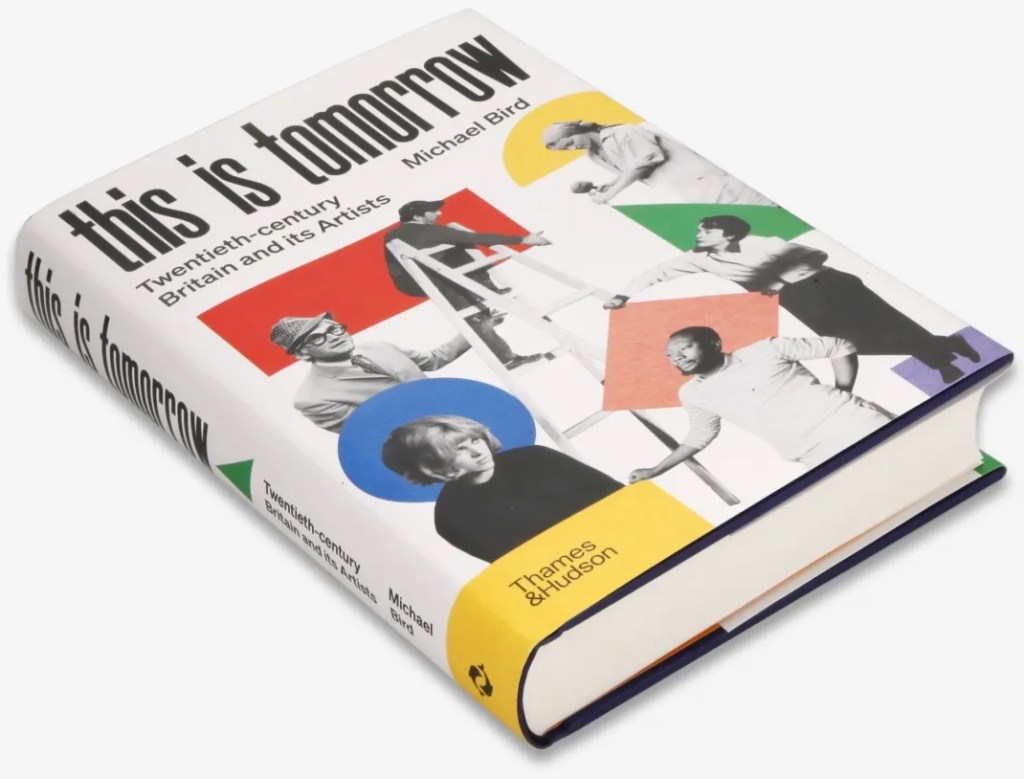
Pauline Boty is included in “This is Tomorrow: Twentieth-century Britain and its Artists” by Michael Bird

“This is Tomorrow: Twentieth-century Britain and its Artists” by Michael Bird, published by Thames & Hudson

Pauline Boty features on the cover and within the new book This is Tomorrow: Twentieth-century Britain and its Artists by Michael Bird, published by Thames & Hudson.

The publisher’s website describes the book as “A compelling and lively history that examines the lives of British artists from the late-19th century to today” and has the following Overview:

“In This is Tomorrow Michael Bird takes a fresh look at the ‘long twentieth century’, from the closing years of Queen Victoria’s reign to the turn of the millennium, through the lens of the artists who lived and worked in this ever-changing Britain. Bird examines how the rhythms of change and adaptation in art became embedded in the collective consciousness of the nation and vividly evokes the personalities who populate and drive this story, looking beyond individual careers and historical moments to weave together interconnecting currents of change that flowed through London, Glasgow, Leeds, Cornwall, the Caribbean, New York, Moscow and Berlin.

From the American James McNeill Whistler’s defence of his new kind of modern art against the British art establishment in the latter half of the 19th century to the Danish-Icelandic artist Olafur Eliasson’s melting icebergs in London, he traverses the lives of the artists that have recorded, questioned and defined our times.

At the heart of this original book are the successive waves of displacement caused by global wars and persecution that conversely brought fresh ideas and new points of view to the British Isles; educational reforms opened new routes for young people from working-class backgrounds; movements of social change enabled the emergence of female artists and artists of colour; and the emergence of the mass media shaped modern modes of communication and culture. These are the ebbs and flows that Michael Bird teases out in this panoramic account of Britain and its artists in across the twentieth century.”
.
Further information is available here: [link]

About the author
Michael Bird is a writer, broadcaster, and curator. His books include Artists’ Letters: Leonardo da Vinci to David Hockney, Studio Voices: Art and Life in 20th-Century Britain, and 100 Ideas That Changed Art. In addition, he has been the Goodison Fellow at the British Library, researching the Artists’ Lives archive.

Publisher: Thames & Hudson
Format: Hardback [Ebook also available]
ISBN 9780500024430
Dimensions: 23.4 x 15.3 cm
Pages: 352
Illustrations: 81
Price: £30.00

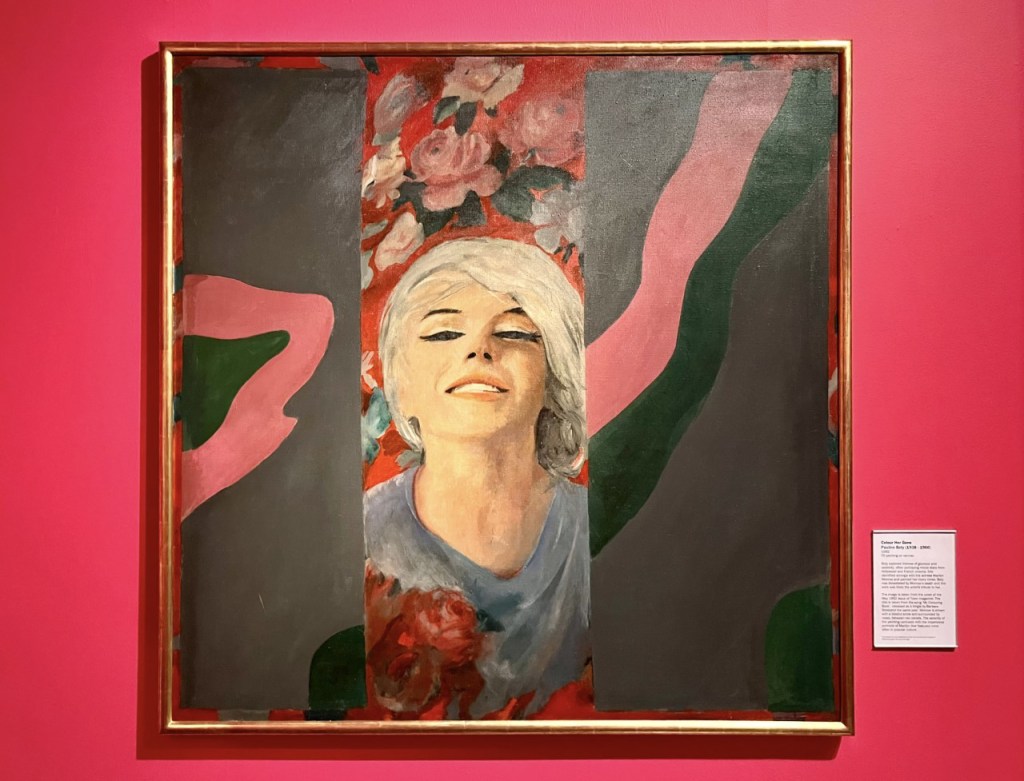
Pauline Boty’s “Colour Her Gone” back on display in new exhibition at Wolverhampton

Pauline Boty’s “Colour Her Gone”, 1962, at Wolverhampton Art Gallery’s “Pop Parade” exhibition. Photo by Bethany Williams.

A new permanent Pop art display entitled Pop Parade has been created at Wolverhampton Art Gallery, featuring Pauline Boty’s 1962 painting Colour Her Gone.

“The painting is a tribute to Marilyn Monroe and a firm favourite from the Gallery’s acclaimed Pop Art collection. The pioneering artist Pauline Boty was one of the founders of the British Pop Art movement and the only female painter within the British branch of the movement. Her work often featured individuals she admired and celebrated her self-assured femininity and female sexuality.

Her later paintings introduced more political themes and criticised the ‘man’s world’ in which she lived. Her art, together with her free-spirited lifestyle, has made her a herald of 1970s feminism.

Pop Parade is free to visit and is situated on the ground floor of the gallery.” [courtesy Wolverhampton Art Gallery Facebook page]

Further information is available here: [link]

Installation shot of the “Pop Parade” exhibition at Wolverhampton Art Gallery. Photo by Bethany Williams.

Boty’s “Cuba Si” will be on view at Frieze Masters 2022

Pauline Boty, Cuba Si, 1963

Marlborough will be showing Pauline Boty’s 1963 work Cuba Si at Frieze Masters 2022 in London from October 12–16.

The work is among a collection “celebrating the 1950s and 60s, one of the most prolific periods in the history of British art. Conceptualised in collaboration with writer and art critic Martin Gayford, whose 2018 publication Modernists and Mavericks provides a compelling account of the bustling London art scene from postwar Soho bohemia to the ‘Swinging 60s’, the presentation will highlight the plurality of artistic approaches at the time, with artists connected through personal relationships rather than distinct schools or manifestos.” [from the Marlborough Gallery London website].

Other artists exhibited by Marlborough at Frieze Masters will include Frank Auerbach, Gillian Ayres, Francis Bacon, Clive Barker, Frank Bowling, Reginald Butler, Patrick Caulfield, Maggi Hambling, Allen Jones, RB Kitaj, Leon Kossoff, Eduardo Paolozzi, Victor Pasmore, Joe Tilson and Euan Uglow.

More on Marlborough is available here: [link]

For more on Frieze Masters please see here [link]

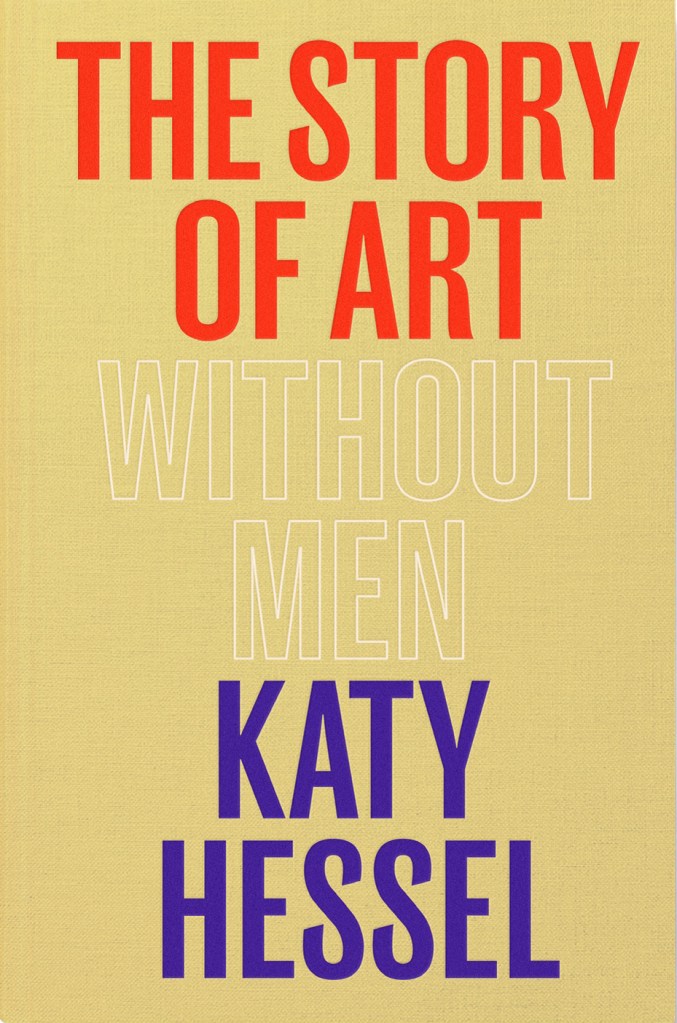
“The Story Of Art Without Men” by Katy Hessel, including a section on Boty, is out now

“The Story of Art Without Men” by Katy Hessel, published by Hutchinson Heinemann

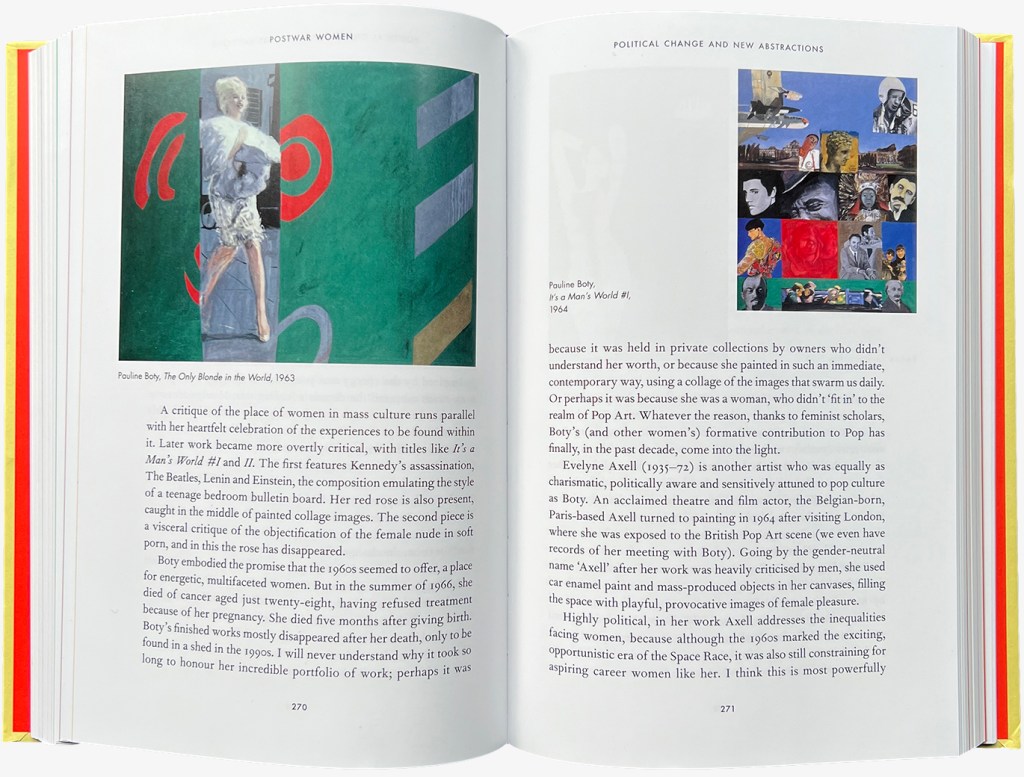
“The Story of Art Without Men Art” by Katy Hessel, a pioneering exploration of women artists from the past 500 years, is published by Hutchinson Heinemann and available now. The book includes a section entitled “Political Change and New Abstractions”, the Pop art chapter of which features Pauline Boty, Marisol, Evelyne Axell, Martha Rosler and others.

“In her new book, curator and art historian Katy Hessel challenges the canon as we know it and showcases the female and gender non-conformist artists who are so often excluded from the history books. Hessel shines a spotlight on the glittering paintings of Sofonisba Anguissola of the Renaissance, the radical work of Harriet Powers in the nineteenth-century US, the astonishing work of post-war artists in Latin America and the women artists defining art in the 2020s. From the Cornish coast to Manhattan, Nigeria to Japan, The Story of Art Without Men is the history of art as it’s never been told before.” [From Hutchinson Heinemann]

A spread from the book with left “The Only Blonde in the World”, 1963, and right “It’s a Man’s World I”, 1964, by Pauline Boty

To coincide with publication of the book, The Story of Art as it’s Still Being Written, is an exhibition at Victoria Miro, London, featuring artists from its final chapter. The exhibition will run from 8 September – 1 October 2022. Further information is available here: [link]

Katy is also conducting a series of book talks to discuss the work – further information available here: [link]

“It’s a long way before the balance is truly redressed but this is a good start.” Tracey Emin

“I was not aware how hungry I was for this book until I dropped everything and ate it from cover to cover. I was not aware how angry I was that this book did not exist until it existed. It’s an urgently needed, un-put-downable, joyful, insightful, glorious, perspective-shifting revision of the Story of Art.” Es Devlin

Women artists currently make up just 1% of the National Gallery collection in London. This same museum only staged their first major solo exhibition by a historic female artist, Artemisia Gentileschi, in 2020, while 2023 will mark the first time the Royal Academy of Arts has ever hosted a solo exhibition by a woman in their main space.” Marina Abramović

A spread from the book showing part of its Timeline

About the author
Katy Hessel is an art historian, broadcaster and curator dedicated to celebrating women artists from all over the world. In 2015, Katy founded the Instagram account @thegreatwomenartists, which has grown to almost 300,000 followers, and hosts a podcast of the same name with over 1.5 million listens. Katy has lectured at Tate, National Gallery, Christie’s and University of Cambridge; presented films for the BBC and Royal Academy; and collaborated with Dior on a podcast series featuring interviews with Tracey Emin and Judy Chicago. She lives in London and sits on the Board of Trustees at Charleston, the former home of the Bloomsbury Group.

Publisher: Hutchinson Heinemann
Format: Hardback [Ebook and Audio Download also available]
ISBN 9781529151145
Dimensions: 241mm x 32mm x 162mm
Pages: 520
Price: £30.00

“Revisiting Modern British Art”, including Boty’s “It’s a Man’s World II”, is published on 10th October

“Revisiting Modern British Art” edited by Jo Baring, published by Lund Humphries

“Revisiting Modern British Art”, edited by Jo Baring, accompanies exhibitions at The Higgins, Bedford (15th October 2022 – 16th April 2023) and The Lightbox (15th October 2022 – 8th January 2023) and is published by Lund Humphries on 10th October.

The book includes contributions by Harriet Baker, Elena Crippa, Aindrea Emelife, Laura Freeman, Alexandra Harris, Simon Martin, Hammad Nasar, James Purdon, James Rawlin, Natalie Rudd, James Russell and Laura Smith and alongside Boty features the work of artists including Paul Nash, Eric Ravilious, Eileen Agar, Ithell Colquhoun, Vanessa Bell, Francis Bacon, Barbara Hepworth, Margaret Mellis, Richard Hamilton and Kim Lim.

From the Lund Humphries website: “As the twenty-first century unfolds, notions of our cultural past and how our history has influenced our present shift almost daily. Within this, accepted artistic trajectories are being questioned and new connections made.

In this wide-ranging and thought-provoking publication, experts in their field address specific aspects of British art of the twentieth century. Presenting new perspectives on established narratives, subjects range from British Surrealism and the rise of corporate and private patronage, to nationality and British identity. Complemented by a range of striking images, this publication succeeds in showing the strength of the British artistic tradition while also encouraging the reader to rethink and explore the existing narrative.”

A spread from the book with left “Cover Girl” by Frank Bowling, 1963–4 and right “It’s a Man’s World II” by Pauline Boty, 1964–5

Jo Baring is a former Director of Christie’s and is currently Director of the Ingram Collection of Modern British and Contemporary Art. Jo is also the co-presenter and co-writer of the podcast, Sculpting Lives.

Publisher: Lund Humphries Publishers Ltd
Format: Hardback
ISBN 9781848225619
Dimensions: 260 x 210 mm
Pages: 176
Illustrations: 100 colour and 10 b&w
Price: £39.99