Two documentaries on “Ready Steady Go!” to be screened on BBC4 this evening

The programme was clearly close to Pauline Boty’s heart – she was regularly chosen as a dancer in the audience with her friend and fellow Pop artist Derek Boshier. The first documentary includes footage of them dancing in the party scene concluding Ken Russell’s “Pop Goes The Easel”.
Further information from and links to the BBC website below:

“The story of Britain’s iconic 1960s music show, Ready Steady Go! The programme revolutionised television ‘for the kids’ and coincided with the tremendous explosion of British pop talent that took the world by storm. It championed emerging talent like The Beatles, The Who, Sandie Shaw, Cilla Black, Otis Redding and The Rolling Stones.”

The Story of Ready Steady Go!
BBC4, 21:00, Friday 20th March 2020
We go behind the scenes and speak to the people who made it all happen, including original producer Vicki Wickham and the programme’s pioneering director, Michael Lindsay-Hogg. Plus further contributions from Annie Nightingale, Eric Burdon, Chris Farlowe, Mary Wilson, Martha Reeves, Paul Jones, Gerry Marsden and Jools Holland.
Further information available here [link]

The Best of Ready Steady Go!
BBC4, 22:00, Friday 20th March 2020
This priceless archive has rarely been seen and includes some of the most memorable performances from the greatest stars of the day. Tune in to see The Beatles perform Twist and Shout on a moving stage, The Rolling Stones presenting their very own episode, and Otis Redding’s sensational duet with Chris Farlowe and Eric Burdon. Other acts include Cilla Black, Lulu, and Martha and the Vandellas. Dusty Springfield also takes centre stage.
Further information available here [link]
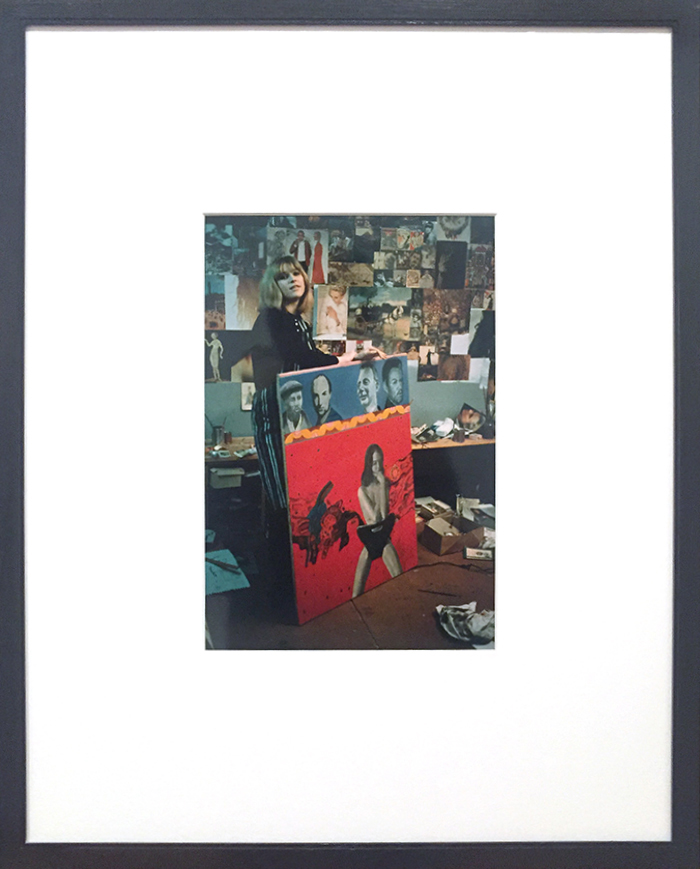
Pauline Boty with “Scandal ’63” by Michael Ward on display at the National Portrait Gallery

Pauline Boty by Michael Ward, 13 January 1964, C-type colour print

The portrait of Pauline Boty with her presumed lost work “Scandal ’63” is on display in “The UK 1960–Today” in Room 32 at the National Portrait Gallery.

“The display includes groups of portraits by particular artists, inviting the viewer to consider the range of contrasting approaches. While the challenge of depicting an observed sitter remained, a rich stylistic diversity characterises portraiture in the late 20th and early 21st centuries.

From the early 1960s the pace of social, political and artistic change in Britain gathered momentum. Food rationing ended only in 1954 and a growing affluence and a new mood of prosperity gave rise to increasing consumerism. Television, cinema, radio, advertising and magazines fuelled these changes by swiftly communicating the latest developments in fashion, design, music, science and the arts. But the optimism of the early 1960s was, by the end of the decade, replaced by a sense that the dream of progress had somehow slipped away. Throughout the 1970s and 1980s inequality in material wealth increasingly created new hierarchies and social tension.” [from the National Portrait Gallery website]

With thanks to Terence Pepper for the notification. More information on the portraits on display can be found here: [link]

New “Sources” section now available online

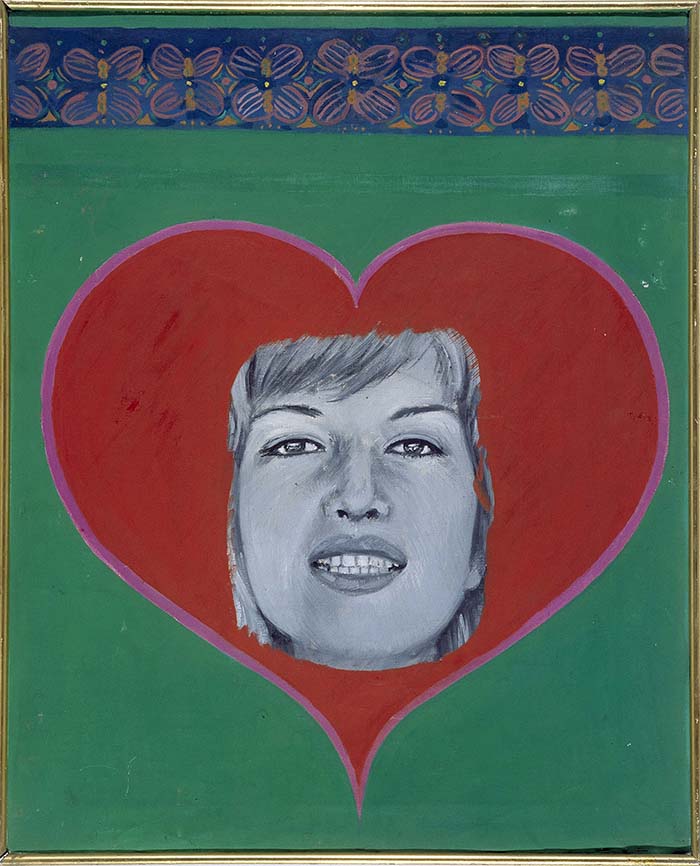
This new section lists some of the sources for titles of Pauline Boty’s paintings such as “Monica Vitti with Heart” shown below. In future the intention is to expand it further and also add information on the content she included, such as the names of individuals featured in the works. Access the new section here [link]

Monica Vitti with Heart, 1963, oil on canvas

New interview with Derek Boshier at paulineboty.org – extracts below:

Paulineboty.org: What were your first impressions when you met Pauline Boty?
Derek Boshier: My first impressions on meeting Pauline were the same as almost everybody. She was a very vivacious, glamorous intellectual. You know. And a lot of fun –the fact that she should have died so early aged 28… I mean, she loved life, you know – and she knew how to live it. She was just good to be around really. And that aspect of her, knowing how to live life, really fed her paintings too.

PBO: Did Pauline express her frustration at having to study stained glass instead of art as she’d originally wanted to?
DB: No. Mainly because she wasn’t a complainer. Politics though – Yes – but not her personal life. The Anti-Ugly March she organised for example, which I went on. She was the figurehead for that. The point about her is that she said her mind – not only in paintings with sensuality and sexuality, but she said it with architecture. I mean she was very direct.

PBO: And your painting “Pauline Boty Goes Digital [for Pauline Boty]”. How did that come about?
DB: Well it’s a very large painting that I made in 2011. You know, I always think of Pauline and what she did and I’m often reminded of her when people write to me and ask me about her or “Pop Goes the Easel” and I remember my friendship with her. I was about to start a new series of paintings about smartphones and I just thought before I do that I’d like to do a homage to Pauline as it were, just to help keep her in people’s memory really.

Full interview here: [link]

Phaidon’s “Great Women Artists” includes Pauline Boty and “Colour Her Gone”

“Five centuries of fascinating female creativity presented in more than 400 compelling artworks and one comprehensive volume: The most extensive fully illustrated book of women artists ever published, Great Women Artists reflects an era where art made by women is more prominent than ever. In museums, galleries, and the art market, previously overlooked female artists, past and present, are now gaining recognition and value.

Featuring more than 400 artists from more than 50 countries and spanning 500 years of creativity, each artist is represented here by a key artwork and short text. This essential volume reveals a parallel yet equally engaging history of art for an age that champions a greater diversity of voices.” from the Phaidon website

SPECIFICATIONS
Format: Hardback
Size: 290 x 250 mm (11 3/8 x 9 7/8 in)
Pages: 464 pp
Illustrations: 450 illustrations
ISBN: 9780714878775

More information available here: [link]

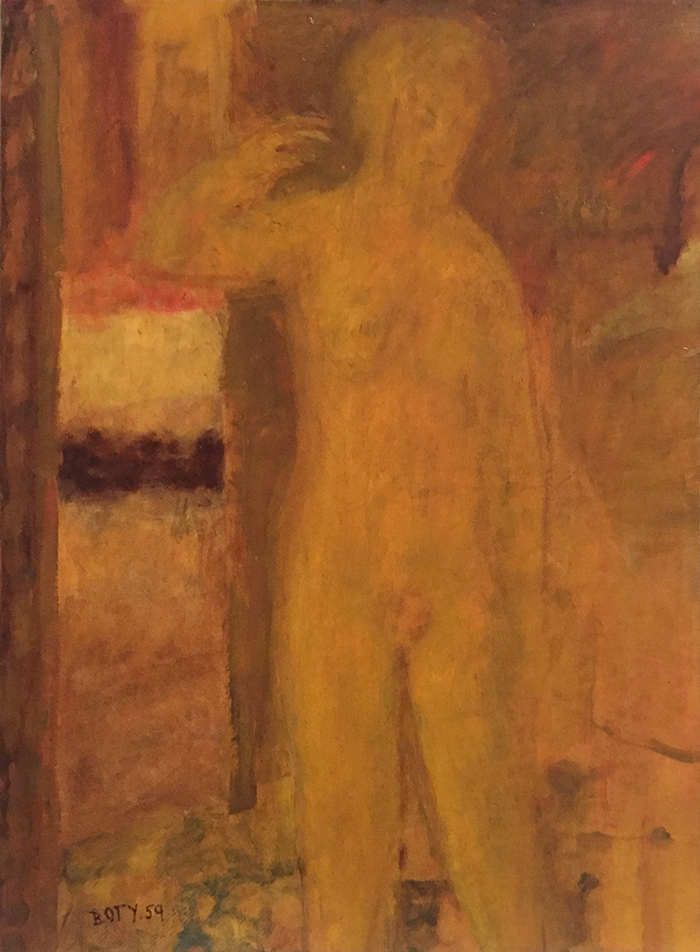
Early Pauline Boty painting discovered!

Untitled by Pauline Boty, 1959, oil on card laid on canvas. 69 x 51 cm
Untitled, 1959, oil on card laid on canvas. 69 x 51 cm

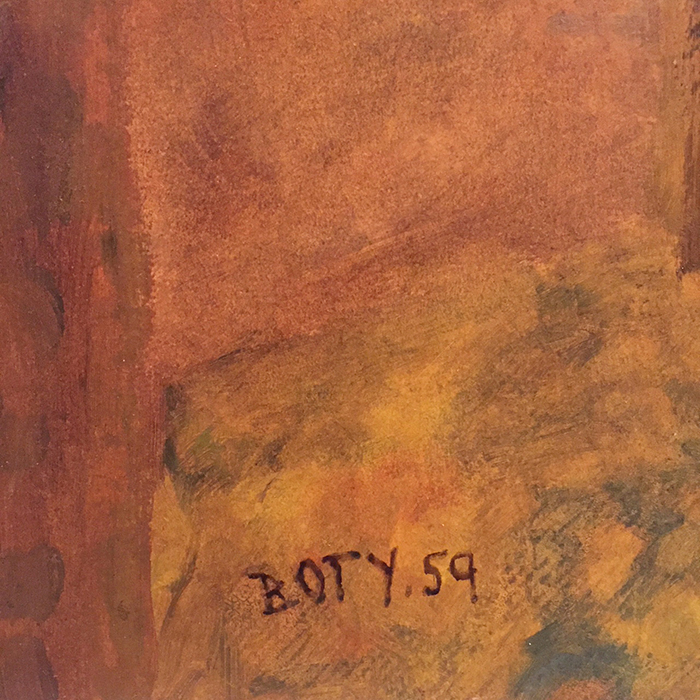
Dating from Boty’s time at the RCA [Royal College of Art] this untitled work has hints of the sensuality she would develop further with some of her key Pop art paintings, but with a palette of autumnal hues she rarely used again. The work is of oil on card laid on canvas and at 69 x 51 cm is large compared to most other surviving works from the period. Excitingly and very unusually it is also prominently signed and dated “Boty.59” on the front.

For further details please enquire using the Contact form or via info@paulineboty.org

Detail of signature and date on recently discovered painting by Pauline Boty.
A rare example of a work by Boty signed and dated on the painting itself.