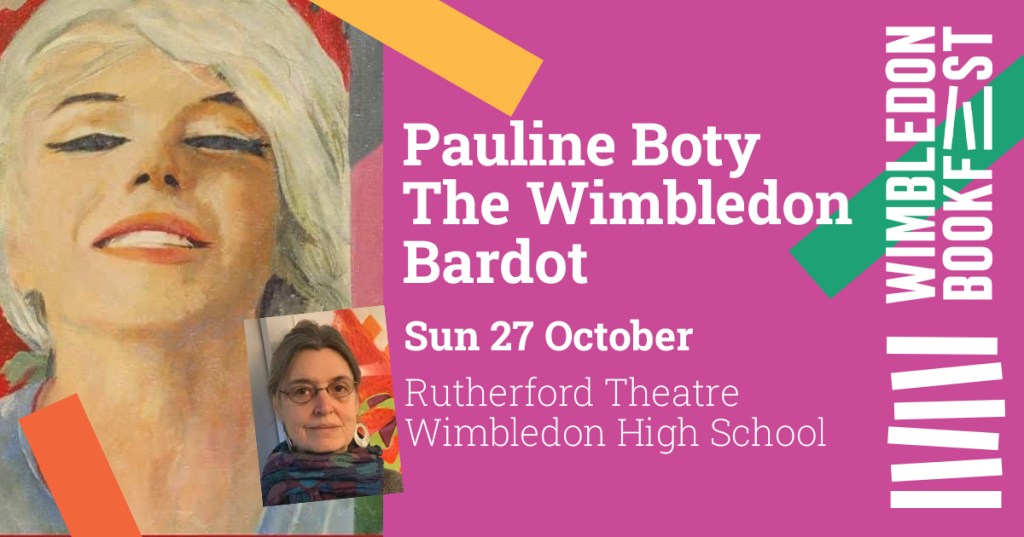
As part of their annual festival Wimbledon Bookfest have announced the a talk between Dr Sue Tate and Samira Ahmed at Rutherford Theatre, Wimbledon High School on Sunday 27 October at 3:00pm:
“An opportunity to find out more about one of the leading co-founders of the British Pop art movement, Pauline Boty.
Known as the Wimbledon Bardot, Pauline Boty was a student at Wimbledon School of Art. She smashed stereotypes and confronted issues well ahead of her time, but was not given the recognition she deserved. During her tragically short life, she produced an exciting and complex body of work, commenting on pop culture, feminism and so much of the era in which she lived. Dr Sue will be in conversation with BBC broadcaster and journalist Samira Ahmed.”
‘The life of Boty? A Molotov fusion of possibility and loss.’ – Ali Smith”
Details Title: Pauline Boty: The Wimbledon Bardot Location: Rutherford Theatre at Wimbledon High School Date: Sunday 27 October 2024 Time: 3:00 pm Tickets are £15 and can be booked here [link]
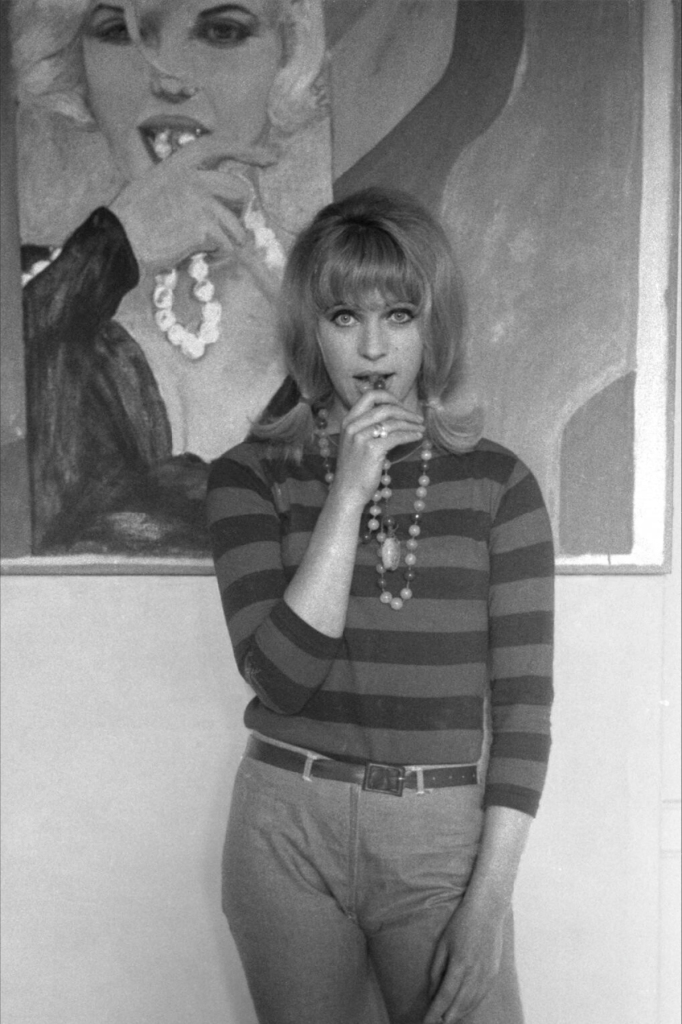
When originally compiling the list of Boty’s paintings for this website I consulted Dr Sue Tate as to whether I should include the “Marilyn with Beads” that Boty is photographed with by John Aston in a print owned by the National Portrait Gallery. Tate was adamant the work no longer existed as she felt sure that Boty had chosen to overpaint it with Colour Her Gone, citing the likelihood that the artist was unhappy with the somewhat crude and overlarge rendering of Monroe’s hand holding the beads – and so it has always been listed accordingly here.
John Aston was commissioned by Men Only to photograph Boty for a feature entitled “Pauline Goes Pop” in the March 1963 issue, ultimately returning for a second session as the first set of prints he showed the magazine wasn’t deemed suitable for its readership.
Having had the chance to look again at Colour Her Gone at Gazelli Art House for the first time since 2013 at the exhibition “Pauline Boty: Pop Artist and Woman”, it occurred to me to see what would happen if I montaged the two images together in Photoshop. As per the first image above, the abstract panels looked to me to match nigh on identically, with the central figurative area of the painting maintaining the same width to support Tate’s assertion and I provided Wolverhampton Art Gallery and Gazelli with printouts to propose the theory.
Happily, the two galleries chose to jointly commission a detailed analysis of the work, resulting in the recent announcements from Gazelli Art House and news article from Artnet:
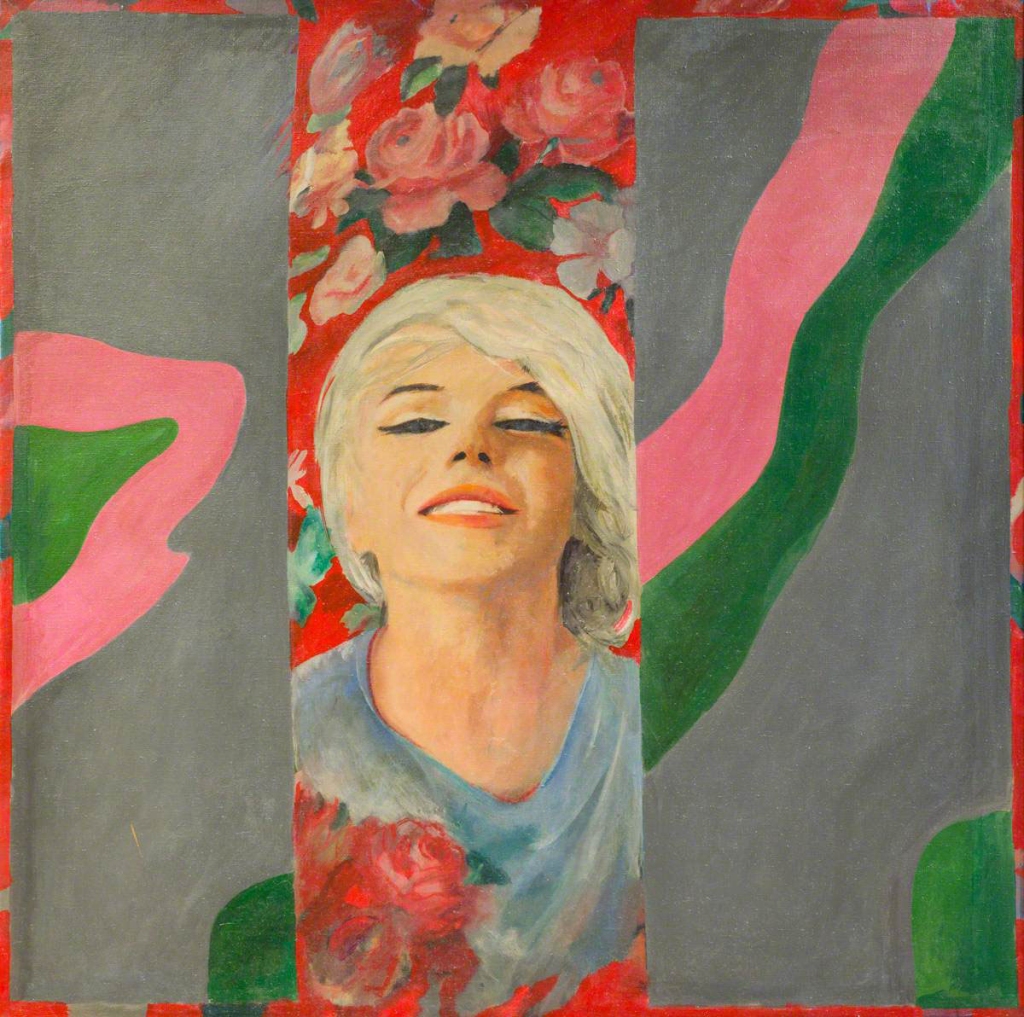
“Exciting news involving Gazelli Art House, Wolverhampton Art Gallery, paulineboty.org, and Dr Sue Tate was recently revealed during Gazelli’s book launch and talk on 23rd January 2024. Together with Wolverhampton Art Gallery, Gazelli Art House conducted a reflectogram (an image taken from beneath an artwork’s surface) validating the ongoing research efforts led by Dr. Sue Tate and Christopher Gregory (paulineboty.org). In a stunning revelation, an entirely new narrative for Pauline Boty’s famed painting Colour Her Gone (1962) has come to light. A reflectogram has shown the iconic portrait of Marilyn Monroe was painted over an earlier image of the star, Marilyn with Beads. This was long thought to be a lost painting, and can be traced back to a 1962 photograph by John Aston. Boty’s Pop Art aesthetic, characterised by broad brushwork and flat perspective, initially suggests a straightforward technique, however reflectography has exposed the intricate evolution of the composition. Painted alterations, particularly to the top of the right-hand colour field panel and the central green ribbon, indicate contemporaneous changes, suggesting a wholesale repainting of the artwork. Pentimenti (visible traces of earlier painting beneath painted layers), showcasing shifts in pearl positions and nostril locations, reflect the artist’s organic design approach. Overall, infrared reflectography (IRR) indicates not just changes in colour panel forms but also hints at alterations to colours used. The transparency of the green upper design in infrared suggests a different initial colour, opening avenues for exploration into pigment variations. The reflectogram invites a closer examination of this artistic transformation, offering a unique glimpse into the complex layers of Colour Her Gone. Colour Her Gone was lent to Gazelli Art House for Pauline Boty: A Portrait (2023-24) by Wolverhampton Art Gallery.
Colour Her Gone; by Pauline Boty, 1962, oil on canvas
‘I had long thought that Marilyn with Beads was not a lost work but lay under Colour Her Gone. The reflectogram gives us conclusive evidence. Here as in other paintings Boty has radically reworked a composition until she had clinched the image that expressed exactly what she wanted to say”. The reflectogram also allows to see, as the report states, “the highly complex development of the composition” and “a high level of planning”, refuting criticisms of slapdash work.’ — Dr. Sue Tate, Freelance Art Historian”
As a footnote both Boty’s source image of Monroe from Town magazine and the paintings’s title originate from the same month of November 1962. In the latter case it was the release date of the single My Colouring Book by among others, Barbra Streisand, with its original closing refrain of “Colour him gone”. Clearly the song made an impression on the artist as she took its title to name another of her works, also including typed fragments of its lyrics, applied using Letraset.
Town magazine, November 1962, published by Corrmarket Press. Cover photo of Marilyn Monroe by George Barris
To see Artnet’s write-up of the report’s confirmation, please see here: [link]
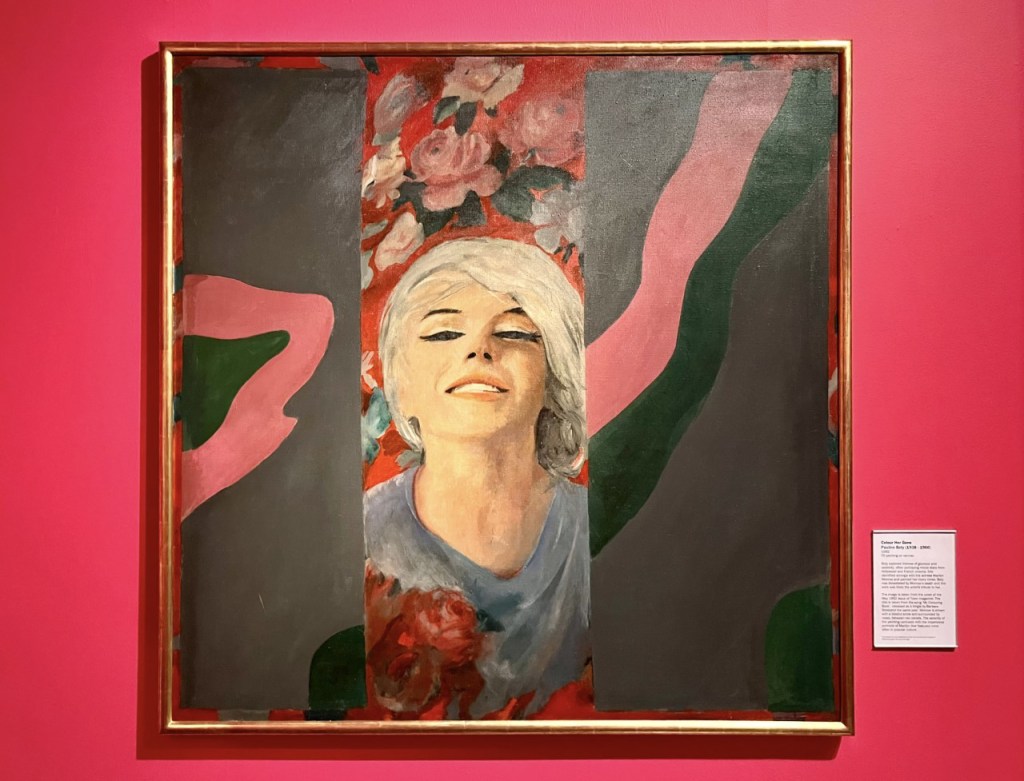
Pauline Boty’s “Colour Her Gone”, 1962, at Wolverhampton Art Gallery’s “Pop Parade” exhibition. Photo by Bethany Williams.
A new permanent Pop art display entitled Pop Parade has been created at Wolverhampton Art Gallery, featuring Pauline Boty’s 1962 painting Colour Her Gone.
“The painting is a tribute to Marilyn Monroe and a firm favourite from the Gallery’s acclaimed Pop Art collection. The pioneering artist Pauline Boty was one of the founders of the British Pop Art movement and the only female painter within the British branch of the movement. Her work often featured individuals she admired and celebrated her self-assured femininity and female sexuality.
Her later paintings introduced more political themes and criticised the ‘man’s world’ in which she lived. Her art, together with her free-spirited lifestyle, has made her a herald of 1970s feminism.
Pop Parade is free to visit and is situated on the ground floor of the gallery.” [courtesy Wolverhampton Art Gallery Facebook page]
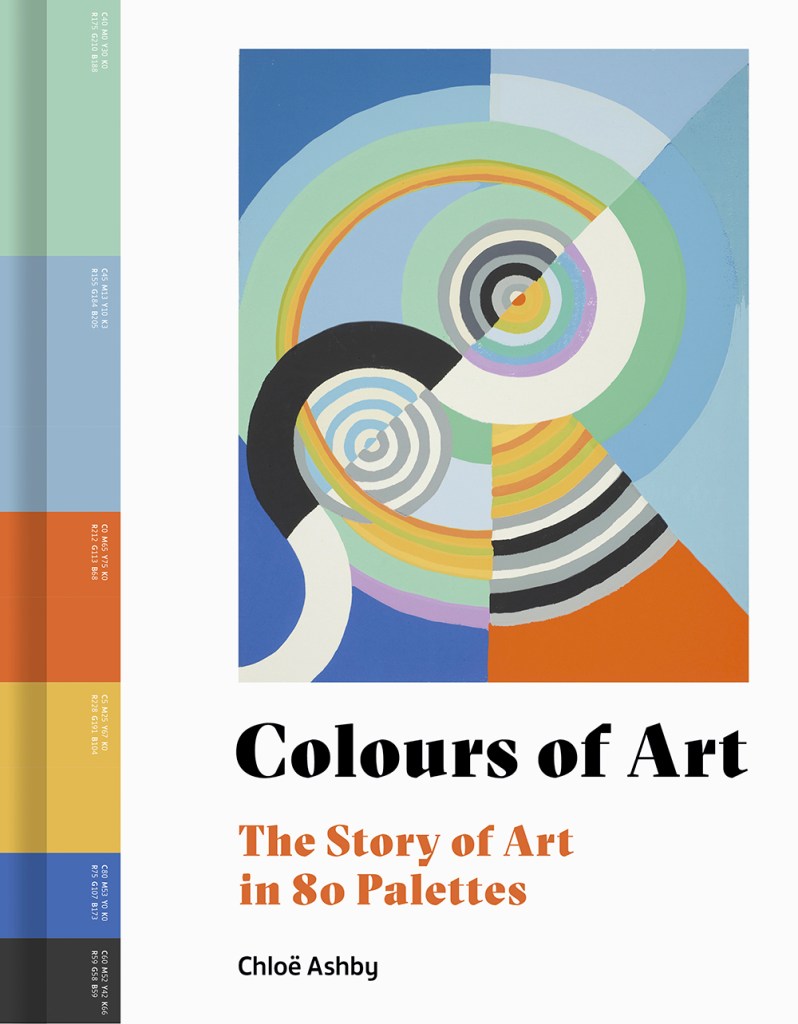
“Colours of Art: The Story of Art in 80 Palettes” by Chloë Ashby, published by Frances Lincoln
“Colours of Art: The Story of Art in 80 Palettes” by Chloë Ashby examines, in chronological order, 80 artworks and their palettes.
From the Quarto website: “Colour allows artists to express their individuality, evoke certain moods and portray positive or negative subliminal messages. And throughout history the greatest of artists have experimented with new pigments and new technologies to lead movements and deliver masterpieces. As something so cardinal, we sometimes forget how poignant colour palettes can be, and how much they can tell us.
Structured chronologically, ‘Colours of Art’ takes a fun, intelligent, visually engaging look at the greatest artistic palettes in history offering a refreshing and thoughtful primer for those who want to look at art through the ages from a different perspective. Spanning centuries and styles, from cave to contemporary art, Chloë Ashby invites you to navigate familiar and lesser-known works through a vibrant new lens.
‘When I was planning my chapters’ says Chloë, “some works came to me right away. Others, I discovered as I went along. This book isn’t definitive – how could it be, considering colour’s inexhaustible variety? Instead, it’s my attempt to capture and celebrate that variety on the page. Each artwork is accompanied by an infographic palette that’s intended to help you engage with the colours at play. My focus is on painting and colour is my jumping off point, but the art that does appear within these pages can be viewed through countless lenses.
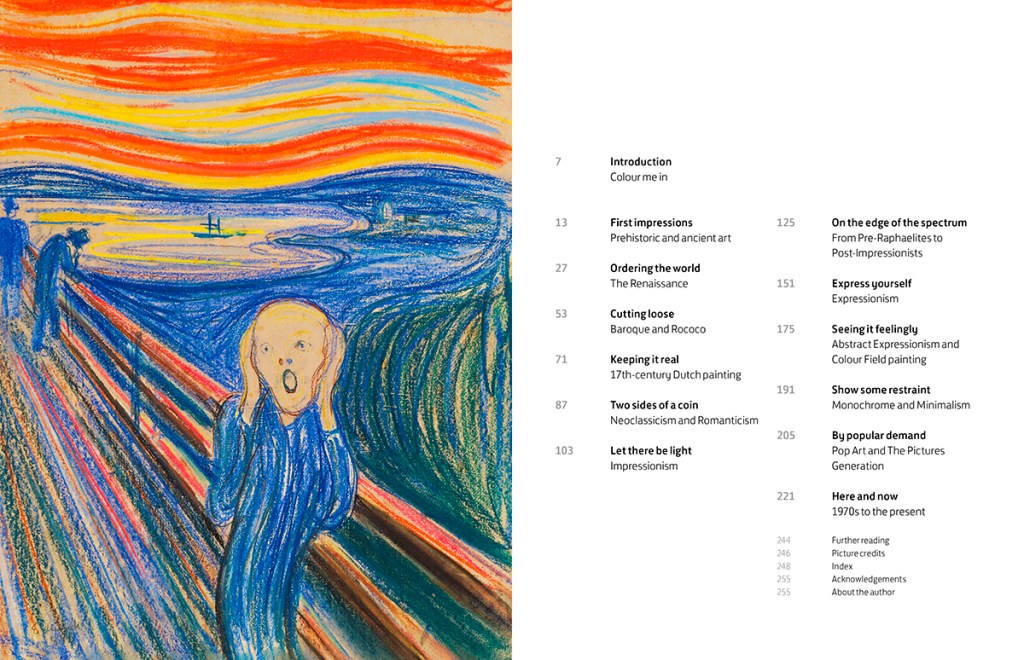
The book’s Contents page
The story of art reads differently depending on where and when you’re doing the reading – this is just one version, told in 80 palettes. You can read it chronologically from start to finish, or you can dip in and out. Wherever you land, you’ll find yourself immersed in colour – rich, vital, chameleonic. For these pieces, colour is not only a tool (like a paintbrush or a canvas) but the fundamental secret to their success.’”
Chloë Ashby is a writer and editor. She studied at the Courtauld Institute of Art and has written about art and culture for numerous publications.
Publisher: Frances Lincoln Format: Hardback ISBN 9780711258044 Dimensions: 245 mm x 190 mm Pages: 256 Price: £25.00
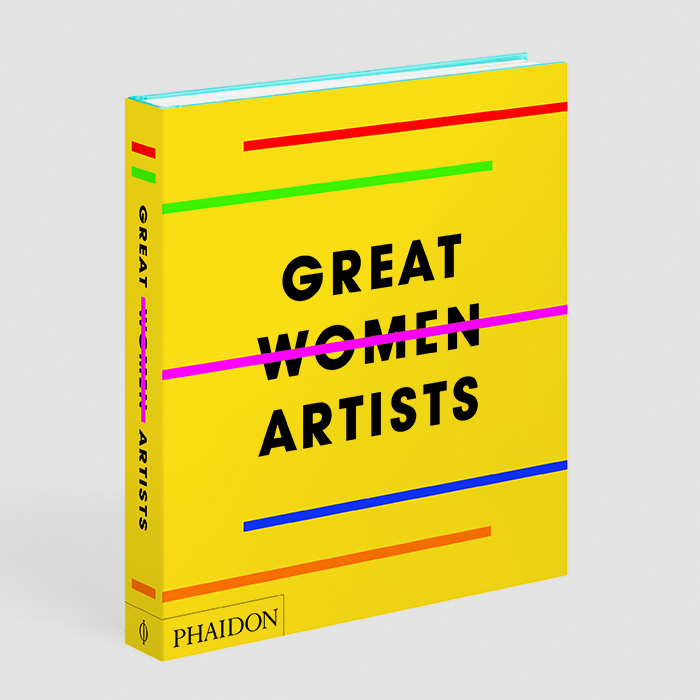
“Five centuries of fascinating female creativity presented in more than 400 compelling artworks and one comprehensive volume: The most extensive fully illustrated book of women artists ever published, Great Women Artists reflects an era where art made by women is more prominent than ever. In museums, galleries, and the art market, previously overlooked female artists, past and present, are now gaining recognition and value.
Featuring more than 400 artists from more than 50 countries and spanning 500 years of creativity, each artist is represented here by a key artwork and short text. This essential volume reveals a parallel yet equally engaging history of art for an age that champions a greater diversity of voices.” from the Phaidon website
SPECIFICATIONS Format: Hardback Size: 290 x 250 mm (11 3/8 x 9 7/8 in) Pages: 464 pp Illustrations: 450 illustrations ISBN: 9780714878775




 Pauline Boty