The key above showing the different individuals and objects assembled by Pauline Boty for one of her most important works, her 1964 painting “It’s a Man’s Word I”, has now been added to the site. Among the figures newly-identified are the 4th century BC Greek statue of Hermes and also Thelonius Monk as a likely contender for another of those represented. As stated on the page, it is greatly hoped that in time the sources of all the items chosen by Boty to make up the work will be identified and the list on this page completed. All comments, corrections, clarifications and suggestions on this item would be greatly appreciated, via the Contact form here: [link] The new page can be accessed here: [link]
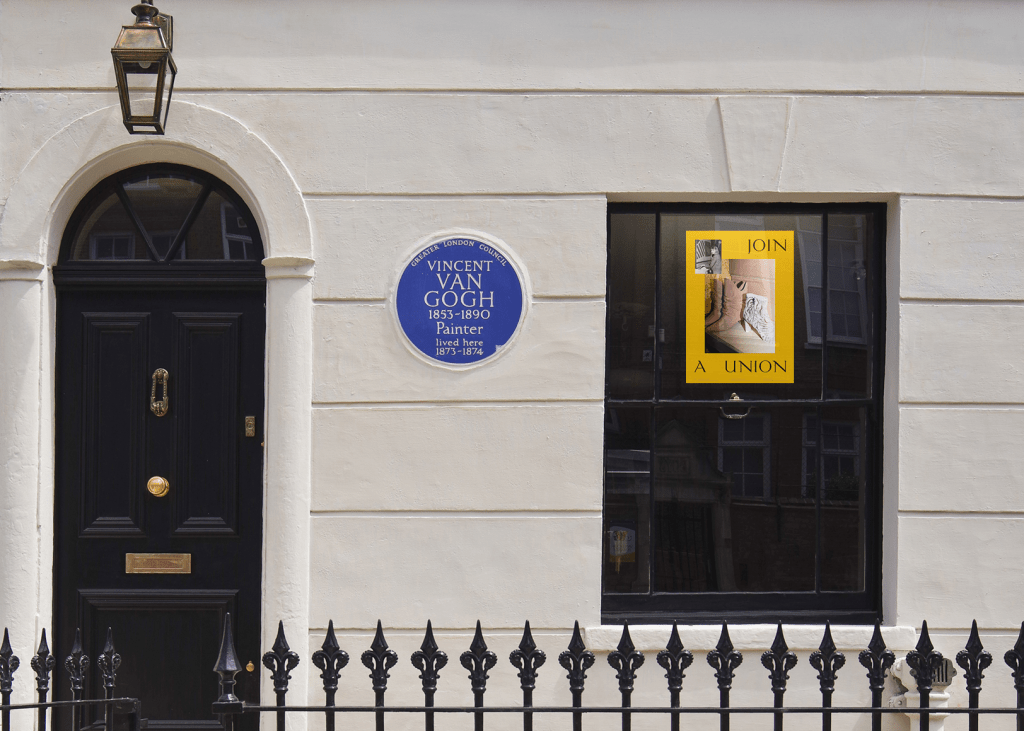
“Join a Union (Boty/Boots)” by Madeleine Pledge on display at Van Gogh House London. Image courtesy of Van Gogh House London
Artist Madeleine Pledge has created a poster entitled “Join a Union (Boty/Boots)” featuring an image of Pauline Boty which will be on display at Van Gogh House London until 31st May. Unveiled on 1st May 2021 (International Workers’ Day), it forms part of “On the Western Window Pane”, a year long project presenting 12 artist designed, limited edition posters in its front, West facing window. The poster is also available to buy in separate yellow and pink colourways – more information available here: [link]
Join a Union (Boty / boots), 2021 by Madeleine Pledge, poster design by Ben Greehy. Image courtesy of Van Gogh House London
Madeleine Pledge describes the inspiration behind her work as follows:
“The image of the artist Pauline Boty hanging a painting at the headquarters of the Trades Union Congress has been on my mind and on the walls of my studio for the last year. I like Boty’s glamorous nonchalance (cigarette in hand, handbag on arm), and her striped suit against the striped canvas. Mostly, though, I like the image for the way it positions the (supposedly isolated, individualised) figure of the artist within this context of collective action and organised labour.
From within the atomising effects of the last year, ‘Join a Union’ felt like the best thing I could say within the space of an A2 page. Boty’s image sits alongside a couple of pairs of unfired clay boots, positioned together in my studio while thinking about the photograph. These things are gathered together within a format reconstituted from the layouts of fashion adverts from 2020 editions of Vogue.”
Van Gogh House London is located at 87 Hackford Rd, Vassal, London SW9 0RE and is available to visit on pre-booked tours. More information here: [link]
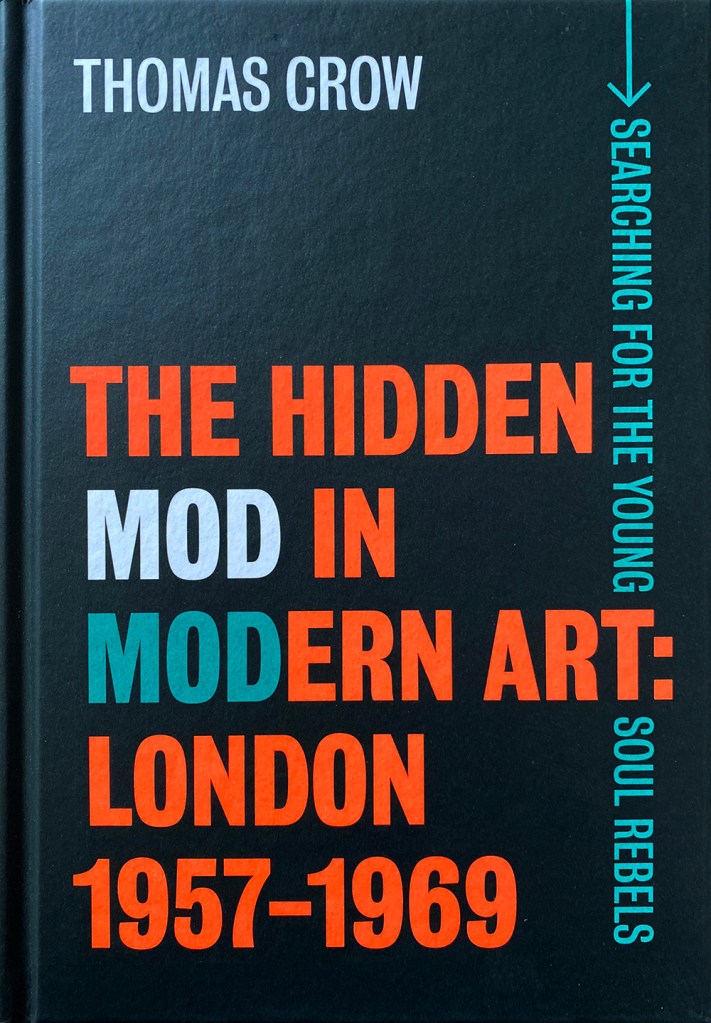
“The Hidden Mod in Modern Art: London, 1957-1969” by Thomas Crow.
“The Hidden Mod in Modern Art: London, 1957-1969” by Thomas Crow looks into the considerable influence of the Mod subculture on key figures of the 1960s British art scene. One of its six chapters is devoted in its entirety to Pauline Boty and Bridget Riley, including a fascinating account of the former’s association with John Schlesinger and his films Billy Liar and Darling. The book is published by the Paul Mellon Centre.
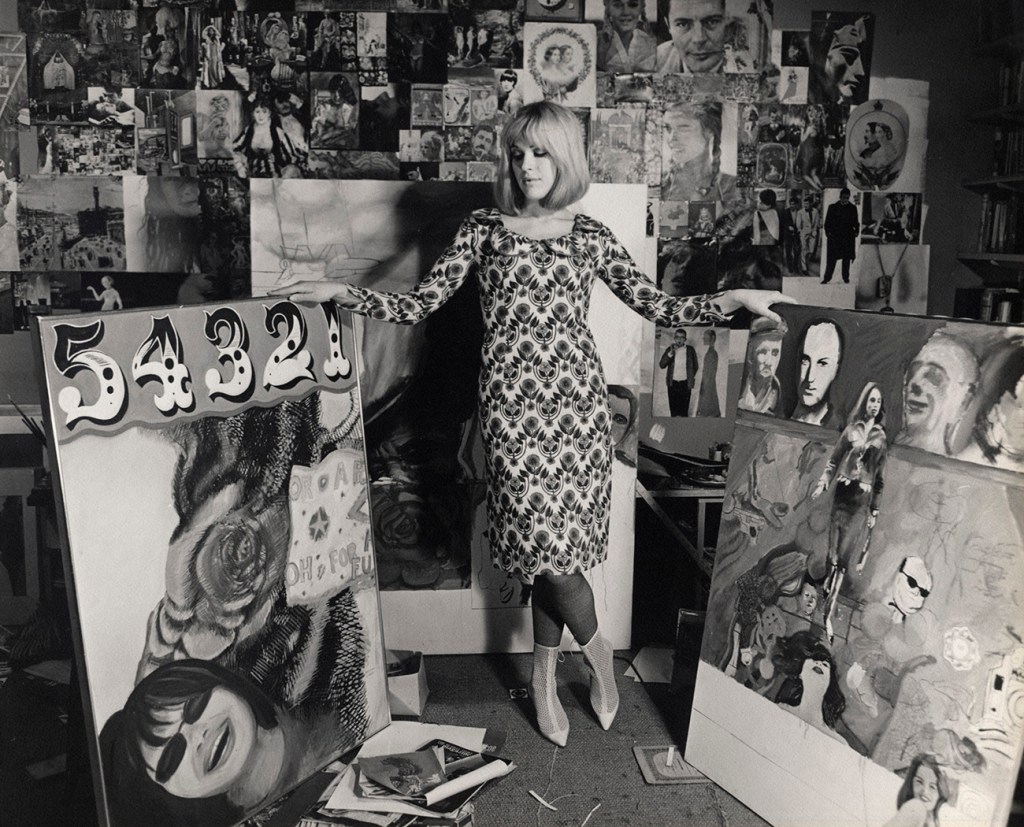
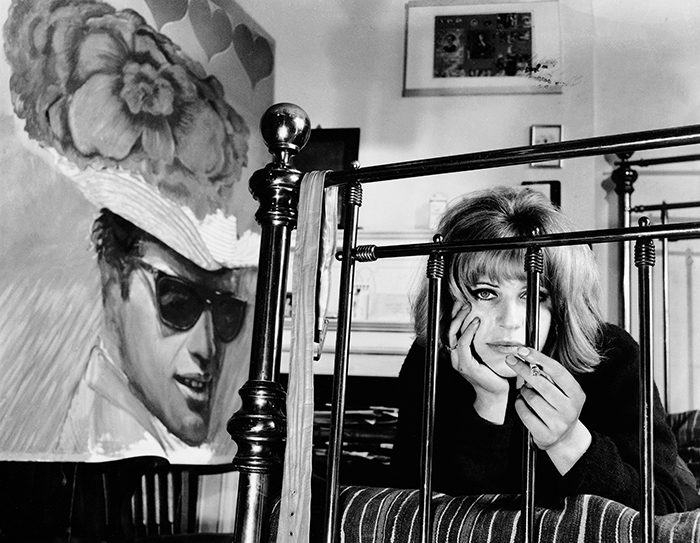
Pauline Boty, photographed by Lewis Morley, 1963. Bromide print, 29.3 x 35.6 cm. National Portrait Gallery, London
From the Yale University Press website: “Bonding over matters of taste and style, the ‘Mods’ of late 1950s London recognised in one another shared affinities for Italian-style suits, tidy haircuts, espresso bars, Vespa scooters and the latest American jazz. In this groundbreaking book, leading art historian Thomas Crow argues that the figure of the Mod exerted an influence beyond its assumed social boundaries by exemplifying the postwar metropolis in all of its excitement and complexity. Crow examines the works of key figures in the London art scene of the 1960s, including Robyn Denny, David Hockney, Pauline Boty, Bridget Riley and Bruce McLean, who shared and heightened aspects of this new and youthful urbanity. The triumphant arrival of the international counterculture forced both young Mods and established artists to reassess and regroup in novel, revealing formations. Understanding the London Mod brings with it a needed, up-to-date reckoning with the legacies of Situationism, Social Art History and Cultural Studies.”
Imprint: Paul Mellon Centre Distribution: Yale University Press Format: Hardback ISBN: 9781913107130 Dimensions: 241 x 165mm Pages: 200 Illustrations: 140 colour + b-w illustrations Price: £25
“Blake, Boty, Porter, Reeve” list of works; AIA Gallery; 30 November – 29 December 1961
Much thanks are due to Geoffrey Reeve for sending in a copy of the list of works that include those shown by Pauline Boty in the group exhibition Blake, Boty, Porter, Reeve at the AIA Gallery in London in late 1961 which have now been added to the Collages listed here on the website. Many of these works, now sadly presumed lost, made an appearance in Ken Russell’s Pop Goes the Easel, originally broadcast by the BBC as part of the Monitor series of arts programme on 25th March 1962. Ultimately it is hoped further research will enable at least some of the lost collages shown in the film to be matched to their titles.
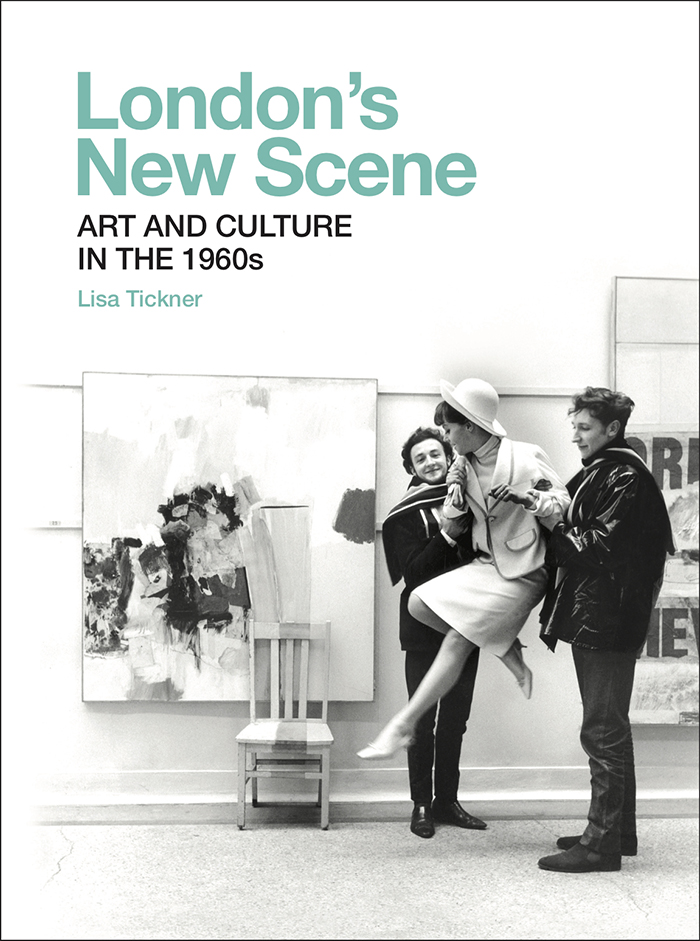
In London’s New Scene: Art and Culture in the 1960s Lisa Tickner presents a sequence of critical case studies, each of which explores a particular institution or event in the cultural life of London between 1962 and 1968. Each chapter takes a particular topic as its focus – these include Ken Russell’s film Pop Goes the Easel (1962), the opening of the Kasmin Gallery (1963), the first of the New Generation exhibitions and Painting and Sculpture of a Decade: ’54-’64 at the Whitechapel and Tate Galleries (1964), Lord Snowdon’s photographs of artists in Private View (1965), Antonioni’s London film Blow-Up (1966), and more. The book treats a film, a gallery, an exhibition, a book, a protest, as itself a ’work’: as a creative project in its own right, built from the resources to hand, subject to the pressures of the moment, comparable in its own way to the art it draws on or frames.
The illustrations include art works by David Hockney, Peter Blake, Derek Boshier, Pauline Boty, Bridget Riley, John Latham and Barry Flanagan, photographs by David Bailey, Ida Kar, Jorge Lewinski and Lord Snowdon, and a wide range of film stills, gallery installation shots, advertisements and press photography.” [information courtesy of Yale University Press]
SPECIFICATIONS Publisher: Paul Mellon Centre Distribution: Yale University Press Format: Hardback Size: 256 x 192mm Pages: 424pp Illustrations: 200/80 colour ISBN: 9781913107109 Price: £35
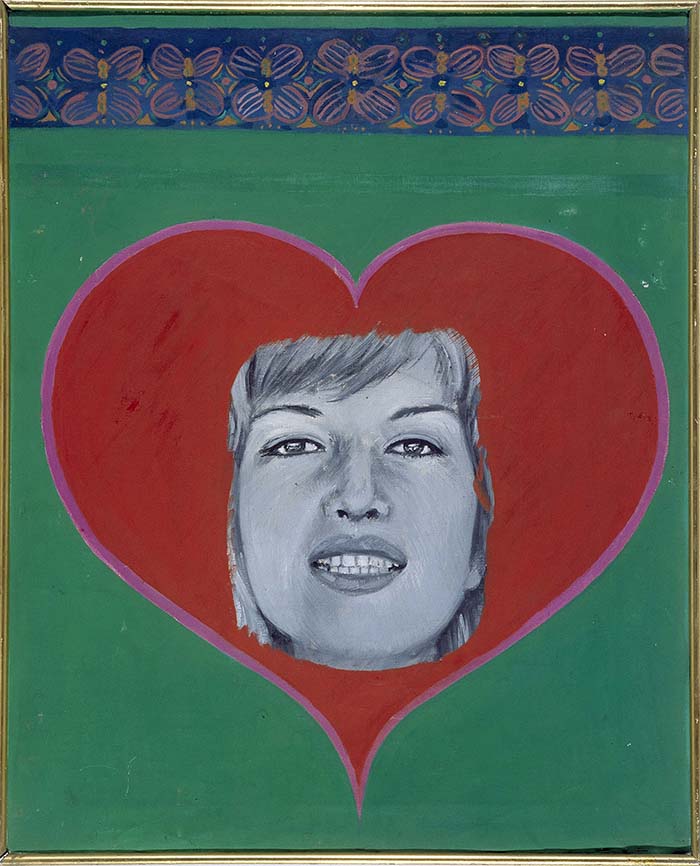
This new section lists some of the sources for titles of Pauline Boty’s paintings such as “Monica Vitti with Heart” shown below. In future the intention is to expand it further and also add information on the content she included, such as the names of individuals featured in the works. Access the new section here [link]
Paulineboty.org: What were your first impressions when you met Pauline Boty? Derek Boshier: My first impressions on meeting Pauline were the same as almost everybody. She was a very vivacious, glamorous intellectual. You know. And a lot of fun –the fact that she should have died so early aged 28… I mean, she loved life, you know – and she knew how to live it. She was just good to be around really. And that aspect of her, knowing how to live life, really fed her paintings too.
PBO: Did Pauline express her frustration at having to study stained glass instead of art as she’d originally wanted to? DB: No. Mainly because she wasn’t a complainer. Politics though – Yes – but not her personal life. The Anti-Ugly March she organised for example, which I went on. She was the figurehead for that. The point about her is that she said her mind – not only in paintings with sensuality and sexuality, but she said it with architecture. I mean she was very direct.
PBO: And your painting “Pauline Boty Goes Digital [for Pauline Boty]”. How did that come about? DB: Well it’s a very large painting that I made in 2011. You know, I always think of Pauline and what she did and I’m often reminded of her when people write to me and ask me about her or “Pop Goes the Easel” and I remember my friendship with her. I was about to start a new series of paintings about smartphones and I just thought before I do that I’d like to do a homage to Pauline as it were, just to help keep her in people’s memory really.
“Five centuries of fascinating female creativity presented in more than 400 compelling artworks and one comprehensive volume: The most extensive fully illustrated book of women artists ever published, Great Women Artists reflects an era where art made by women is more prominent than ever. In museums, galleries, and the art market, previously overlooked female artists, past and present, are now gaining recognition and value.
Featuring more than 400 artists from more than 50 countries and spanning 500 years of creativity, each artist is represented here by a key artwork and short text. This essential volume reveals a parallel yet equally engaging history of art for an age that champions a greater diversity of voices.” from the Phaidon website
SPECIFICATIONS Format: Hardback Size: 290 x 250 mm (11 3/8 x 9 7/8 in) Pages: 464 pp Illustrations: 450 illustrations ISBN: 9780714878775
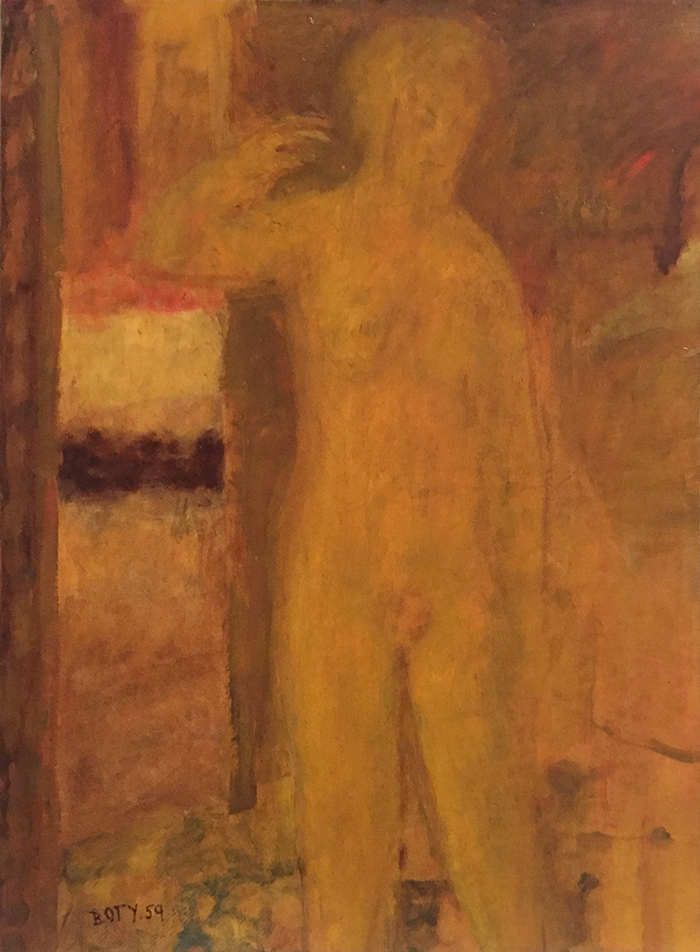
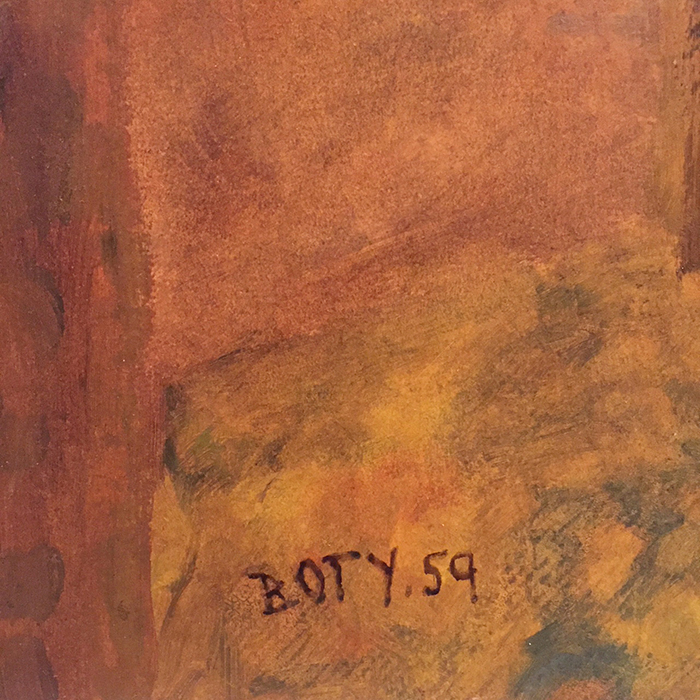
Untitled, 1959, oil on card laid on canvas. 69 x 51 cm
Dating from Boty’s time at the RCA [Royal College of Art] this untitled work has hints of the sensuality she would develop further with some of her key Pop art paintings, but with a palette of autumnal hues she rarely used again. The work is of oil on card laid on canvas and at 69 x 51 cm is large compared to most other surviving works from the period. Excitingly and very unusually it is also prominently signed and dated “Boty.59” on the front.
For further details please enquire using the Contact form or via info@paulineboty.org
A rare example of a work by Boty signed and dated on the painting itself.




 Pauline Boty