Published on 9th September, British Blonde: Women, Desire and the Image in Post-War Britain by Lynda Nead gives “a vivid account of the atmosphere and culture of postwar Britain, explored through the image of the British Blonde.” The book is published by the Paul Mellon Centre.
From the Yale University Press website: “In the 1950s, American glamour swept into a war-torn Britain as part of a broader transatlantic exchange of culture and commodities. But in this process, the American ideal of the blonde became uniquely British—Marilyn Monroe transformed into Diana Dors.
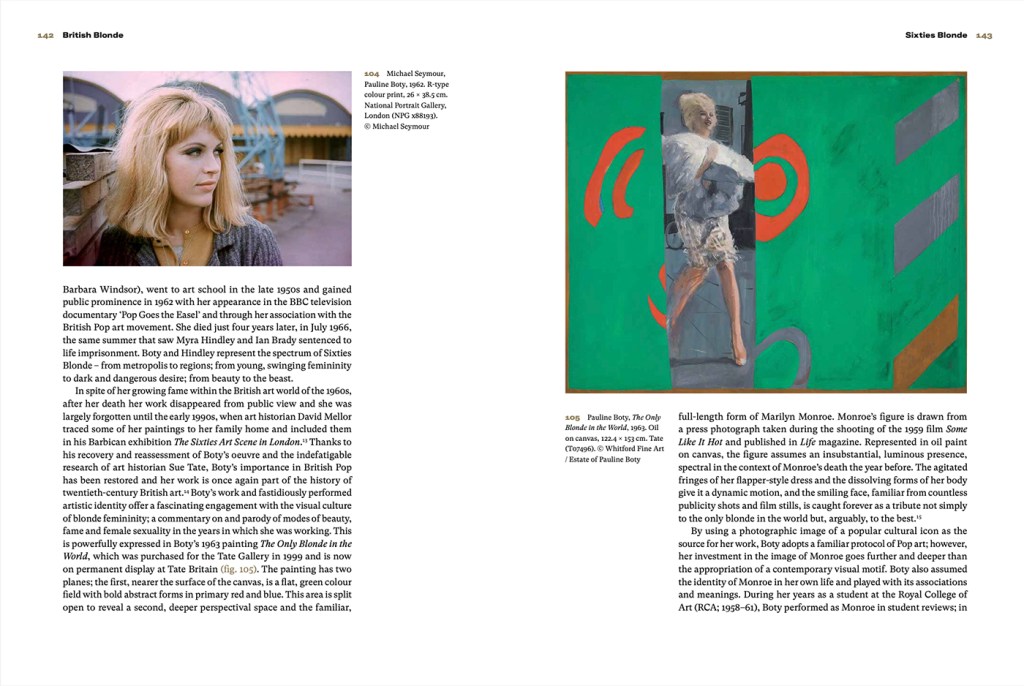
British Blonde examines postwar Britain through the changing ideals of femininity that reflected the nation’s evolving concerns in the twenty-five years following the Second World War. At its heart are four iconic women whose stories serve as prompts for broader accounts of social and culture change: Diana Dors, the quintessential blonde bombshell; Ruth Ellis, the last woman to be hanged in Britain; Barbara Windsor, star of the Carry On films; and the Pop artist Pauline Boty. Together, they reveal how class, social aspiration, and desire reshaped the cultural atmosphere of the 1950s and 1960s, complicating gender roles and visual culture in the process.
Spread from“British Blonde: Women, Desire and the Image in Post-War Britain” by Lynda Nead.
Richly illustrated with paintings, photography, film stills, and advertisements, this interdisciplinary and engagingly written study offers a highly original perspective on an era that transformed Britain’s visual and cultural identity.”
Lynda Nead will be giving a talk at the Victoria and Albert Museum on 23 October. Further information is available here: [link]
Imprint: Paul Mellon Centre Format: Hardback ISBN: 9781913107499 Dimensions: 254 x 190mm Pages: 240 Illustrations: 143 colour + b-w Price: £30 Further information on the book is available here: [link]
POP MODELS will run until 28 September at Museum MORE,Gorssel, Netherlands, who have announced the following about the exhibition:
“Advertisements, comic strips, bold colours – and women: these are defining elements of Pop Art in the 1960s and early 1970s. The role of women in Pop Art was twofold, perhaps even ambiguous. They embodied a stereotypical, desirable ideal, while also emerging as symbols of liberation. Women were at once supermodels and role models. In POP MODELS, Museum MORE becomes the first museum to put women in Pop Art at centre stage. As both muses and makers. The exhibition focuses on Europe, where the movement was often more outspoken and socially engaged than its American counterpart. This major exhibition at MORE presents an extensive selection of paintings, collages and objects by well-known artists such as Niki de Saint Phalle, Yves Klein and Richard Hamilton, alongside exciting discoveries like Ketty La Rocca and Jana Želibská.
Website for POP MODELS, Museum MORE, Gorssel, featuring Evelyne Axell’s “Ice Cream”, 1964
POP MODELS presents more than 70 works by nearly 60 artists from Belgium, Denmark, France, Germany, Great Britain, Iceland, Italy, the Netherlands, Poland, Portugal, Slovakia and Spain, from both museum and private collections. The exhibition was curated by guest curator Feico Hoekstra, in collaboration with Julia Dijkstra, Curator at Museum MORE.
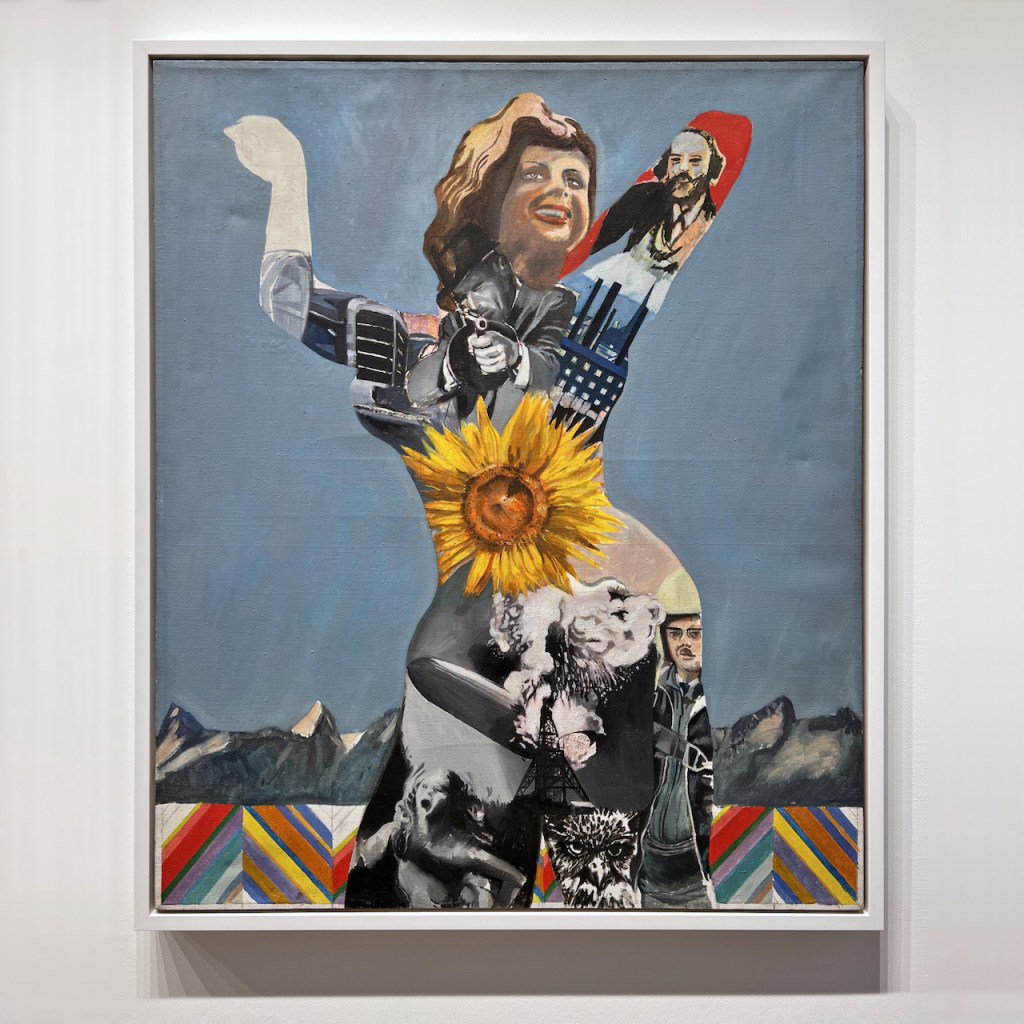
Pauline Boty, (Untitled) Sunflower Woman, 1963
The accompanying illustrated publication contains a text by Curator Julia Dijkstra and guest curator Feico Hoekstra, an essay by Maaike Meijer (Professor of Gender Studies) and Rosemarie Buikema (Professor of Art, Culture and Diversity), and Julia Dijkstra’s interview with British-American artist Jann Haworth. The book is published by WBooks and designed by Studio Mayra & Sam: 160 pages, approx. 100 images, price: € 34.95.”
Details POP MODELS Museum MORE, Hoofdstraat 28, 7213CW Gorssel, Netherlands Open Tuesday to Sunday from 10am to 5pm Tel: +31 (0) 575 760 300. Email: info@museummore.nl
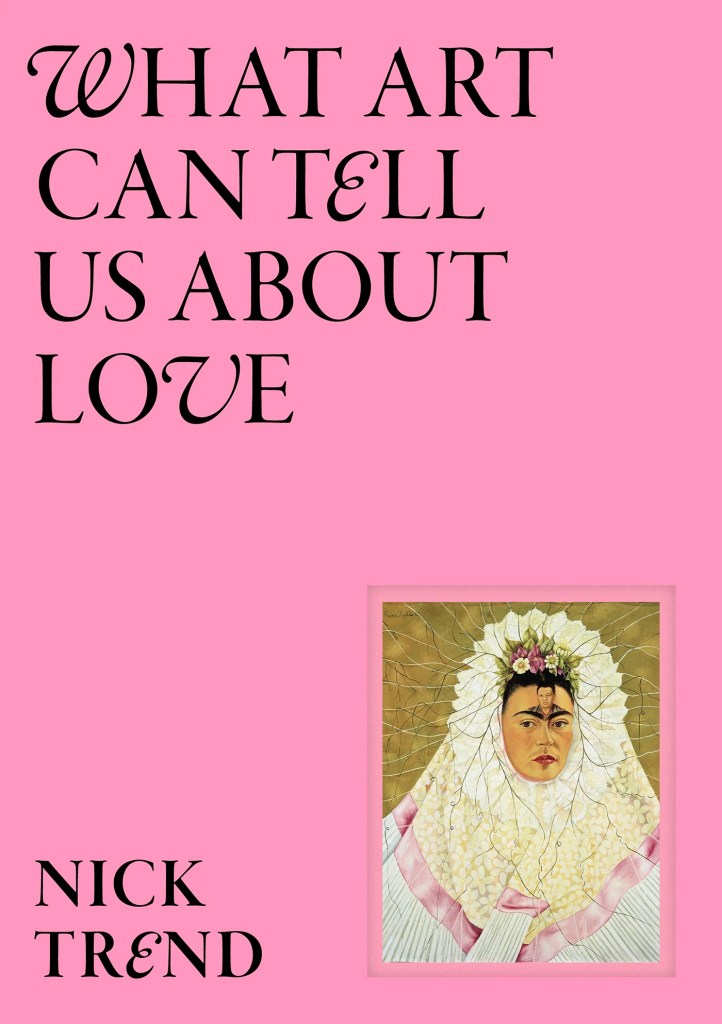
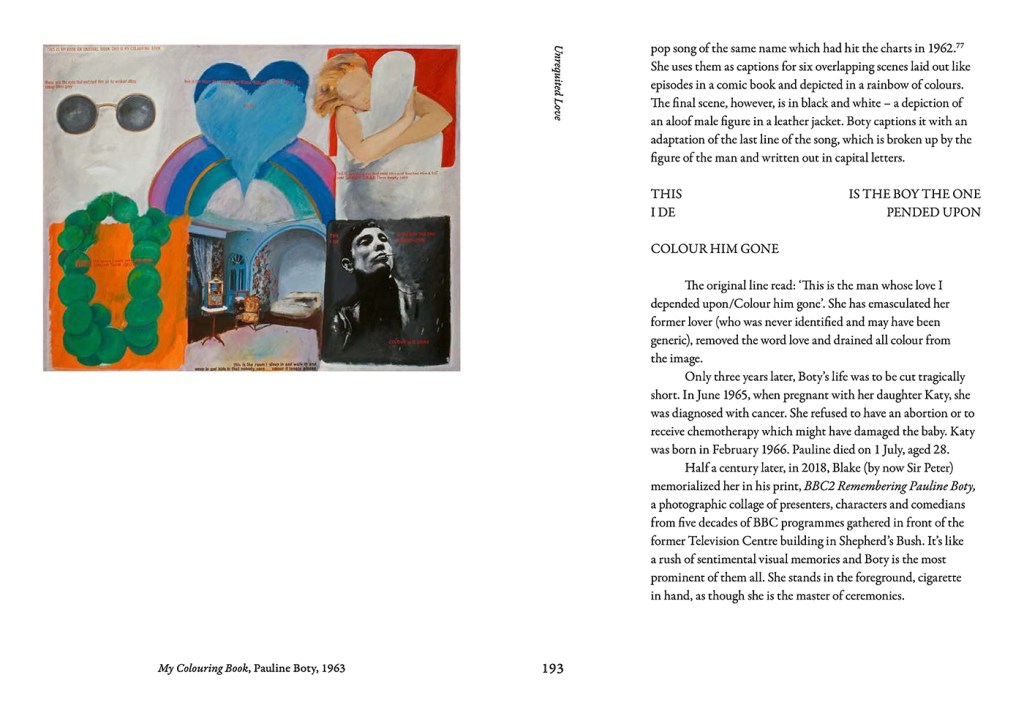
“What Art Can Tell Us About Love” by Nick Trend, published by Laurence King
Written by Nick Trend, publisher Laurence King describes the new book as follows: “Whether in the throes of passion, enduring the pain of an unrequited love or basking in the joy of a wonderfully supportive friendship, this book explores how love influenced artists and the work they created.
Beautifully illustrated with full-colour photographs of more than 70 artworks, this guide looks at how artists have painted, sketched and modelled their lovers, and how the theme of love has found its way into an array of subjects – from landscapes to still-life and self-portraits.
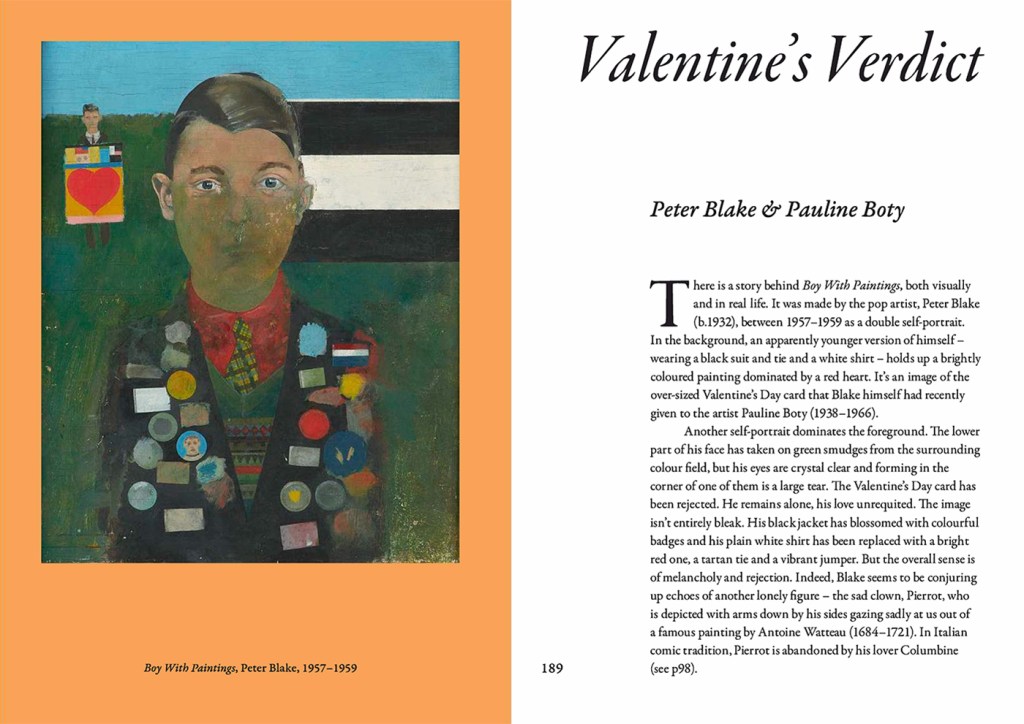
“Boy With Paintings”, 1957–1959 by Peter Blake in “What Art Can Tell Us About Love”
Other artists include: Caravaggio, Georgia O’Keefe, Sarah Bernhardt, Picasso, Rembrandt, Frida Kahlo, Tamara de Lempicka, Clifford Prince-King, Chagall, Lotte Laserstein and Niki de Saint Phalle.
Due to be published on 13 March, What Art Can Tell Us About Love is a new and accessible way to understand art, through the passions that inspired the world’s greatest masterpieces.”
Sections in the book include Enduring Love, Serial Lovers, Soul Mates, Burning Passions, Secret Affairs, Love Triangles and Unrequited Love.
“Historian Simon Schama explores how art and culture has captured the transformations of British society since 1945. Although the postwar years saw a shared optimism, expressed in the 1951 Festival of Britain, Simon discovers how a common British identity slowly fragmented as different and sometimes clashing voices emerged. Writers like Alan Sillitoe depicted working-class life with new authority, while artists like Pauline Boty reflected a new mood of sexual frankness. The evangelical Christian Festival of Light fought back against what its leaders viewed as a rising tide of filth, but nothing could stop competing voices from being heard – first on TV, in what were known as ‘open access’ programmes, and today on social media.” [from the BBC website] . The programme will be first broadcast on BBC2 at 21:00 on Wednesday 8 January and then available on iPlayer. . For further information please see [link] . With thanks to John Earls for the notification.
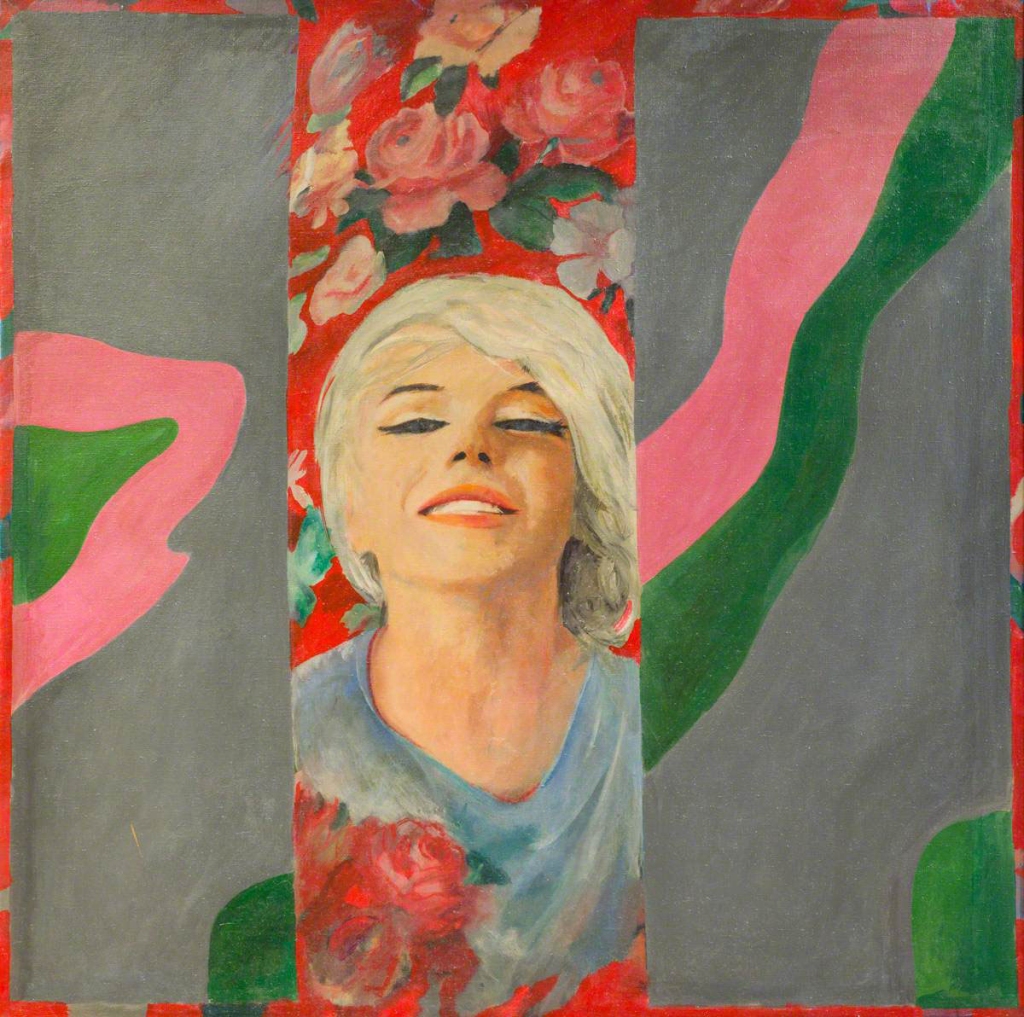
Pauline Boty’s 1962 tribute to Marilyn Monroe, “Epitaph to Something’s Gotta Give”, sold earlier this evening at Christie’s London for £1,310,500 – a new record for one of her works! This was previously held by another of her paintings from 1962, “With Love to Jean-Paul Belmondo”, which sold for £1,159,500 at Sotheby’s in 2022. . The conclusion to the sale can be seen here: [link]
Pauline Boty: A Portrait previews 30 November, 6–8PM (GMT) with the Exhibition opening 1December 2023–24 February, 2024 at Gazelli Art House, London.
Colour Her Gone; by Pauline Boty, 1962, oil on canvas
The following information is from the gallery’s website:
“Gazelli Art House celebrates the life and legacy of trailblazing British painter Pauline Boty (1938-1966) in her first posthumous solo exhibition in a decade.
Pauline Boty: A Portrait presents a remarkable opportunity to view Boty’s coveted paintings in unison, alongside a plethora of profound, archival materials. Marking the artist’s third showing at Gazelli Art House, this exhibition continues the gallery’s explorations of Boty’s pivotal and enduring artistic impact. Pauline Boty: A Portrait marks over twenty years since Pauline Boty – The Only Blonde in the World (The Mayor Gallery and Whitford Fine Art, London), and ten years since Pauline Boty: Pop Artist and Woman (Wolverhampton Art Gallery, UK, touring to Pallant House Gallery) curated by Boty specialist and author, Dr Sue Tate. Pauline Boty: A Portrait will be accompanied by a catalogue and talk.
A prominent figure in the British Pop Art movement of the 1960s, Boty waylaid convention with her fearless exploration of femininity, societal norms, politics, and popular culture. Eschewed the esteem of her male contemporaries, and customarily eclipsed by preoccupations with her beauty and the tragedy of her untimely passing, Boty’s artworks are today venerated as climacteric within the cultural discourse surrounding the period.
In the pivotal early work Self Portrait (c.1955), Boty’s instinctual painterly ability delivers an immediate, and human, intensity. Elsewhere, Untitled (Landscape with Rainbow) (1961), seen in Ken Russell’s Young British Artists documentary Pop Goes the Easel (1962), is a rare abstract created concurrently with Boty’s graduation thesis on the rendering of dreams. Here, candied forms drift about an ochre and white expanse with all the turbulence of the ‘swinging’ sixties and the social unrest on the horizon. These bold, early abstracts are, Prof. David Alan Mellor states, ‘inflected by the Cohen brothers and the emblematics of Allen Jones’s rereadings of Dealauny and Kandinsky’.
The influence that film, alongside popular music, played upon Boty’s practice is evidenced in works such as Colour Her Gone (1962), With Love to Jean-Paul Belmondo (1962), and Monica Vitti with Heart (1963). Dr. Sue Tate notes that, in press interviews the artist spoke of a “nostalgia for now” for “present day mythology”. As with myth, Boty’s paintings are laced with symbolism, where a rose may become an unapologetic allegory for female sexuality. These paintings demonstrate the abstract strewn apart and montaged with the figurative, in what would become Boty’s distinctive, painted collage technique.
From popular culture to political musings, in Cuba Si (1963) – named for Chris Marker’s 1961 film of the same name – Boty delivers a complex critique on a Postwar U.S. that denotes the artist’s “ongoing interest in Cuba”, says Author Marc Kristal. When we consider the term ‘Political Pop’ did not emerge until the 1980s, it would be by no means overzealous to suggest Boty was ahead of her time.
Yet, in many ways, Boty was so of her time, so attuned to the charge of change, and perhaps that energy is what resonates still so powerfully today. Boty’s appearances across stage, screen, and radio – including Alfie (1966), and Frank Hilton’s Day of the Prince (1963) at the Royal Court Theatre (for which Boty also designed the programme) – are here exemplified in video footage. In archival photographs within the exhibition we glimpse aspects of the artist’s vivid personality: Boty lies nude atop a chaise-longue, sits contemplative with two black cats, and mimics the actions of her painted subjects.
The significance of this exhibition is not only to draw attention to the radical artworks and ideas of Boty, and the new wave of feminism she undoubtedly heralded, but also to credit the efforts of recent years to rightfully reinstate Boty within the art historical canon.
Pauline Boty signed photo, by John Aston, 1962.
About the Artist Pauline Boty (1938-1966) was born in South London, and embarked on her artistic journey with a scholarship to Wimbledon School of Art in 1954. In 1958, she continued her studies at the Royal College of Art.
Boty’s diverse body of work, encompassing paintings, collages, and stained glass, often depicted individuals she deeply admired, celebrated her unapologetic femininity, and explored themes of female sexuality. As her career progressed, her paintings began to incorporate more overt or implicit critiques of the male-dominated societal norms she confronted, thus shedding light on the inequalities of the “man’s world” in which she navigated.
Boty’s artwork is held in the collections of: The National Portrait Gallery, London; Tate Britain, London; Wolverhampton Art Gallery, Wolverhampton; Stained Glass Museum, Ely; Pallant House Gallery, Chichester; Muzeum Sztuki Łódź, Portugal; Museu Coleção Berardo, Lisboa; Smithsonian American Art Museum, Washington.
About the Gallery Founded in 2010 by Mila Askarova, Gazelli Art House, London brings a fresh perspective to Mayfair – through championing artists from all corners of the globe. Focusing on artists at the height of their practice, the gallery showcases their work through a diverse programme of exhibitions and events. Along with its sister site in Baku, Gazelli Art House specialises in promoting art from Azerbaijan and its neighbours to introduce a greater understanding of the rich linguistic, religious and historical ties that connect these areas to international audiences. In 2015, the gallery further expanded to support artists working in digital art through its online platform: GAZELL.iO, comprising an online Residency programme, NFT drops and collaborations, a dedicated Project Space holding monthly exhibitions, and a permanently installed VR Library.
Acknowledgements For their generosity and insight, Gazelli Art House would like to thank the Estate of Pauline Boty, Wolverhampton Art Gallery, Pallant House Gallery, and other lenders to the exhibition who wish to remain anonymous.”
paulineboty.org is delighted and honoured to be contributing to this exhibition through the loan of a number of pieces of ephemera.
Exhibitiondetails Pauline Boty: A Portrait Preview: 30 November 2023 Time: 6–8pm (UK) Exhibition dates: 1 December 2023 — 24 February, 2024
Gazelli Art House, 39 Dover Street, London W1S 4NN Tel: (+44) 01353 660347
Further information is available at the Gazelli Art House website here: [link]
In a wide-ranging interview art historian, curator and author Sue Tate, who has been so instrumental in bringing Boty’s life and work to a wider audience, discusses how she first encountered Pauline Boty, met with her friends and family members, discovered lost works and went on to curate a number of exhibitions.
She also gives her thoughts on the recent rise of awareness in Boty’s life and work and lasting legacy, tells us about some exciting new projects she’s currently involved with and much more!
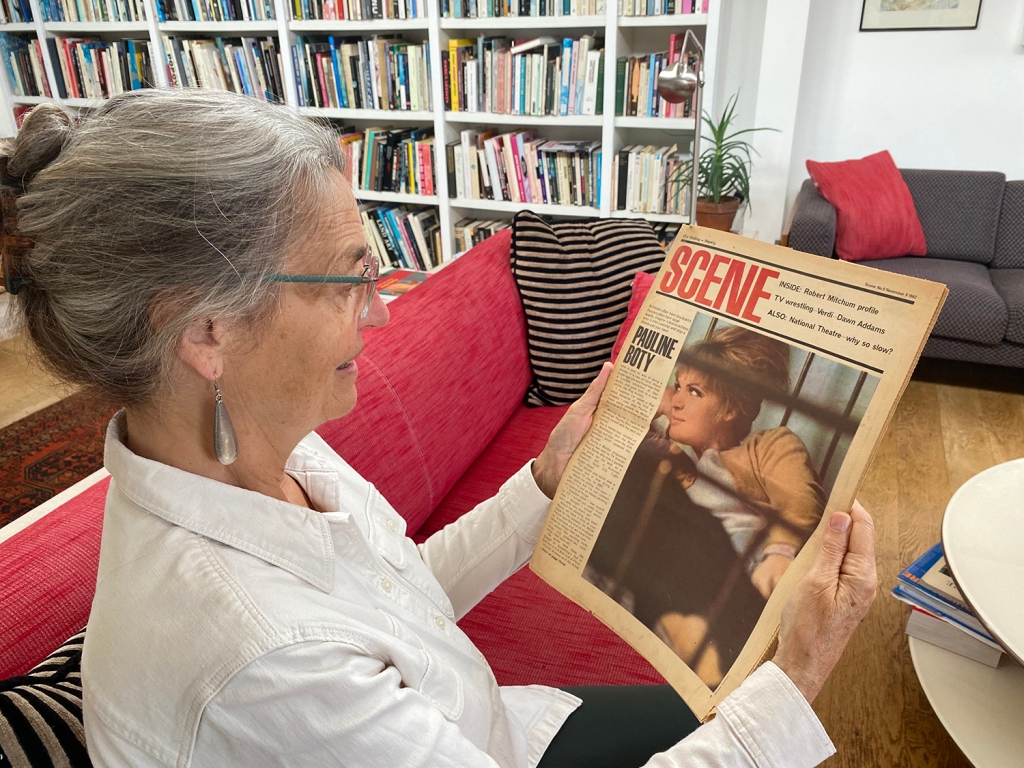
Sue Tate with her copy of “Scene” magazine from November 1962 featuring Pauline Boty on the cover, interviewed by Derek Marlowe and photographed by Michael Seymour
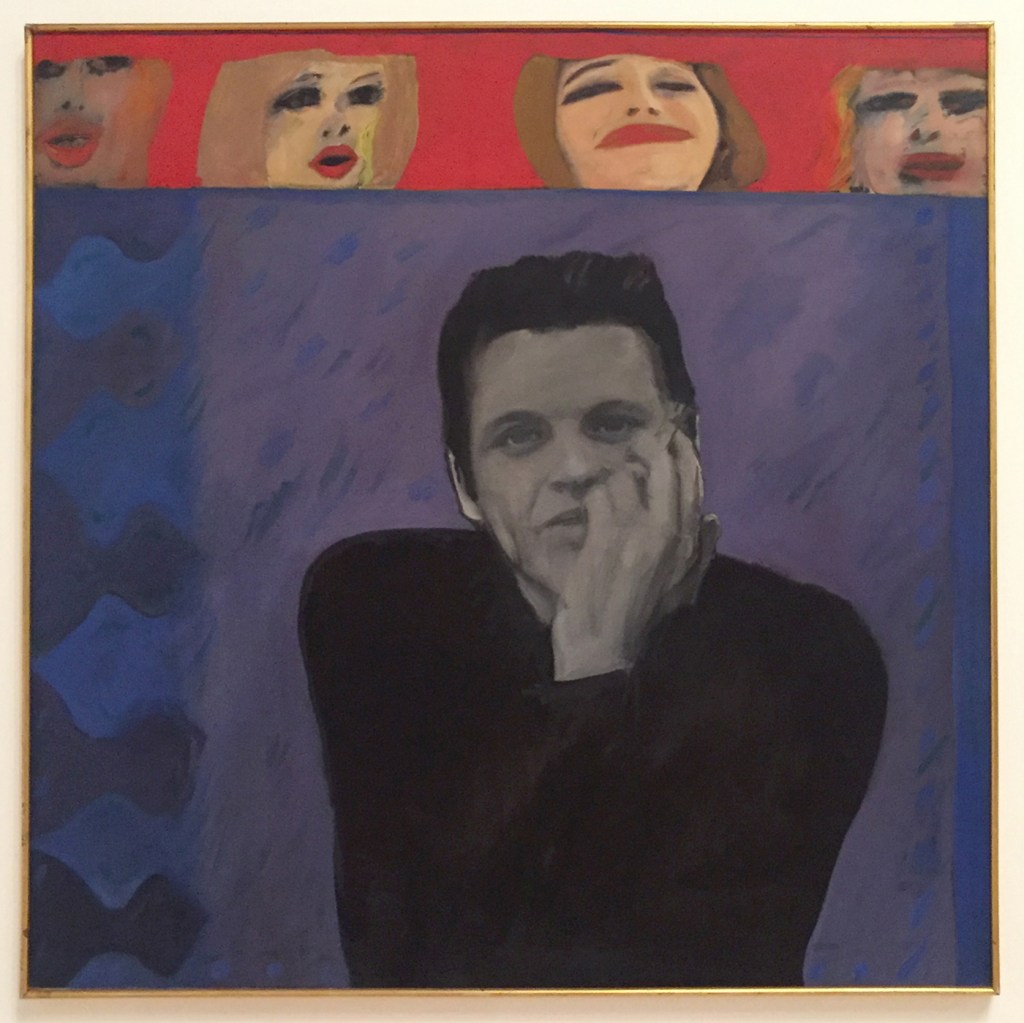
Pauline Boty, “Portrait of Derek Marlowe with Unknown Ladies”, oil on canvas, 1963
Subtitled A journey through painting and photography the exhibition runs from 13 June – 28 April 2024. The Tate website explains its subject further, as follows:
“The arrival of photography changed the course of painting forever. In this unique exhibition, we explore the dynamic relationship between the two mediums through some of the most iconic artworks of recent times.
From the expressive paintings of Pablo Picasso and Paula Rego, to striking photographs by Hiroshi Sugimoto and Jeff Wall, you will see how these two distinct mediums have shaped each other over time.
You will also discover how artists have blurred the boundaries between painting and photography, creating new and exciting forms of art, such as Pauline Boty’s pop paintings, Andy Warhol’s silkscreen prints, the photorealist works of Gerhard Richter, or Andreas Gursky’s large-scale panoramic photographs.
In an open-ended conversation between some of the greatest painters and photographers of the modern era, we explore how the brush and the lens have been used to capture moments in time.
The exhibition is realised in collaboration with the YAGEO Foundation, Taiwan. The YAGEO Foundation was founded by Taiwanese collector, entrepreneur, and philanthropist Pierre Chen in 1999.”
As well as Boty, other artists and photographers featured in Capturing The Moment include Michael Armitage, Francis Bacon, Georg Baselitz, Lisa Brice, Cecily Brown, Miriam Cahn, George Condo, Njideka Akunyili Crosby, John Currin, Peter Doig, Marlene Dumas, Jana Euler, Lucian Freud, Andreas Gursky, Richard Hamilton, David Hockney, Candida Höfer, Dorothea Lange, Louise Lawler, Marwan (Marwan Kassab-Bachi), Alice Neel, Paulina Olowska, Laura Owens, Pablo Picasso, Pushpamala N., Christina Quarles, Robert Rauschenberg, Paula Rego, Gerhard Richter, Wilhelm Sasnal, Joan Semmel, Lorna Simpson, Thomas Struth, Hiroshi Sugimoto, Salman Toor, Luc Tuymans, Jeff Wall and Andy Warhol
This is Dr. Sue Tate’s assessment of the exhibition: “Still time to catch Capturing the Moment at Tate Modern before it closes on April 28th and see how unquestionably Pauline Boty’s work holds its own in company with major figures Gerhard Richter and Andy Warhol. As you pass Richter’s Aunt Marianne, 1965, Boty’s Portrait of Derek Marlowe with Unknown Ladies will be in your sight line in the next room. With their shared use of monochrome photorealist reproduction of existing photographs yet very divergent meanings, they are in an equal dialogue. At the far end of the Pop art wall, Andy Warhol’s photo-screen printed Self Portrait echoes the Marlowe portrait. Boty, however, goes further than simple portrayal to offer a complex mix of gender critique (those poor unknown ladies) and object of desire. Wonderful to see Boty’s work taking and holding its due place in the pantheon of 20th century art.”
Further information, including how to book tickets, is available here: [link]
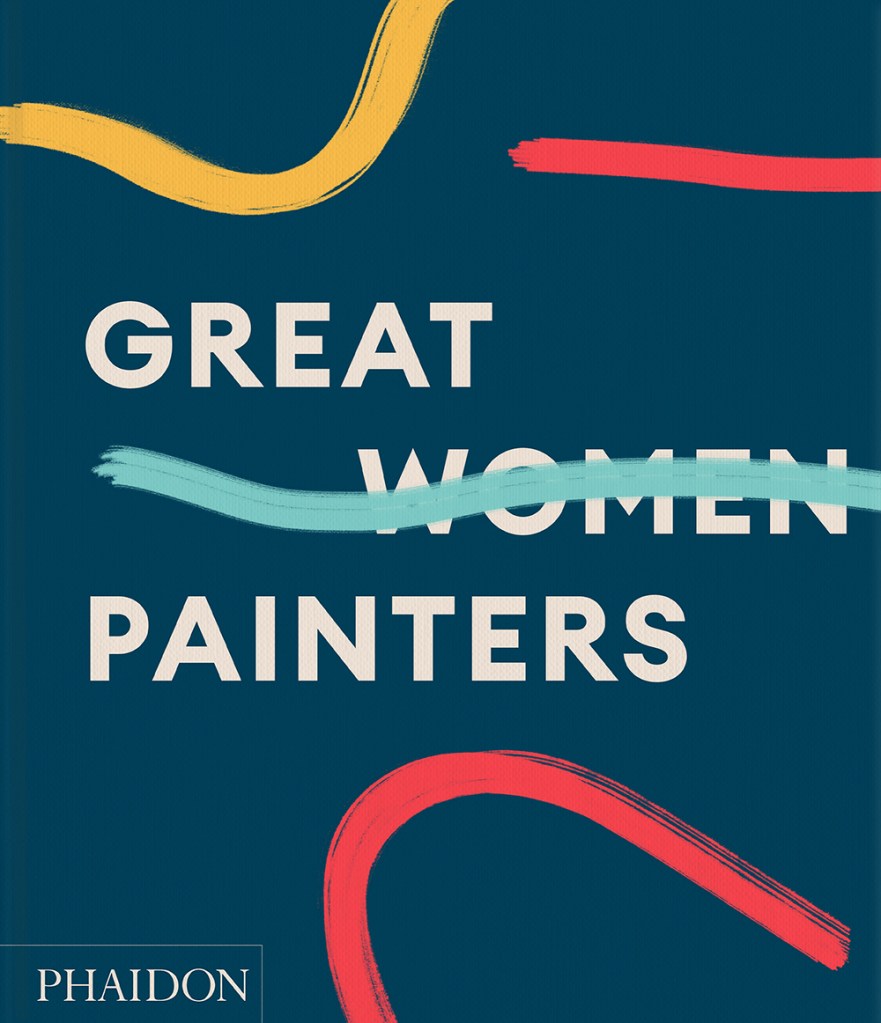
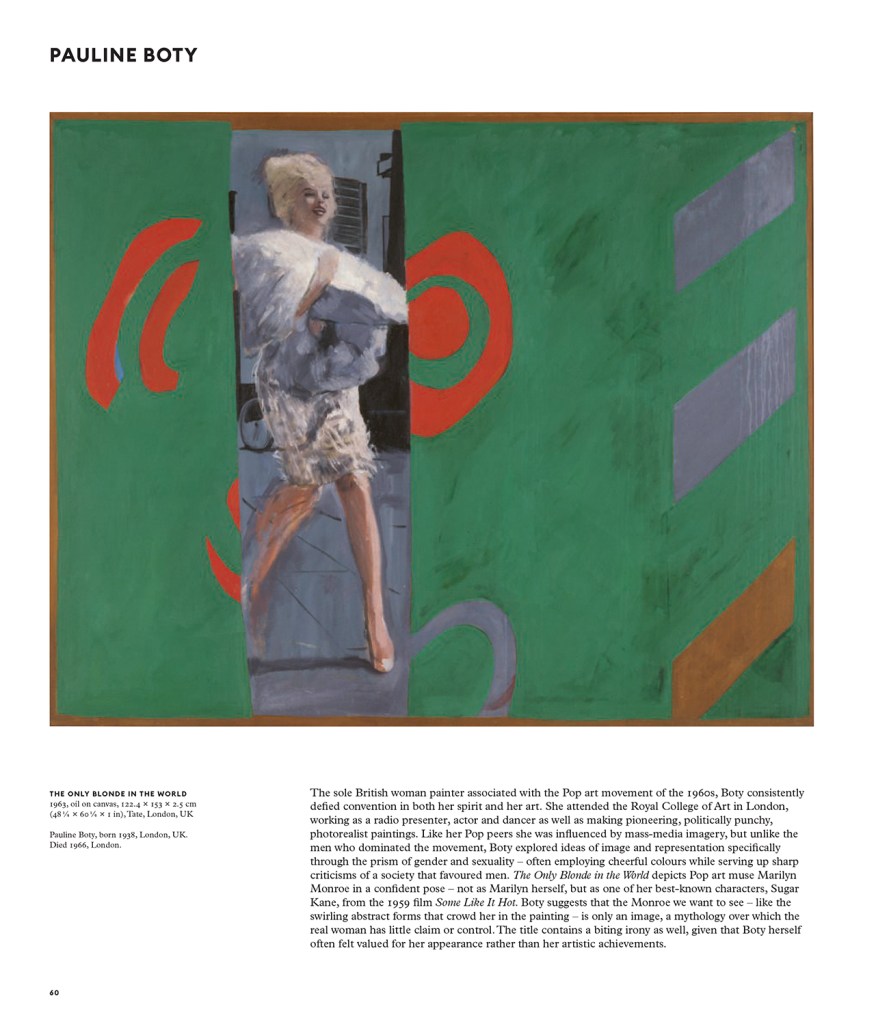
Phaidon describe the new book as follows: “Great Women Painters is groundbreaking book that reveals a richer and more varied telling of the story of painting. Featuring more than 300 artists from around the world, it includes both well-known women painters from history and today’s most exciting rising stars.
Covering nearly 500 years of skill and innovation, this survey continues Phaidon’s celebrated The Art Book series and reveals and champions a more diverse history of art, showcasing recently discovered and newly appreciated work and artists throughout its more than 300 pages and images.
Other artists featured include: Hilma af Klint, Eileen Agar, Sofonisba Anguissola, Cecily Brown, Leonora Carrington, Mary Cassatt, Elaine de Kooning, Marlene Dumas, Nicole Eisenman, Jadé Fadojutimi, Helen Frankenthaler, Artemisia Gentileschi, Maggi Hambling, Carmen Herrera, Gwen John, Frida Kahlo, Tamara de Lempicka, Agnes Martin, Joan Mitchell, Alice Neel, Plautilla Nelli, Georgia O’Keeffe, Paula Rego, Bridget Riley, Jenny Saville, Dana Schutz, Lee Krasner and Yayoi Kusama.”






 Pauline Boty