
Subscribe to continue reading
Subscribe to get access to the rest of this post and other subscriber-only content.
Pop art pioneer
Subscribe to get access to the rest of this post and other subscriber-only content.
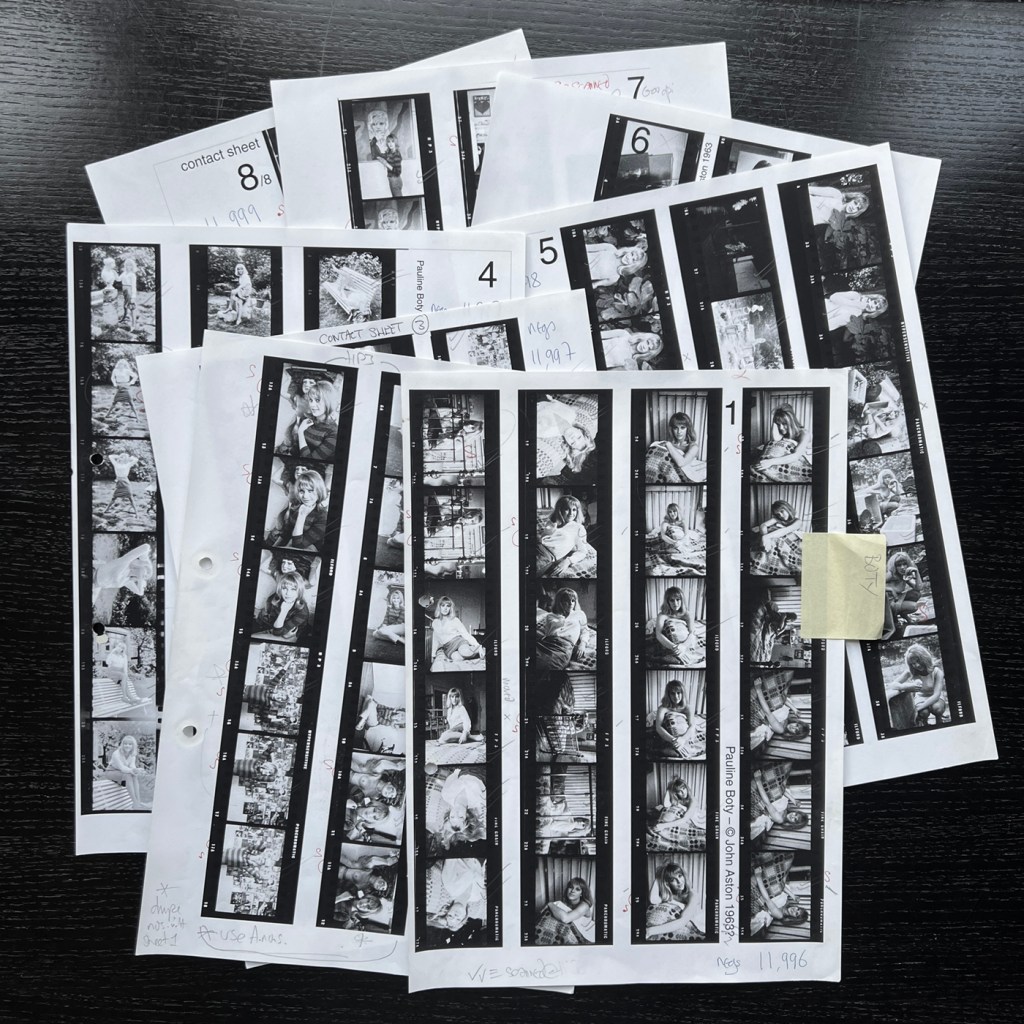
Many thanks indeed to the Estate of John Aston for agreeing to allow a selection of his portraits of Pauline Boty from the contact sheets above to be shown on the website. The images are, for the most part, unseen at large before.
John Aston trained as a photographer and graphic designer, starting his career as art editor for the magazine Photographic Review before joining the BBC Publishing division. He later became manager of the BBC’s Graphic Design Studios where his contributions included the iconic spinning globe ident. Aston photographed Boty on two occasions, his images accompanying the article “Pauline Goes Pop” in Men Only magazine’s issue of March 1963. One of his portraits of Boty is held by the National Portrait Gallery, which includes the only surviving record of her painting of Marilyn Monroe with beads, later overpainted by the work “Colour Her Gone”.
John Aston’s photos can be seen here: [link]
For information on the licensing any of these images please get in touch via the Contact form here: [link]
“Historian Simon Schama explores how art and culture has captured the transformations of British society since 1945. Although the postwar years saw a shared optimism, expressed in the 1951 Festival of Britain, Simon discovers how a common British identity slowly fragmented as different and sometimes clashing voices emerged. Writers like Alan Sillitoe depicted working-class life with new authority, while artists like Pauline Boty reflected a new mood of sexual frankness. The evangelical Christian Festival of Light fought back against what its leaders viewed as a rising tide of filth, but nothing could stop competing voices from being heard – first on TV, in what were known as ‘open access’ programmes, and today on social media.” [from the BBC website]
.
The programme will be first broadcast on BBC2 at 21:00 on Wednesday 8 January and then available on iPlayer.
.
For further information please see [link]
.
With thanks to John Earls for the notification.

The key above for the different individuals and objects assembled by Pauline Boty in one of her most important collages – the c. 1960/61 work “Picture Show” – is part of a new page recently added to the site.
Thanks to Boty’s preproduction interview for and commentary during Ken Russell’s 1962 BBC documentary “Pop Goes the Easel”, we have a record of her inspiration behind creating the collage and descriptions of some of its sources, including Franklin D. Roosevelt, Proust, Marilyn Monroe and Colette.
With most of the contents identified, it is hoped that in time the rest of the items can be also and the list on this page completed.
The new page can be accessed here: [link]
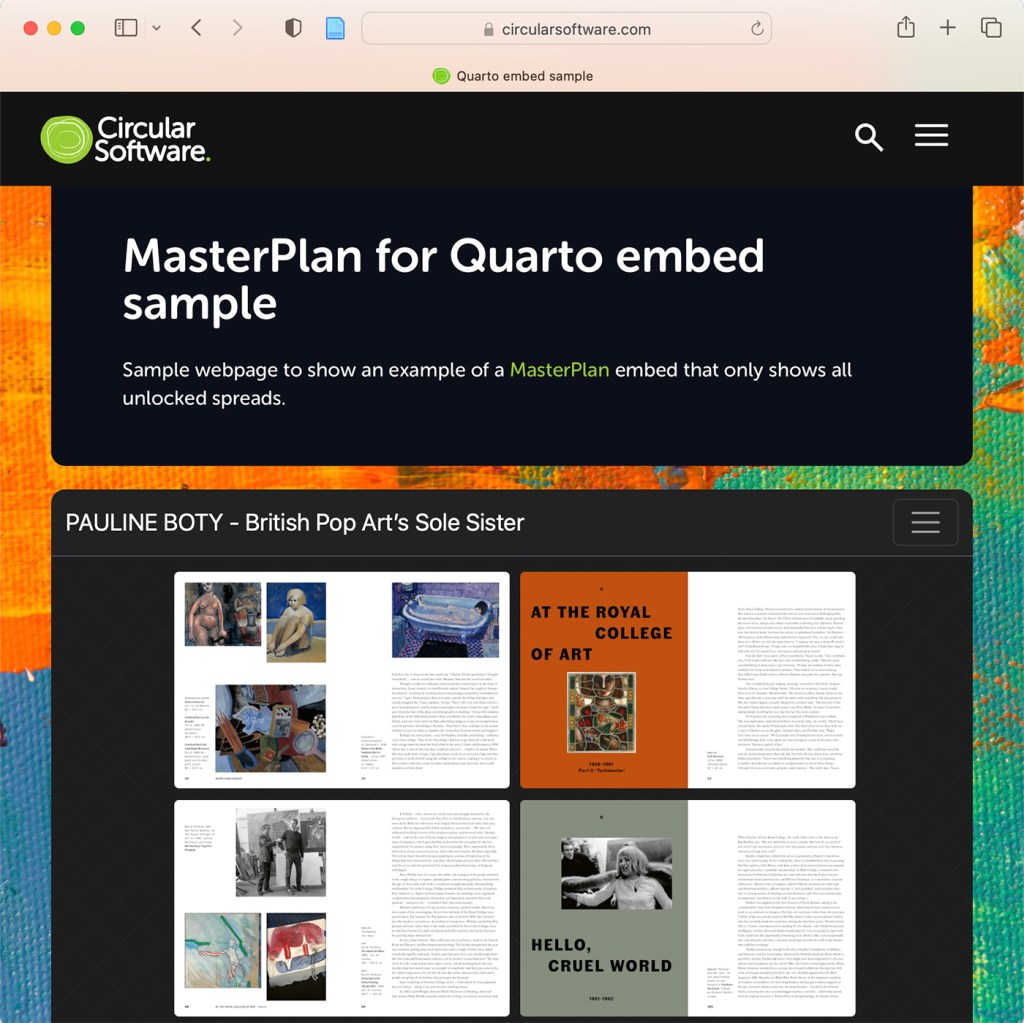
Welcome to a new feature where you can access a selection of pages from the recent biography by Marc Kristal, Pauline Boty: British Pop Art’s Sole Sister, published by Frances Lincoln, an imprint of the Quarto Group. The service is provided by MasterPlan from Circular Software.
The pages displayed will be regularly changing to give an indication of the subjects covered and images contained within the book. Above is a screenshot of the spreads as displayed, where you can view, click or swipe through, search text within, share to social media, and more.
For more details and to go to the feature, please click here: [link]
The Modern British and Irish Art Day Sale starting at 2:00pm on 17 October includes the previously unseen and unknown work Untitled (Christmas collage ’64) executed by Pauline Boty in 1964. The three works in the sale can be viewed at 8 King St, St. James’s, London SW1Y 6QT from 12 October.
The following images and details are all courtesy of Christie’s:
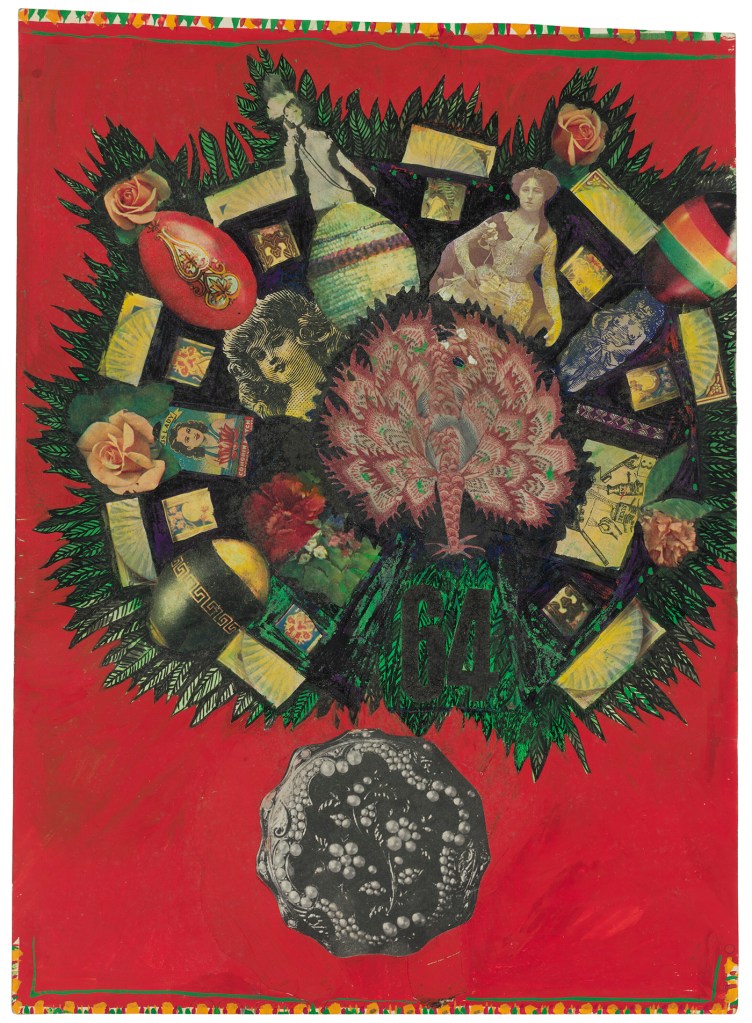
Lot 131
PAULINE BOTY (1938-1966)
Untitled (Christmas collage ’64)
gouache, ink and collage on paper
17½ x 125⁄8 in. (44.5 x 32.1 cm.) Executed in 1964
£10,000-15,000 | US$14,000-20,000 | €12,000-18,000
Provenance
The artist, and by descent to the present owner
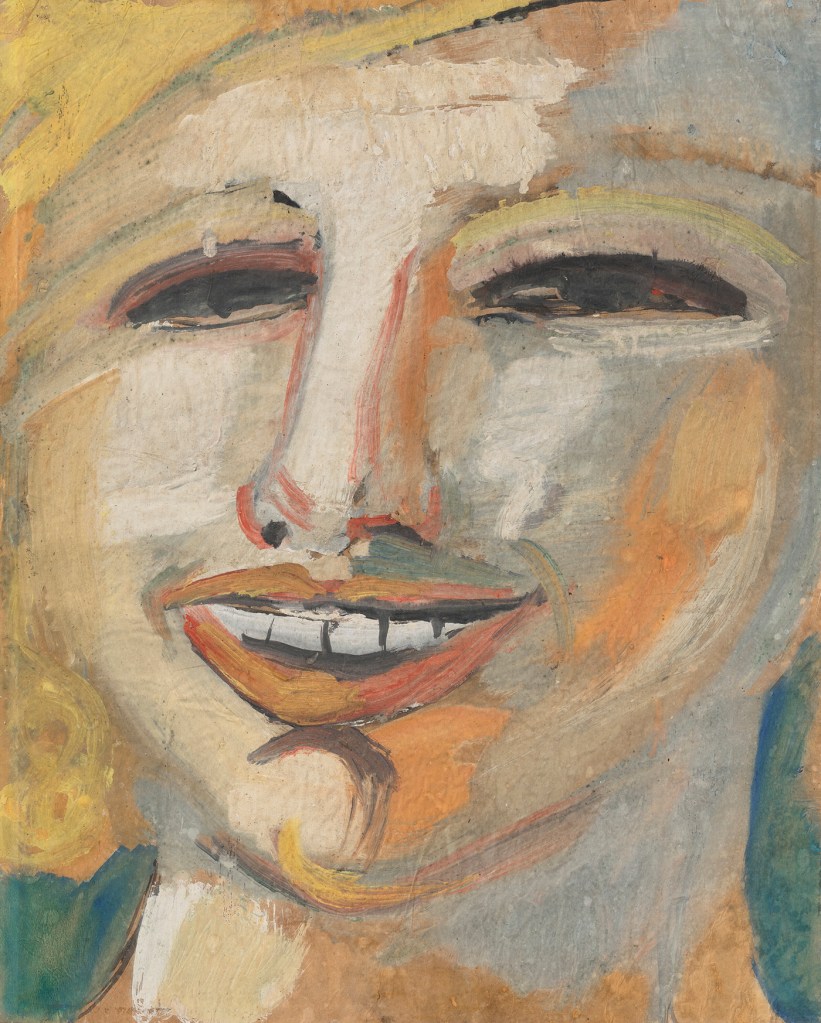
Lot 130
PAULINE BOTY (1938-1966)
Untitled (Head of a Girl)
gouache on paper
19¾ x 16 in. (50.2 x 40.7 cm.) Executed circa 1961.
£30,000-50,000 | US$40,000-65,000 | €36,000-59,000
Provenance
The artist, and by descent to the present owner
Literature
‘Advertisement for Rowney’, ARK, No. 28, London, 1961, illustrated.
S. Tate, Pauline Boty: Pop Artist and Woman, Wolverhampton, 2013, p. 43, pl. 13, as part of “Advertisement for Rowney’.
M. Kristal, Pauline Boty: British Pop Art’s Sole Sister, London, 2023, p. 106, as part of ‘Advertisement for Rowney’, illustrated.
Untitled (Head of a Girl) featured in an advertisement for Rowney artists’ materials, first published in ARK No. 28, 1961. ARK was a style and design journal published by the Royal College of Art from 1950-1978. The Rowney advert, designed by Keith Branscombe,
depicts Boty seated in front of three of her paintings, holding a card with ROWNEY printed on it. As in other photo shoots, Boty is making sure her work appears in photographs taken of her, anchoring her identity as an artist, not just a pretty face.
We are very grateful to Dr Sue Tate, author of Pauline Boty: Pop Artist and Woman, Wolverhampton, 2013, for her assistance in cataloguing this lot.

Lot 135
PAULINE BOTY (1938-1966)
Theatre Design for Irma’s Room in ‘The Balcony’ by Jean Genet
inscribed ‘The Balcony. Jean Genet/Irma’s Room’ (on a label attached to the backboard)
ink, watercolour, gouache, collage and lace on paper
12½ x 18 in. (31.8 x 45.8 cm.)
Executed in 1961.
£20,000-30,000 | US$27,000-39,000 | €24,000-35,000
Provenance
with Mayor Gallery, London.
Private collection, UK, from whom acquired by the present owner circa 2019
Exhibited
London, Mayor Gallery, Pauline Boty, June 1993, no. 10. Wolverhampton, Arts Council England, City Art Gallery, Pauline Boty: Pop Artist and Woman, June – November 2013, pp. 68, 129, exhibition not numbered, pl. 34: this exhibition travelled to Chichester, Pallant
House Gallery, November 2013 – February 2014; and Poland, Łódź, Museum Sztuki, March – May 2014.
Literature
LITERATURE
S. Tate, Pauline Boty: Pop Artist and Woman, Wolverhampton, 2013, pp. 68, 129, pl. 34.
M. Kristal, Pauline Boty: British Pop Art’s Sole Sister, London, 2023, p. 139, illustrated.
We are very grateful to Dr Sue Tate, author of Pauline Boty: Pop Artist and Woman, Wolverhampton, 2013, for her assistance in cataloguing this lot
Auction details
Modern British and Irish Art Day Sale
17 OCT 2PM BST | LIVE AUCTION 22686
Christie’s, 8 King Street, St. James’s, London SW1Y 6QT
Viewing
From 12 October
Further information is available here: [link]
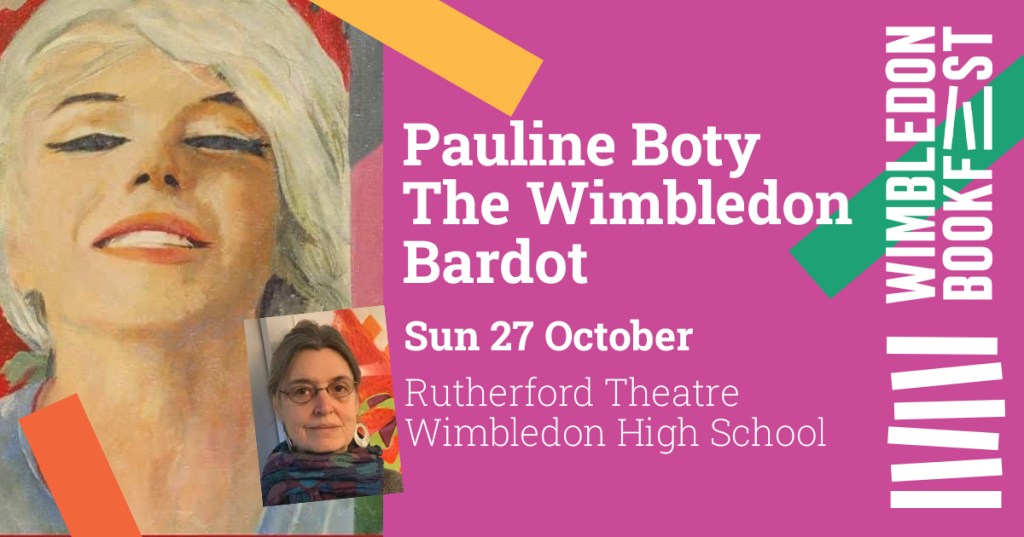
As part of their annual festival Wimbledon Bookfest have announced the a talk between Dr Sue Tate and Samira Ahmed at Rutherford Theatre, Wimbledon High School on Sunday 27 October at 3:00pm:
“An opportunity to find out more about one of the leading co-founders of the British Pop art movement, Pauline Boty.
Known as the Wimbledon Bardot, Pauline Boty was a student at Wimbledon School of Art. She smashed stereotypes and confronted issues well ahead of her time, but was not given the recognition she deserved. During her tragically short life, she produced an exciting and complex body of work, commenting on pop culture, feminism and so much of the era in which she lived. Dr Sue will be in conversation with BBC broadcaster and journalist Samira Ahmed.”
‘The life of Boty? A Molotov fusion of possibility and loss.’ – Ali Smith”
Details
Title: Pauline Boty: The Wimbledon Bardot
Location: Rutherford Theatre at Wimbledon High School
Date: Sunday 27 October 2024
Time: 3:00 pm
Tickets are £15 and can be booked here [link]

A Year in the Life of the Swinging Sixties was broadcast yesterday on Radio 4 and is now available at BBC Sounds.
.
It features clips of Pauline Boty alongside other contributors including Mary Quant and The Beatles from “The Public Ear”, a fortnightly programme on culture and entertainment she co-presented, including her thoughts on the popularity of romantic fiction! The programme ran from 6 October 1963–22 March 1964.
.
“James Peak and Joan Bakewell find some incredible hidden BBC archive from 1963. Wait! Is that The Beatles? And Mary Quant? And Morecambe & Wise?
The Public Ear was a bold new arts show, broadcast on The Light Programme in 1963, which tried to make sense of all the amazing things that were happening in London and the UK in music, art, theatre, comedy, football, politics and feminism. Travel back in time for a Year in the Life of the Swinging Sixties, for archive unheard for these last 60 years – the precise moment that Beatlemania started and the National Theatre was founded, a time when broadcasters could ask people on the street who they’d drop a bomb on. Joan Bakewell was there the first time around and puts these amazing archive finds into context.” [from the programme website]
.
The programme is available here: [link]
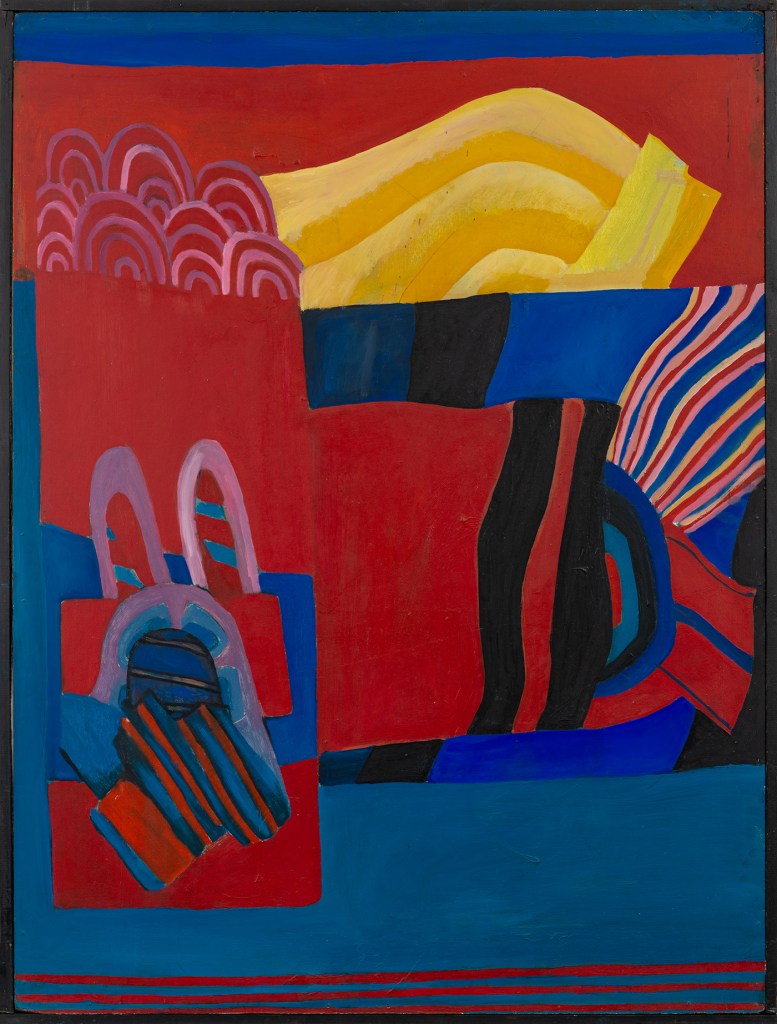
The exhibition will run from Wednesday 9 – Sunday 13 October 2024 in The Regent’s Park with over 270 galleries from more than 40 countries present. Gazelli Art House have announced the following about their attendance:
”We are thrilled to present a solo booth at Frieze Masters 2024 dedicated to the pioneering British painter Pauline Boty (1938–1966). This exclusive exhibition offers an unparalleled opportunity to engage with significant paintings from across Boty’s short but incendiary career, accompanied by an insightful selection of archival material. This presentation, Gazelli Art House’s first booth for Frieze Masters, reaffirms the gallery’s commitment to celebrating Boty’s effervescent life and her lasting impact on the art world. It follows the success of Pauline Boty: A Portrait at Gazelli Art House, London (1 December 2023–24 February 2024) which was Boty’s first posthumous solo exhibition in a decade.
A pivotal figure in the British Pop Art movement of the 1960s, Boty defied conventional norms with her fearless exploration of femininity, politics, and popular culture. Often overshadowed by her male peers during her lifetime – a life tragically cut short by her untimely death from cancer in 1966 at the age of 28 – Boty’s work is now rightfully recognised for its significant contribution to the cultural discourse of her time, and its enduring influence on subsequent generations. In the words of art historian and leading Boty expert Dr Sue Tate ‘Her work was so bold, so outrageous, so unusual, and she so shattered gender expectations that people couldn’t cope.’
Key pieces on display include Untitled (red yellow blue abstract) (1961), unseen by the public for over two decades, is one of only four abstract paintings Boty made and encapsulates the spirit and vibrancy of the ‘swinging’ sixties. Boty insightfully described the pop art movement as a “nostalgia for now”, and regularly incorporated contemporary subjects in her work, including Elvis Presley and Marilyn Monroe, and an Italian Mafia boss in the painting Big Jim Colosimo (c.1963).
Boty’s astute social commentary was bound up with the active role she herself played the cultural milieu of the era. Her illustrious career encompassed stage, screen, and radio, with standout performances in the film Alfie (1966) and Frank Hilton’s Day of the Prince (1963). Archival photographs included in the Frieze Masters presentation vividly capture Boty’s dynamic persona.
This exhibition not only honours Boty’s pioneering approach and feminist legacy but also celebrates the concerted efforts of many to secure her rightful place in art history. Gazelli Art House is proud to lead this significant moment, recognising and celebrating Pauline Boty’s impact. Boty enriched Pop Art by bringing together celebration and critique in a way no one had done before.”
.
Further information
Gazell Art House,
39 Dover Street,
London W1S 4NN
Tel: +44 207 491 8816
Gallery website: [link]
FRIEZE MASTERS
October 9 – 13 2024
The Regent’s Park
Frieze Masters website: [link]
Tickets for Frieze Masters and Frieze London are available to buy here: [link]

Three new items have been identified in the ongoing project to name those chosen by Pauline Boty for the collaged wall she assembled at her flat in west London photographed by, among others, Roger Mayne in 1964. Item #28 is of Queen Victoria and Empress Eugénie, c. 1855, #77 Emperor Napoleon III and Empress Eugénie, c. 1850s and #136 Portrait of Doge Leonardo Loredan, Giovanni Bellini, c. 1501–1502.
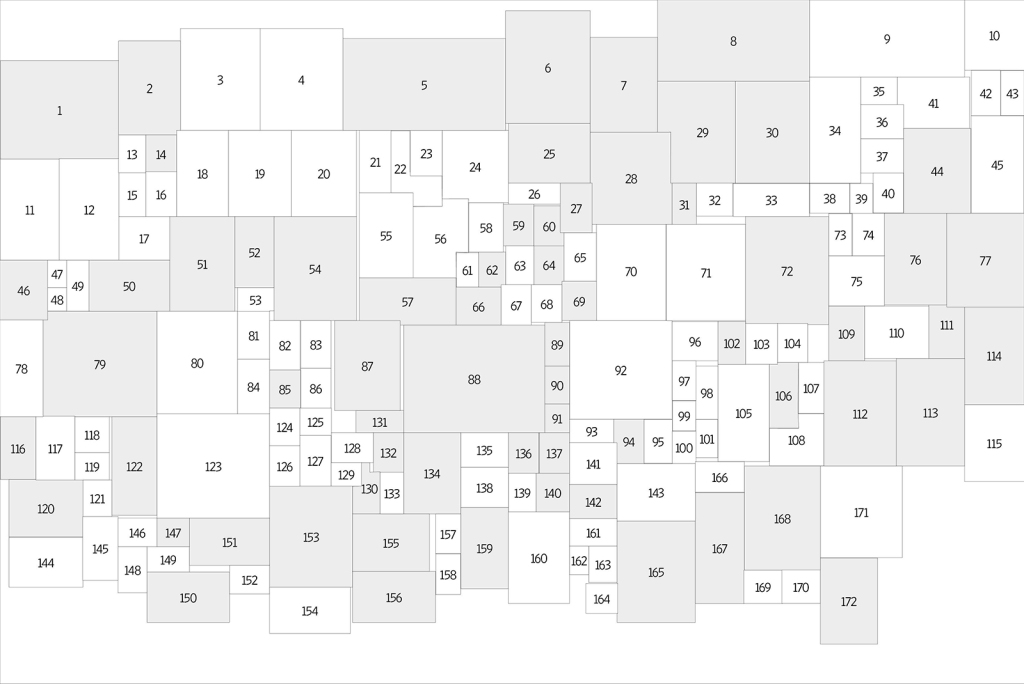
The Wikipedia entry for Eugénie de Montijo notes: “The empress strongly advocated equality for women, pressured the Ministry of National Education to give the first baccalaureate diploma to a woman and tried unsuccessfully to induce the Académie Française to elect the writer George Sand as its first female member” and “She was perhaps the last Royal personage to have a direct and immediate influence on fashion. She set the standard for contemporary fashion at a time when the luxury industries of Paris were flourishing. Eugénie’s influence on contemporary taste extended into the decorative arts.” Further information is available here: [link]
With thanks to Jasmine Allen of The Stained Glass Museum for identifying the first two detailed above and Rachel Godfrey the third.
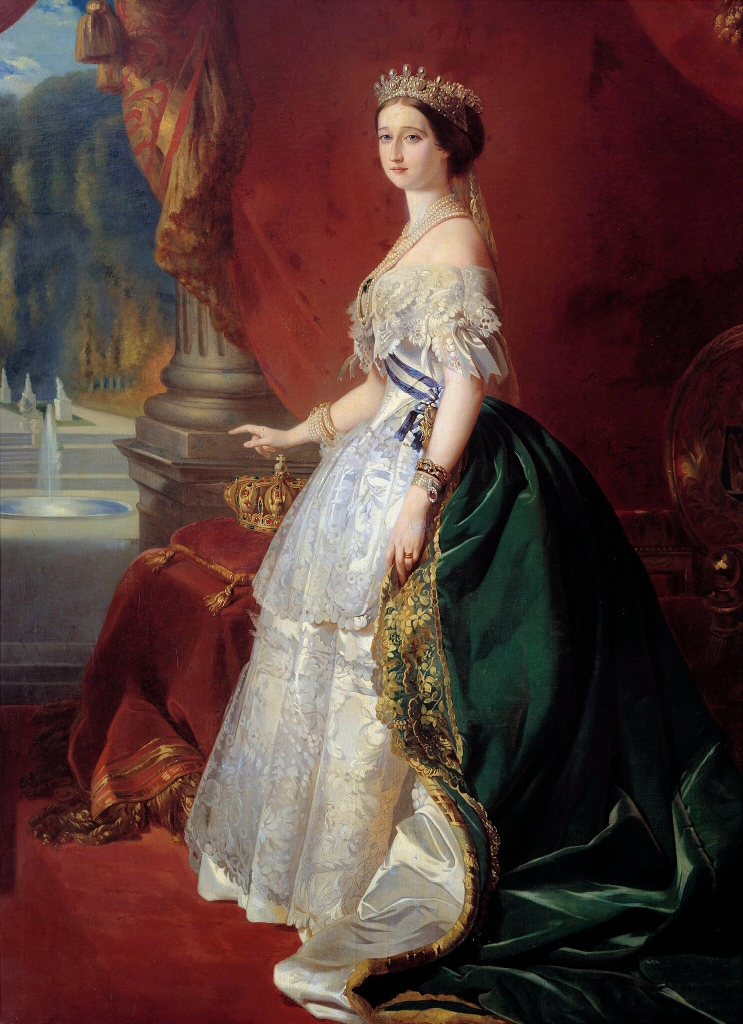
All comments, corrections, clarifications and suggestions from visitors to the site about this project would be greatly appreciated, via the Contact page here: [link]
The updated page can be accessed here: [link]
 Pauline Boty