The section on Boty concludes the programme and starts at approximately 29:10. The BBC website describes the contents of this edition as follows:
“The extraordinary work of the artist Pauline Boty (1938 – 1966) is explored by the curator of a new exhibition, Mila Askarova, and the art historian Lynda Nead.
Paddington director Paul King returns with Wonka starring Timothée Chalamet in the title role. He talks with Samira about exploring the backstory of Willy Wonka and Roald Dahl’s surprising vision for fiction’s greatest confectioner.
Front Row rounds up the best non-fiction books of 2023 with Caroline Sanderson – non-fiction books editor for The Bookseller and chair of judges for the Baillie Gifford Prize in 2022, Stephanie Merritt – critic and novelist, and John Mitchinson – cofounder of Unbound, the independent crowdfunding publisher and co-presenter of literary podcast, Backlisted.” . The programme is available to listen to here [link]
Details Presenter: Samira Ahmed Producer: Paula McGrath Released On: 6 Dec 2023 Available for over a year
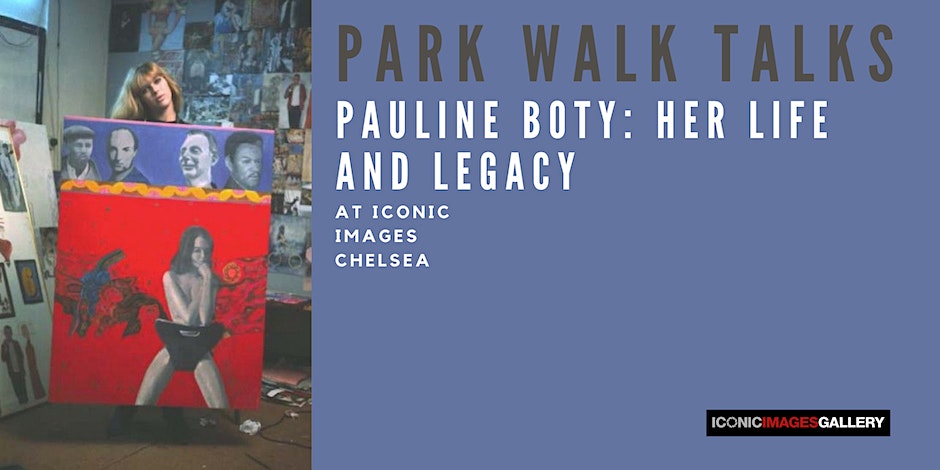
Iconic Images Chelsea have announced the following as the latest in their series of Park Walk Talks: “Artist, feminist, pioneer, provocateur – Pauline Boty was many things in her too-short life. Born into a middle-class Catholic family in 1938, she won a scholarship to the Wimbledon School of Art, attending despite her conservative father’s disapproval. A degree at the Royal College of Art followed, then the post-college years in which Boty became the only established female member of the Pop art movement of the 1960s.
After her untimely death in 1966 at the age of only 28, Boty’s paintings were stored away in a barn on her brother’s farm, and she was largely forgotten for nearly 30 years. In the 1990s her work was rediscovered, provoking new interest in her contribution to Pop art and leading to her inclusion in several group exhibitions as well as a major solo retrospective – in other words, a rewriting of Pop art history.
Join us on Thursday December 7th at the Iconic Images Gallery Chelsea for the latest in our series of Park Walk Talks, where the collector and researcher Christopher Gregory will be exploring Pauline Boty’s brief but fascinating life and legacy. A longtime aficionado of 1960s pop culture, Gregory first encountered Boty’s work in 2011, contributing to her newly published biography and establishing the authorised website paulineboty.org.”
Details Title: Park Walk Talks: Pauline Boty: Her Life and Legacy Location: Iconic Images Chelsea, 13A Park Walk, London SW10 0AJ Date: 7 December 2023 Time: 7:00 pm Tickets are free and can be booked via eventbrite here [link]
Header image shows Pauline Boty with her great lost work “Scandal ’63” photographed by Michael Ward.
Pauline Boty: A Portrait previews 30 November, 6–8PM (GMT) with the Exhibition opening 1December 2023–24 February, 2024 at Gazelli Art House, London.
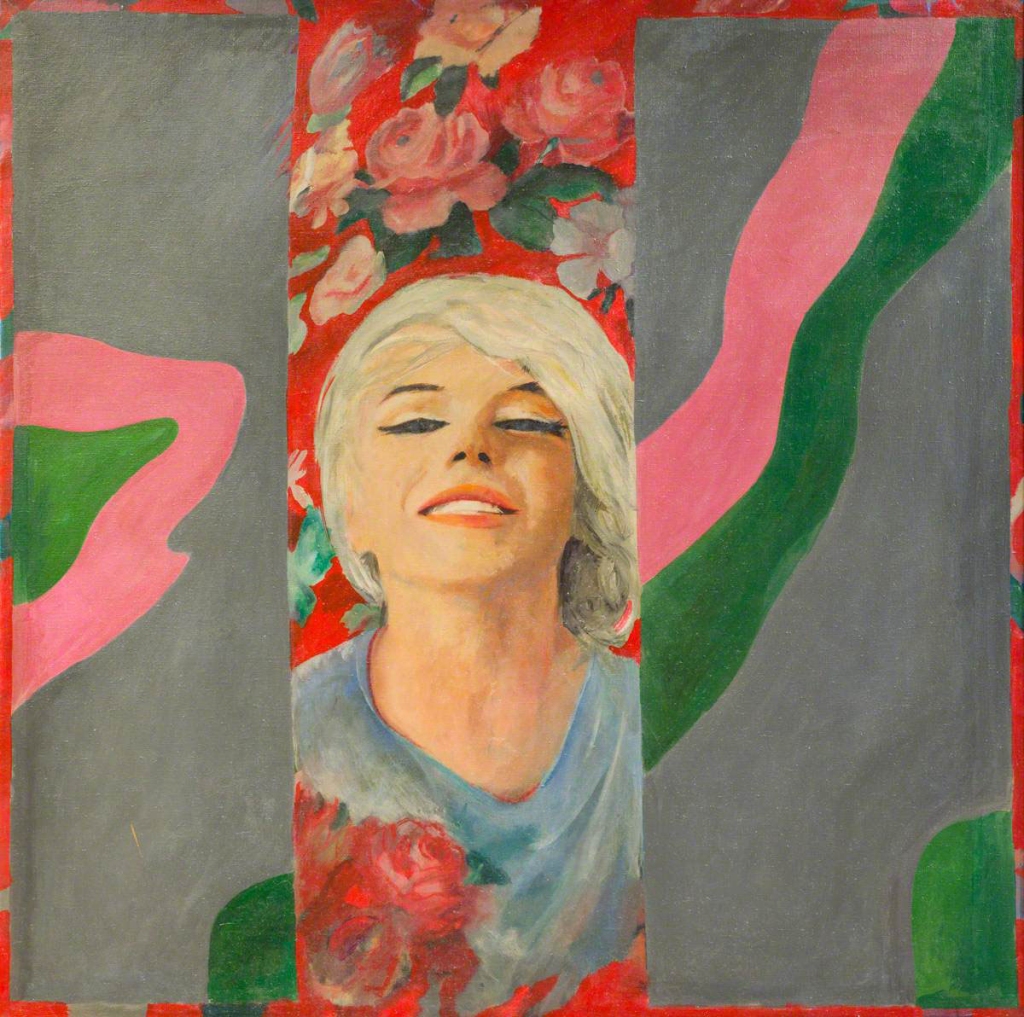
Colour Her Gone; by Pauline Boty, 1962, oil on canvas
The following information is from the gallery’s website:
“Gazelli Art House celebrates the life and legacy of trailblazing British painter Pauline Boty (1938-1966) in her first posthumous solo exhibition in a decade.
Pauline Boty: A Portrait presents a remarkable opportunity to view Boty’s coveted paintings in unison, alongside a plethora of profound, archival materials. Marking the artist’s third showing at Gazelli Art House, this exhibition continues the gallery’s explorations of Boty’s pivotal and enduring artistic impact. Pauline Boty: A Portrait marks over twenty years since Pauline Boty – The Only Blonde in the World (The Mayor Gallery and Whitford Fine Art, London), and ten years since Pauline Boty: Pop Artist and Woman (Wolverhampton Art Gallery, UK, touring to Pallant House Gallery) curated by Boty specialist and author, Dr Sue Tate. Pauline Boty: A Portrait will be accompanied by a catalogue and talk.
A prominent figure in the British Pop Art movement of the 1960s, Boty waylaid convention with her fearless exploration of femininity, societal norms, politics, and popular culture. Eschewed the esteem of her male contemporaries, and customarily eclipsed by preoccupations with her beauty and the tragedy of her untimely passing, Boty’s artworks are today venerated as climacteric within the cultural discourse surrounding the period.
In the pivotal early work Self Portrait (c.1955), Boty’s instinctual painterly ability delivers an immediate, and human, intensity. Elsewhere, Untitled (Landscape with Rainbow) (1961), seen in Ken Russell’s Young British Artists documentary Pop Goes the Easel (1962), is a rare abstract created concurrently with Boty’s graduation thesis on the rendering of dreams. Here, candied forms drift about an ochre and white expanse with all the turbulence of the ‘swinging’ sixties and the social unrest on the horizon. These bold, early abstracts are, Prof. David Alan Mellor states, ‘inflected by the Cohen brothers and the emblematics of Allen Jones’s rereadings of Dealauny and Kandinsky’.
The influence that film, alongside popular music, played upon Boty’s practice is evidenced in works such as Colour Her Gone (1962), With Love to Jean-Paul Belmondo (1962), and Monica Vitti with Heart (1963). Dr. Sue Tate notes that, in press interviews the artist spoke of a “nostalgia for now” for “present day mythology”. As with myth, Boty’s paintings are laced with symbolism, where a rose may become an unapologetic allegory for female sexuality. These paintings demonstrate the abstract strewn apart and montaged with the figurative, in what would become Boty’s distinctive, painted collage technique.
From popular culture to political musings, in Cuba Si (1963) – named for Chris Marker’s 1961 film of the same name – Boty delivers a complex critique on a Postwar U.S. that denotes the artist’s “ongoing interest in Cuba”, says Author Marc Kristal. When we consider the term ‘Political Pop’ did not emerge until the 1980s, it would be by no means overzealous to suggest Boty was ahead of her time.
Yet, in many ways, Boty was so of her time, so attuned to the charge of change, and perhaps that energy is what resonates still so powerfully today. Boty’s appearances across stage, screen, and radio – including Alfie (1966), and Frank Hilton’s Day of the Prince (1963) at the Royal Court Theatre (for which Boty also designed the programme) – are here exemplified in video footage. In archival photographs within the exhibition we glimpse aspects of the artist’s vivid personality: Boty lies nude atop a chaise-longue, sits contemplative with two black cats, and mimics the actions of her painted subjects.
The significance of this exhibition is not only to draw attention to the radical artworks and ideas of Boty, and the new wave of feminism she undoubtedly heralded, but also to credit the efforts of recent years to rightfully reinstate Boty within the art historical canon.
Pauline Boty signed photo, by John Aston, 1962.
About the Artist Pauline Boty (1938-1966) was born in South London, and embarked on her artistic journey with a scholarship to Wimbledon School of Art in 1954. In 1958, she continued her studies at the Royal College of Art.
Boty’s diverse body of work, encompassing paintings, collages, and stained glass, often depicted individuals she deeply admired, celebrated her unapologetic femininity, and explored themes of female sexuality. As her career progressed, her paintings began to incorporate more overt or implicit critiques of the male-dominated societal norms she confronted, thus shedding light on the inequalities of the “man’s world” in which she navigated.
Boty’s artwork is held in the collections of: The National Portrait Gallery, London; Tate Britain, London; Wolverhampton Art Gallery, Wolverhampton; Stained Glass Museum, Ely; Pallant House Gallery, Chichester; Muzeum Sztuki Łódź, Portugal; Museu Coleção Berardo, Lisboa; Smithsonian American Art Museum, Washington.
About the Gallery Founded in 2010 by Mila Askarova, Gazelli Art House, London brings a fresh perspective to Mayfair – through championing artists from all corners of the globe. Focusing on artists at the height of their practice, the gallery showcases their work through a diverse programme of exhibitions and events. Along with its sister site in Baku, Gazelli Art House specialises in promoting art from Azerbaijan and its neighbours to introduce a greater understanding of the rich linguistic, religious and historical ties that connect these areas to international audiences. In 2015, the gallery further expanded to support artists working in digital art through its online platform: GAZELL.iO, comprising an online Residency programme, NFT drops and collaborations, a dedicated Project Space holding monthly exhibitions, and a permanently installed VR Library.
Acknowledgements For their generosity and insight, Gazelli Art House would like to thank the Estate of Pauline Boty, Wolverhampton Art Gallery, Pallant House Gallery, and other lenders to the exhibition who wish to remain anonymous.”
paulineboty.org is delighted and honoured to be contributing to this exhibition through the loan of a number of pieces of ephemera.
Exhibitiondetails Pauline Boty: A Portrait Preview: 30 November 2023 Time: 6–8pm (UK) Exhibition dates: 1 December 2023 — 24 February, 2024
Gazelli Art House, 39 Dover Street, London W1S 4NN Tel: (+44) 01353 660347
Further information is available at the Gazelli Art House website here: [link]
The Modern British and Irish Art Day Sale starting at 1:00pm on 19 October includes Pauline Boty’s Still life with paint brushes from c. 1959-61. The work can be viewed at 8 King St, St. James’s, London SW1Y 6QT from 15 October.
The following image and details are all courtesy of Christie’s:
Details PAULINE BOTY (1938-1966) Still life with paint brushes pencil, gouache and metallic paint on card 15 ¾ x 19 ¾ in. (40.5 x 52.7 cm.) Executed circa 1959-61
Provenance Purchased by Joe Boyd at the 1993 exhibition. His sale; Christie’s, South Kensington, 12 December 2014, lot 97, where purchased by the present owner
Literature S. Tate, Pauline Boty: Pop Artist and Woman, Wolverhampton, 2013, pp. 28, 128, pl. 7.
Exhibited London, Mayor Gallery, Pauline Boty, May – June 1993, no. 8. London, Whitford Fine Art and Mayor Gallery, Pauline Boty: The Only Blond in the World, November – December 1998, exhibition not numbered. Wolverhampton, Art Gallery, Pauline Boty: Pop Artist and Woman, June – November 2013, exhibition not numbered
Estimate GBP 25,000 – GBP 35,000
Auction details LOT 127 Modern British and Irish Art Day Sale 19 OCT 1PM BST | LIVE AUCTION 21951
Note We are very grateful to Dr Sue Tate for her assistance in cataloguing this lot
Pauline Boty, Untitled (Paris, dreaming woman and rose), 1961
Organised by The Stained Glass Museum, the online talk from Dr Sue Tate – Pauline Boty: Collage into Stained Glass – a Pop Art Approach – will take place on Thursday 2 November 2023 at 7pm (UK).
“Pauline Boty was one of the founders of British Pop; a talented and ambitious artist, and also a charismatic player on the swinging London scene. She produced a vibrant body of work in stained glass, collage and paint that both challenges and enriches Pop from a female perspective. This talk will focus on the stained glass work she made while at the Royal College of Art (including the piece held at the Ely Stained Glass Museum). It will explore the relationship between the mediums of collage and stained glass and place both in the wider context of Boty’s whole oeuvre and contribution to Pop.
Dr Sue Tate is a freelance art historian with a specific interest in women artists. She is the leading expert on Pauline Boty, British Pop Artist, 1938-66, having curated exhibitions of her oeuvre, lecturing on it in the UK, Europe and the USA, and publishing essays, book chapters and the definitive book on the artist: Pauline Boty: Pop Artist and Woman.
This is an online event held via Zoom webinars. A Zoom link will be circulated in the week leading up to the event.” [information from The Stained Glass Museum website]
Details Date: 18 October 2023 Time: 7pm (UK) Price: General £6.50, Friends of the SGM £5.00
Further information, including how to buy tickets, is available here: [link]
The Stained Glass Museum, South Triforium, Ely Cathedral, Ely, Cambridgeshire, CB7 4DL (+44) 01353 660347
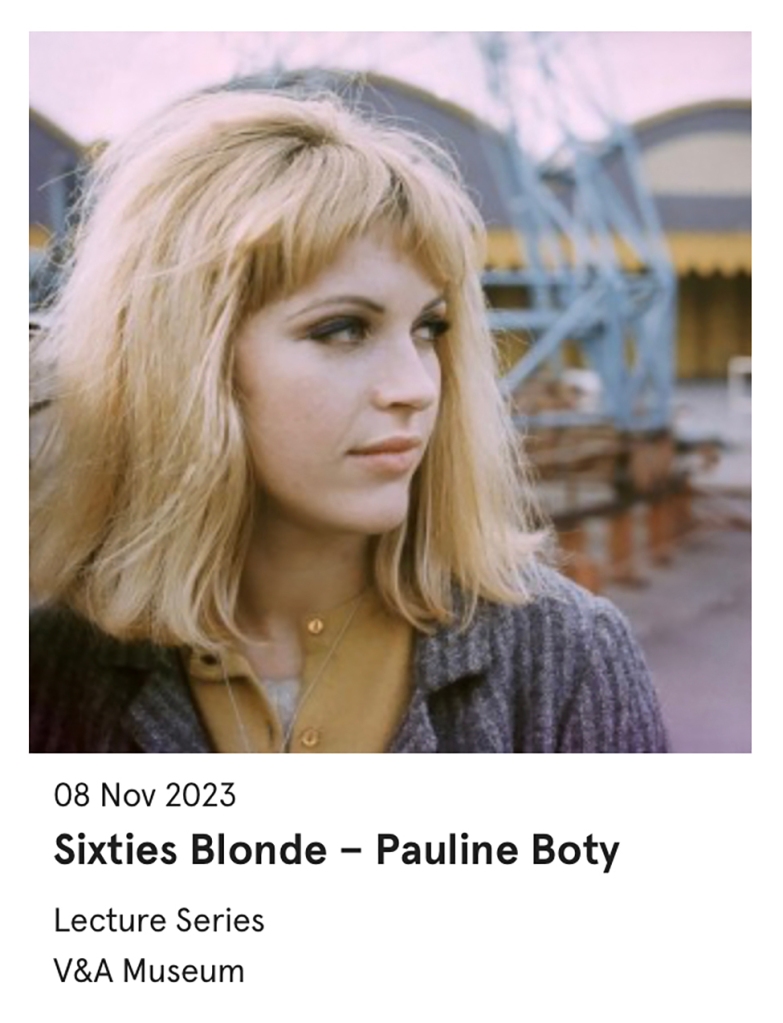
The talk by Professor Lynda Nead will be held as part of the Mellon Lecture Series British Blonde: Women, Desire and the Image in Post-War Britain at the Gorvy Lecture Theatre, V&A Museum, from 6:30 – 7:30 pm on 8 November 2023.
The Paul Mellon Centre website has the following information on the series: “These lectures look at post-war Britain through changing styles of femininity that expressed many of the key concerns of the nation in the twenty-five years that followed the end of the Second World War. In the 1950s, American glamour was exported to a war-torn Britain, part of a larger passage of commodities that crossed the Atlantic in this period. In the process, however, something important happened, blonde became British, Marilyn Monroe became Diana Dors. The lectures capture this process as it evolved through the 1950s and 1960s and was subjected to the changing definitions of class, social aspiration and desire that shaped the post-war nation.
Drawing on a wide range of visual media and forms including painting, film, photography, advertising and fashion the lectures offer a new history of the art and culture of post-war Britain.
In the 1960s a new kind of blonde femininity emerged. Part of a new regional and class configuration and a changing moral and sexual environment, Sixties Blonde was described as natural, energetic, impulsive and self-sufficient; an urban figure who embodied modernity and was a staple of fashion photography and sixties cinema. The work of British pop artist, Pauline Boty, expresses many of the tensions for young women in the 1960s, the possibilities and constraints, liberation and collusion. This lecture considers Boty’s work and her image in the context of shifts in morality and sexuality in the period and the broader culture of film and photography in these years.
The Paul Mellon lectures, which are named in honour of the philanthropist and collector of British art, Paul Mellon (1907-1999), were inaugurated in 1994 when Professor Francis Haskell delivered the first series at the Gallery in London. The model for the series was the Andrew W. Mellon lectures, established in 1949 in honour of Paul Mellon’s father, the founder of the National Gallery of Art in Washington, DC. The lectures are biennial, given by a distinguished historian of British art.
About the speaker Lynda Nead is Pevsner Professor of History of Art at Birkbeck, University of London. She has published widely on a range of art historical subjects and particularly on the history of British visual culture in the nineteenth and twentieth centuries. Her most recent book is The Tiger in the Smoke: Art and Culture in Post-War Britain (Published for the Paul Mellon Centre for Studies in British Art by Yale University Press). She has a number of advisory roles in national art museums and galleries and is a Trustee of the Holburne Museum and of Campaign for the Arts. She is currently writing a book called British Blonde: Women, Desire and the Image in Post-War Britain.”
Details Ticket price: £5 per lecture Location: Gorvy Lecture Theatre, V&A Museum, Victoria & Albert Museum,, Cromwell Road, London SW7 2RL Date: 8 November 2023 Time: 6:30 – 7:30 pm Tickets can be booked via eventbrite here [link]
Image credit: Pauline Boty by Michael Seymour, 1962.
“Pauline Boty: British Pop Art’s Sole Sister” by Marc Kristal, published by Frances Lincoln. Photo by Lewis Morley.
“Pauline Boty: British Pop Art’s Sole Sister” by Marc Kristal will be published by Frances Lincoln on 19th October.
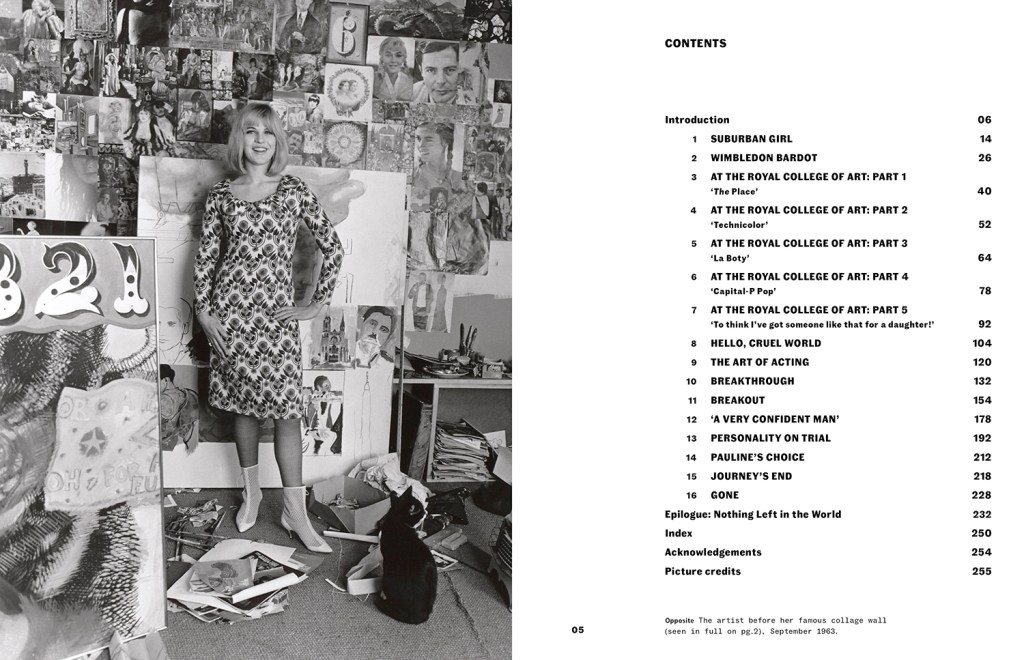
From the publisher’s website: “Pauline Boty (1938 –1966) was a founding member of the British Pop Art movement and one of its very few women. She attended London’s Royal College of Art at a watershed moment when its students included David Hockney, Peter Blake, R.B. Kitaj and Allen Jones. Dying tragically young at the age of 28, she is now seen as central to British Pop Art and an icon of Sixties culture.
As well as her work as an artist, she appeared on the stage, TV and in film (including alongside Michael Caine in Alfie) and was a regular contributor on BBC radio. She was photographed by David Bailey and other society photographers and became a key player in 1960s London’s golden age.
Outspoken, provocative and charismatic, she refused to accept the oppositions between sexual woman and serious artist, between celebration and critique, between high and low culture. Observer and participant, feminist and hedonist, subject and object, Boty’s ‘double vision’ was decades ahead of its time, and prefigured a diversity of artists—everyone from Cindy Sherman to Madonna.
Having been largely forgotten after her death, her reputation has been growing steadily since the rediscovery and exhibition of her works in the early 1990s. As well as cropping up regularly in various books, documentaries and newspaper articles since then, she features as a central character in Ali Smith’s novel Autumn (2016) and one of her works sold for $1.4m at auction in June 2022.
After seeing her work at an auction in 2013, author Marc Kristal has spent almost ten years researching her life, interviewing the people who knew her and delving into archives and libraries.”
Contents page from the book with at left a portrait of Boty by Lewis Morley taken in September 1963.
Marc Kristal is an author, screenwriter, filmmaker, editor, and journalist. He has authored, co-written or contributed to more than forty books, notably Re:Crafted: Interpretations of Craft in Contemporary Architecture and Interiors (2010), Immaterial World: Transparency in Architecture (2011), and The New Old House: Historic and Modern Architecture Combined (2017). His writing has appeared in numerous publications, including the New York Times, Architectural Digest, Wallpaper, Metropolis, and Elle Décor.
He has also written films about contemporary and modern artists, notably Cindy Sherman and Mark Rothko. He is a two-time MacDowell fellow.
Publisher: Frances Lincoln Format: Hardback ISBN: 9780711287549 Dimensions: 9.65 x 7.48 in / 245 x 190 mm Pages: 256 Price: £25.00 / $40.00
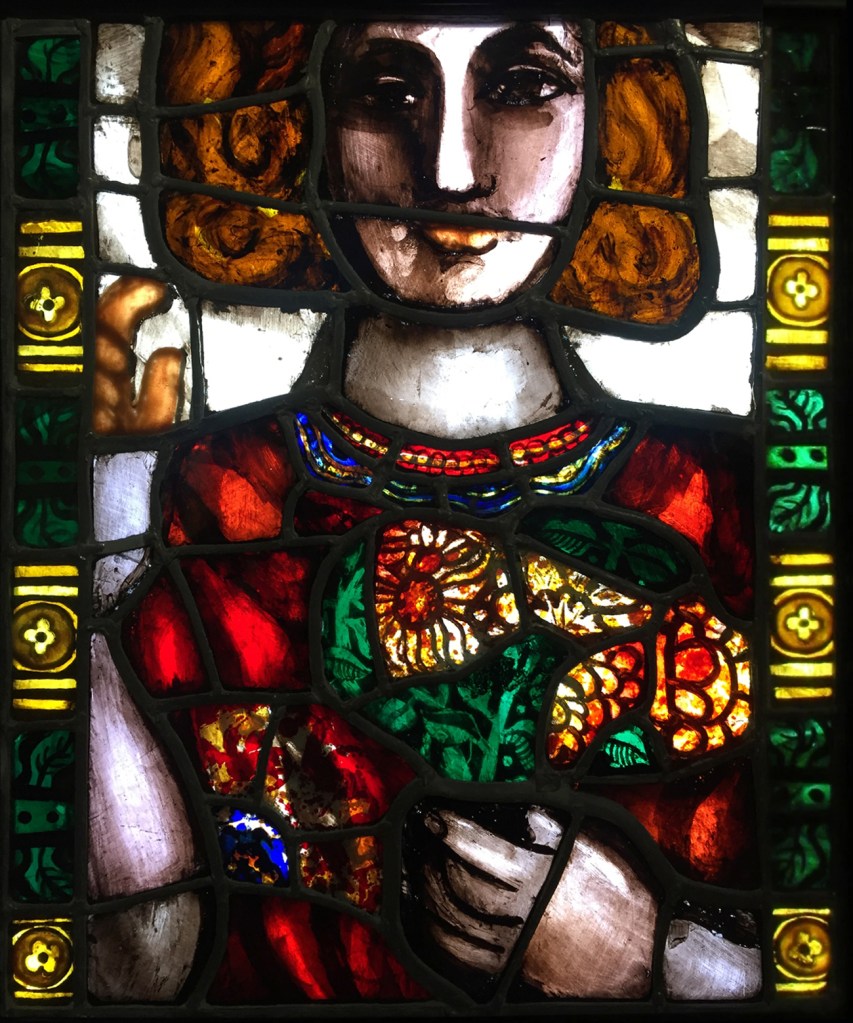
Pauline Boty’s stained glass “Self Portrait”, c.1958 at the National Portrait Gallery. Photo by paulineboty.org
The National Portrait Gallery, closed for extensive refurbishment since 2020, has confirmed that Pauline Boty’s c.1958 stained glass work “Self Portrait” will be on display (in Room 28) when reopening to visitors on 22 June.
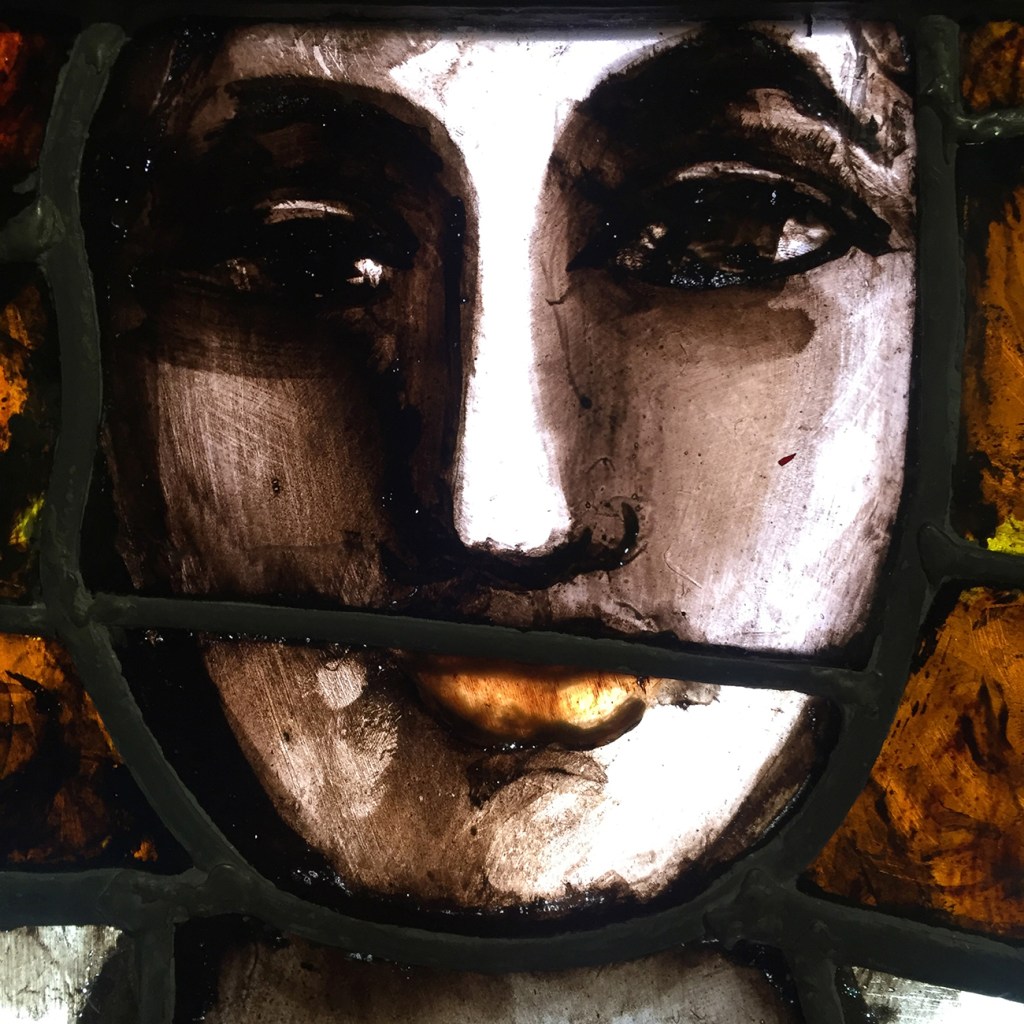
“A rare self-portrait in Boty’s oeuvre, this is a beautiful and assured portrait in stained glass, believed to date from 1958 when Boty was a student in the stained glass department at the Royal College of Art. There are conventional borders with floral motifs and quatrefoils. The work incorporates many of the creative techniques associated with the influential stained glass department of the Royal College of Art at that period, including layering, aciding of deep flashed layers, and expressive use of glass painting. The glass leading is experimental, with its eccentric use of arbitrary leads such as the piece cutting across the face of the figure.” [from the NPG’s website]
Detail of Pauline Boty’s stained glass “Self Portrait”, c.1958 at the National Portrait Gallery. Photo by paulineboty.org
The gallery also has a number of portraits of Boty by different photographers including Lewis Morley, Michael Ward and Michael Seymour, which can be viewed on their website at npg.org.uk
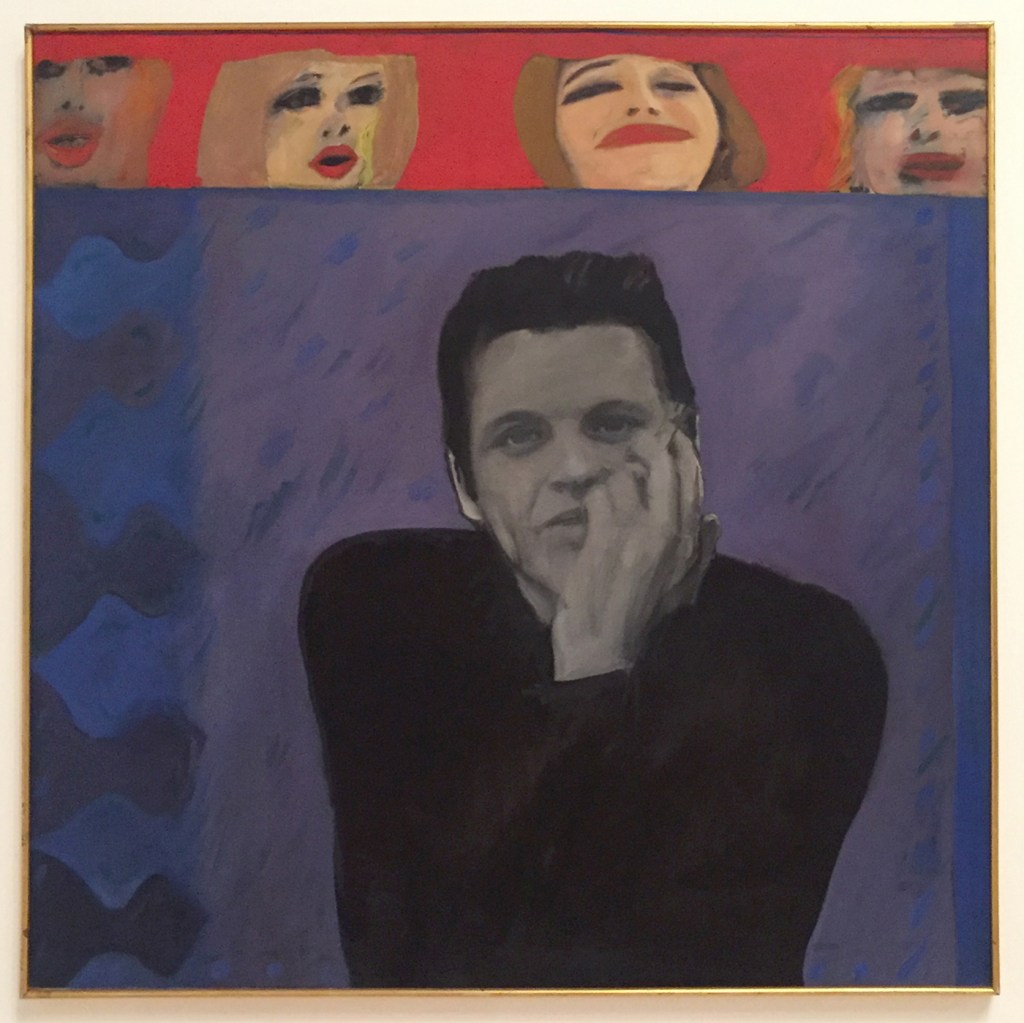
Pauline Boty, “Portrait of Derek Marlowe with Unknown Ladies”, oil on canvas, 1963
Subtitled A journey through painting and photography the exhibition runs from 13 June – 28 April 2024. The Tate website explains its subject further, as follows:
“The arrival of photography changed the course of painting forever. In this unique exhibition, we explore the dynamic relationship between the two mediums through some of the most iconic artworks of recent times.
From the expressive paintings of Pablo Picasso and Paula Rego, to striking photographs by Hiroshi Sugimoto and Jeff Wall, you will see how these two distinct mediums have shaped each other over time.
You will also discover how artists have blurred the boundaries between painting and photography, creating new and exciting forms of art, such as Pauline Boty’s pop paintings, Andy Warhol’s silkscreen prints, the photorealist works of Gerhard Richter, or Andreas Gursky’s large-scale panoramic photographs.
In an open-ended conversation between some of the greatest painters and photographers of the modern era, we explore how the brush and the lens have been used to capture moments in time.
The exhibition is realised in collaboration with the YAGEO Foundation, Taiwan. The YAGEO Foundation was founded by Taiwanese collector, entrepreneur, and philanthropist Pierre Chen in 1999.”
As well as Boty, other artists and photographers featured in Capturing The Moment include Michael Armitage, Francis Bacon, Georg Baselitz, Lisa Brice, Cecily Brown, Miriam Cahn, George Condo, Njideka Akunyili Crosby, John Currin, Peter Doig, Marlene Dumas, Jana Euler, Lucian Freud, Andreas Gursky, Richard Hamilton, David Hockney, Candida Höfer, Dorothea Lange, Louise Lawler, Marwan (Marwan Kassab-Bachi), Alice Neel, Paulina Olowska, Laura Owens, Pablo Picasso, Pushpamala N., Christina Quarles, Robert Rauschenberg, Paula Rego, Gerhard Richter, Wilhelm Sasnal, Joan Semmel, Lorna Simpson, Thomas Struth, Hiroshi Sugimoto, Salman Toor, Luc Tuymans, Jeff Wall and Andy Warhol
This is Dr. Sue Tate’s assessment of the exhibition: “Still time to catch Capturing the Moment at Tate Modern before it closes on April 28th and see how unquestionably Pauline Boty’s work holds its own in company with major figures Gerhard Richter and Andy Warhol. As you pass Richter’s Aunt Marianne, 1965, Boty’s Portrait of Derek Marlowe with Unknown Ladies will be in your sight line in the next room. With their shared use of monochrome photorealist reproduction of existing photographs yet very divergent meanings, they are in an equal dialogue. At the far end of the Pop art wall, Andy Warhol’s photo-screen printed Self Portrait echoes the Marlowe portrait. Boty, however, goes further than simple portrayal to offer a complex mix of gender critique (those poor unknown ladies) and object of desire. Wonderful to see Boty’s work taking and holding its due place in the pantheon of 20th century art.”
Further information, including how to book tickets, is available here: [link]
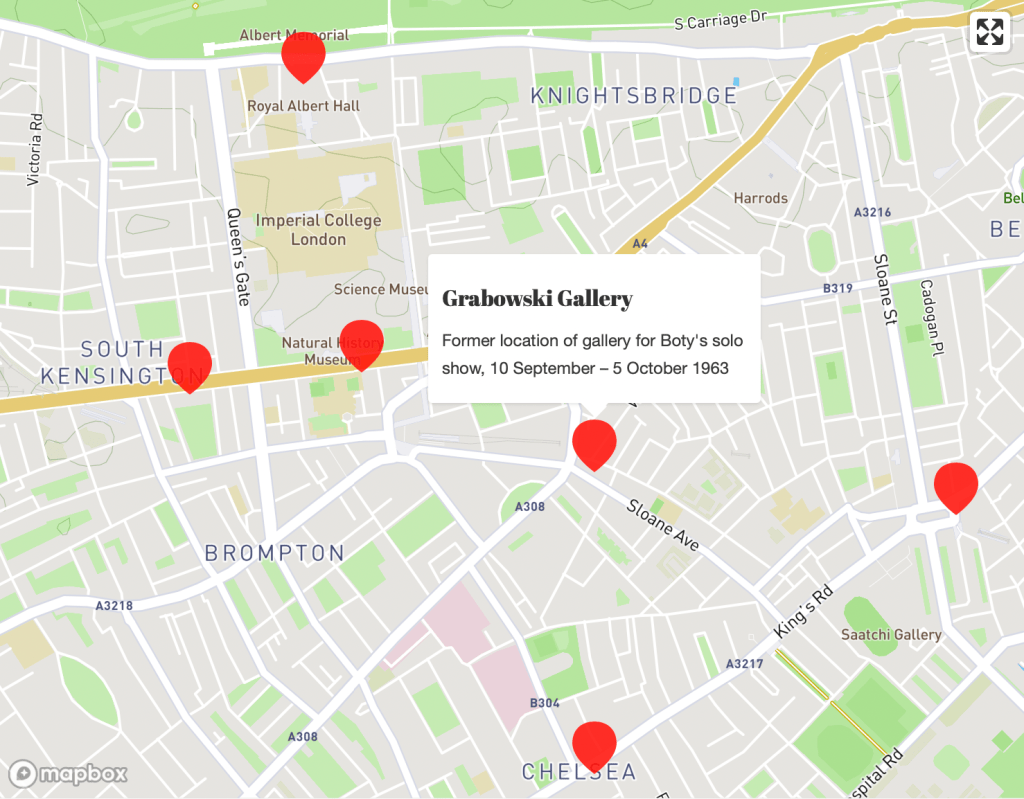
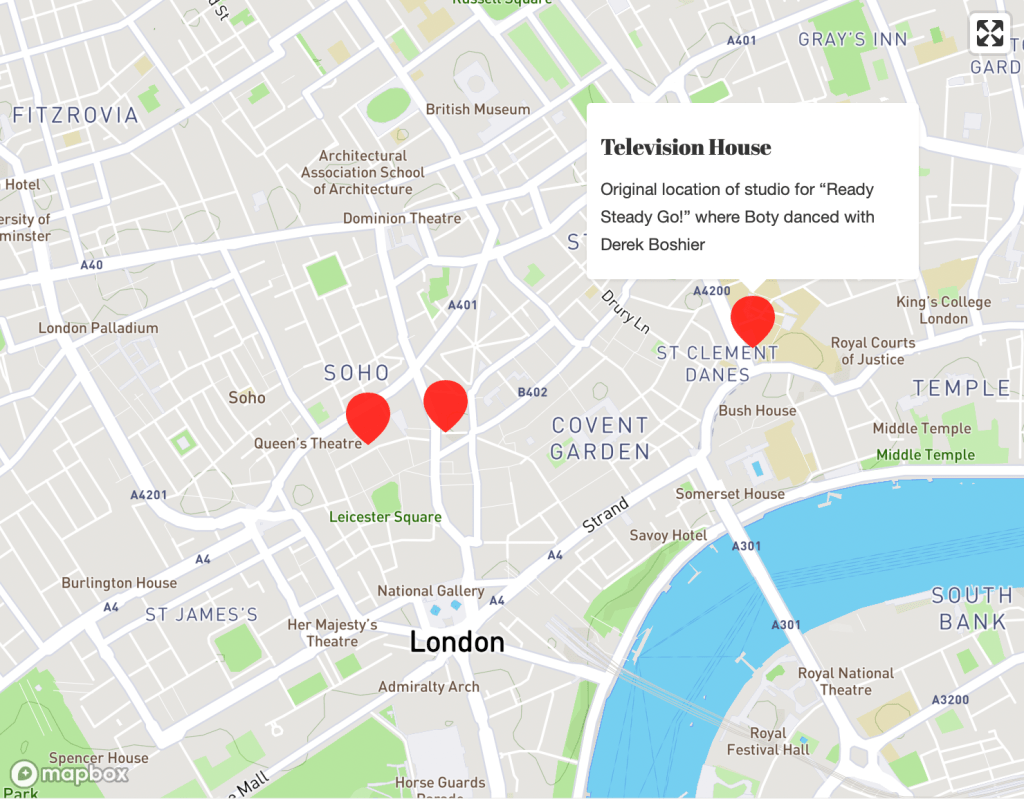
The screen grab below is of a new map containing more than 20 locations in London and its environs associated with Pauline Boty, including where she lived, worked and exhibited and sites shown in Pop Goes the Easel. The map itself with a list of the locations and their relevance below is available here [link]
(Please note: image above is a screen shot only of the map. Please visit the page itself to see all locations.)
Please note, some locations are approximate due to the markers being generated from the post codes of the areas in which they fall. We also welcome feedback including suggested locations to add/corrections required via the Contact form here [link]
(Please note: image above is a screen shot only of the map. Please visit the page itself to see all locations.)




 Pauline Boty