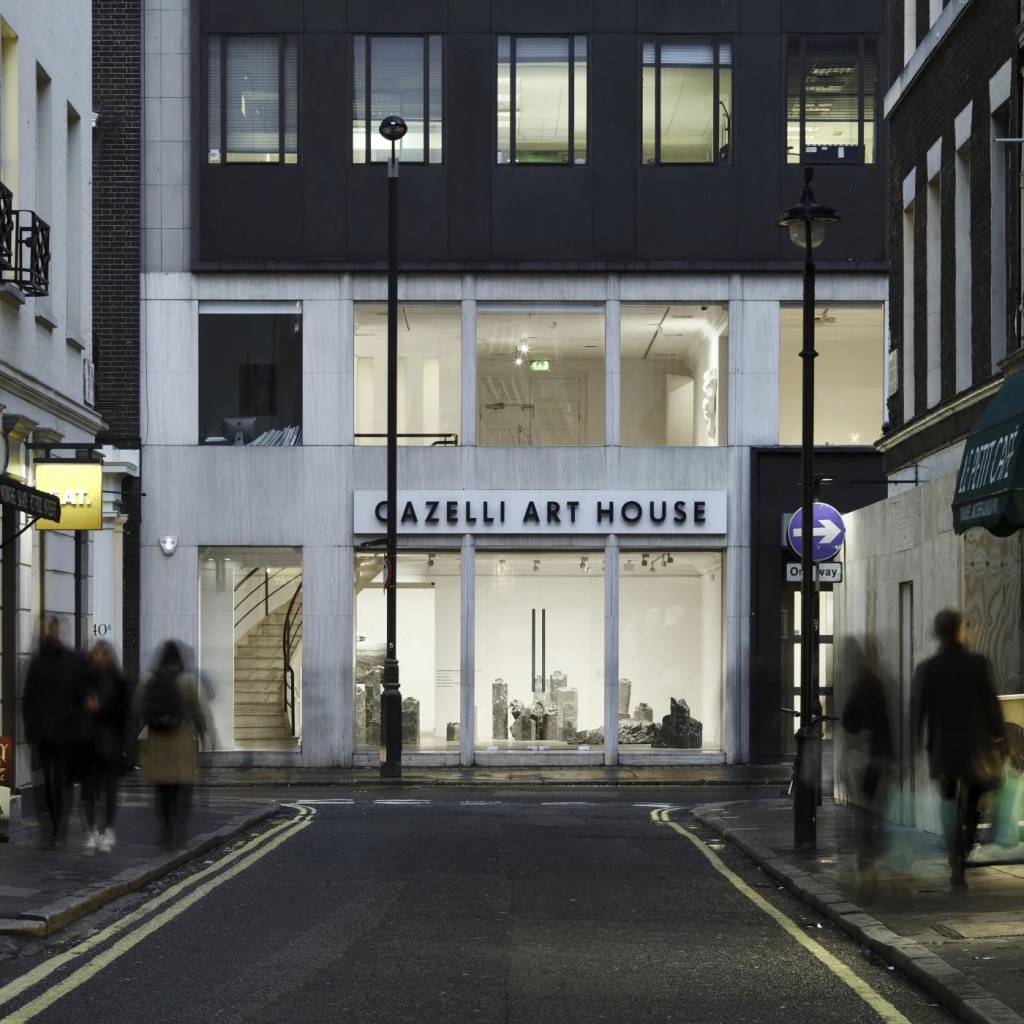
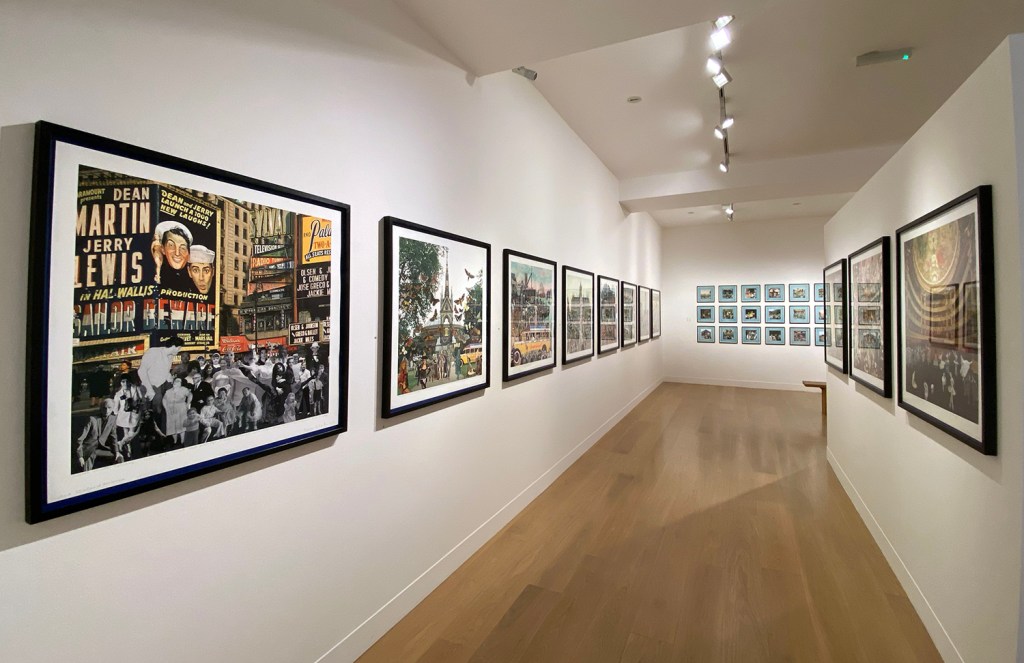
Gazelli Art House celebrates the life and legacy of Pauline Boty in her first posthumous solo exhibition in a decade

Pauline Boty: A Portrait previews 30 November, 6–8 PM (GMT) with the Exhibition opening 1 December 2023–24 February, 2024 at Gazelli Art House, London.
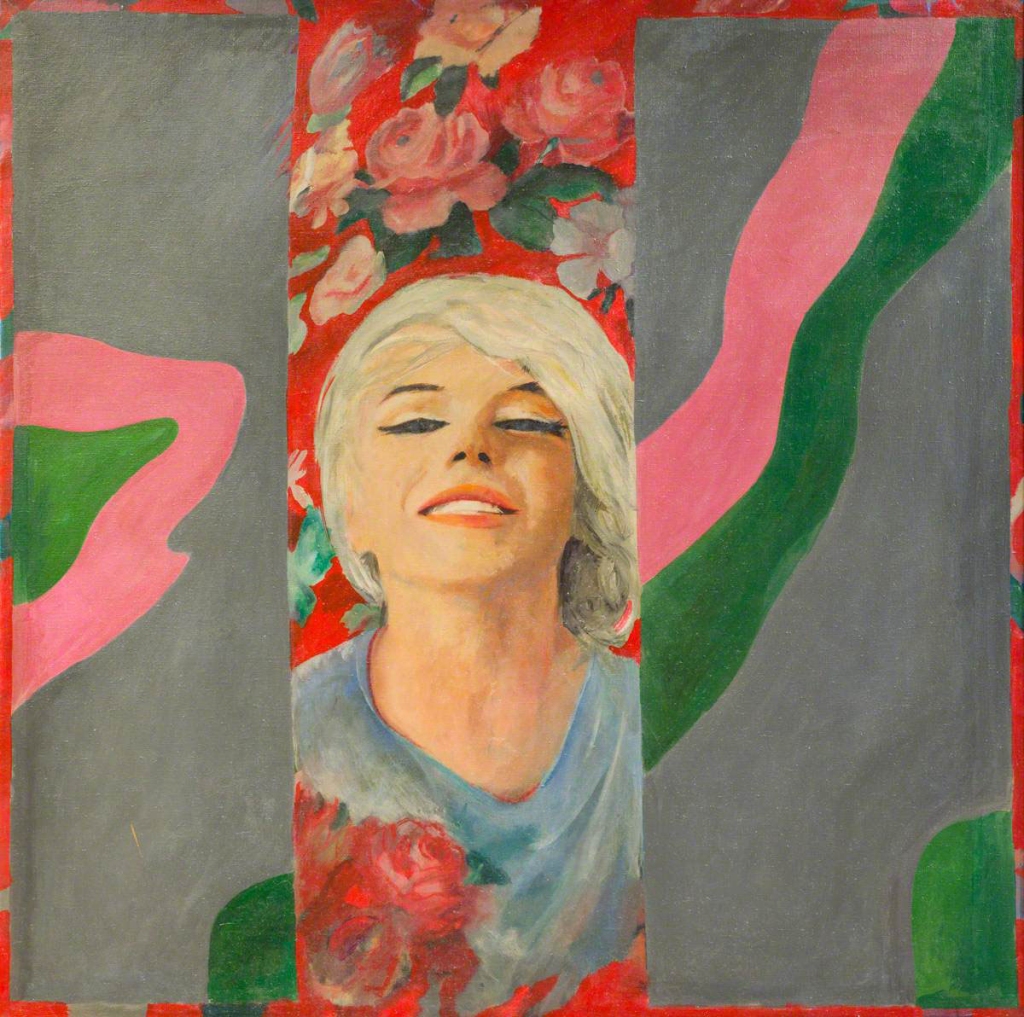
Colour Her Gone; by Pauline Boty, 1962, oil on canvas

The following information is from the gallery’s website:

“Gazelli Art House celebrates the life and legacy of trailblazing British painter Pauline Boty (1938-1966) in her first posthumous solo exhibition in a decade.

Pauline Boty: A Portrait presents a remarkable opportunity to view Boty’s coveted paintings in unison, alongside a plethora of profound, archival materials. Marking the artist’s third showing at Gazelli Art House, this exhibition continues the gallery’s explorations of Boty’s pivotal and enduring artistic impact. Pauline Boty: A Portrait marks over twenty years since Pauline Boty – The Only Blonde in the World (The Mayor Gallery and Whitford Fine Art, London), and ten years since Pauline Boty: Pop Artist and Woman (Wolverhampton Art Gallery, UK, touring to Pallant House Gallery) curated by Boty specialist and author, Dr Sue Tate. Pauline Boty: A Portrait will be accompanied by a catalogue and talk.

A prominent figure in the British Pop Art movement of the 1960s, Boty waylaid convention with her fearless exploration of femininity, societal norms, politics, and popular culture. Eschewed the esteem of her male contemporaries, and customarily eclipsed by preoccupations with her beauty and the tragedy of her untimely passing, Boty’s artworks are today venerated as climacteric within the cultural discourse surrounding the period.

In the pivotal early work Self Portrait (c.1955), Boty’s instinctual painterly ability delivers an immediate, and human, intensity. Elsewhere, Untitled (Landscape with Rainbow) (1961), seen in Ken Russell’s Young British Artists documentary Pop Goes the Easel (1962), is a rare abstract created concurrently with Boty’s graduation thesis on the rendering of dreams. Here, candied forms drift about an ochre and white expanse with all the turbulence of the ‘swinging’ sixties and the social unrest on the horizon. These bold, early abstracts are, Prof. David Alan Mellor states, ‘inflected by the Cohen brothers and the emblematics of Allen Jones’s rereadings of Dealauny and Kandinsky’.

The influence that film, alongside popular music, played upon Boty’s practice is evidenced in works such as Colour Her Gone (1962), With Love to Jean-Paul Belmondo (1962), and Monica Vitti with Heart (1963). Dr. Sue Tate notes that, in press interviews the artist spoke of a “nostalgia for now” for “present day mythology”. As with myth, Boty’s paintings are laced with symbolism, where a rose may become an unapologetic allegory for female sexuality. These paintings demonstrate the abstract strewn apart and montaged with the figurative, in what would become Boty’s distinctive, painted collage technique.

From popular culture to political musings, in Cuba Si (1963) – named for Chris Marker’s 1961 film of the same name – Boty delivers a complex critique on a Postwar U.S. that denotes the artist’s “ongoing interest in Cuba”, says Author Marc Kristal. When we consider the term ‘Political Pop’ did not emerge until the 1980s, it would be by no means overzealous to suggest Boty was ahead of her time.

Yet, in many ways, Boty was so of her time, so attuned to the charge of change, and perhaps that energy is what resonates still so powerfully today. Boty’s appearances across stage, screen, and radio – including Alfie (1966), and Frank Hilton’s Day of the Prince (1963) at the Royal Court Theatre (for which Boty also designed the programme) – are here exemplified in video footage. In archival photographs within the exhibition we glimpse aspects of the artist’s vivid personality: Boty lies nude atop a chaise-longue, sits contemplative with two black cats, and mimics the actions of her painted subjects.

The significance of this exhibition is not only to draw attention to the radical artworks and ideas of Boty, and the new wave of feminism she undoubtedly heralded, but also to credit the efforts of recent years to rightfully reinstate Boty within the art historical canon.

Pauline Boty signed photo, by John Aston, 1962.

About the Artist
Pauline Boty (1938-1966) was born in South London, and embarked on her artistic journey with a scholarship to Wimbledon School of Art in 1954. In 1958, she continued her studies at the Royal College of Art.

Boty’s diverse body of work, encompassing paintings, collages, and stained glass, often depicted individuals she deeply admired, celebrated her unapologetic femininity, and explored themes of female sexuality. As her career progressed, her paintings began to incorporate more overt or implicit critiques of the male-dominated societal norms she confronted, thus shedding light on the inequalities of the “man’s world” in which she navigated.

Boty’s artwork is held in the collections of: The National Portrait Gallery, London; Tate Britain, London; Wolverhampton Art Gallery, Wolverhampton; Stained Glass Museum, Ely; Pallant House Gallery, Chichester; Muzeum Sztuki Łódź, Portugal; Museu Coleção Berardo, Lisboa; Smithsonian American Art Museum, Washington.

About the Gallery
Founded in 2010 by Mila Askarova, Gazelli Art House, London brings a fresh perspective to Mayfair – through championing artists from all corners of the globe. Focusing on artists at the height of their practice, the gallery showcases their work through a diverse programme of exhibitions and events. Along with its sister site in Baku, Gazelli Art House specialises in promoting art from Azerbaijan and its neighbours to introduce a greater understanding of the rich linguistic, religious and historical ties that connect these areas to international audiences. In 2015, the gallery further expanded to support artists working in digital art through its online platform: GAZELL.iO, comprising an online Residency programme, NFT drops and collaborations, a dedicated Project Space holding monthly exhibitions, and a permanently installed VR Library.

Acknowledgements
For their generosity and insight, Gazelli Art House would like to thank the Estate of Pauline Boty, Wolverhampton Art Gallery, Pallant House Gallery, and other lenders to the exhibition who wish to remain anonymous.”

paulineboty.org is delighted and honoured to be contributing to this exhibition through the loan of a number of pieces of ephemera.

Exhibition details
Pauline Boty: A Portrait
Preview: 30 November 2023
Time: 6–8pm (UK)
Exhibition dates: 1 December 2023 — 24 February, 2024

Gazelli Art House,
39 Dover Street,
London W1S 4NN
Tel: (+44) 01353 660347

Further information is available at the Gazelli Art House website here: [link]
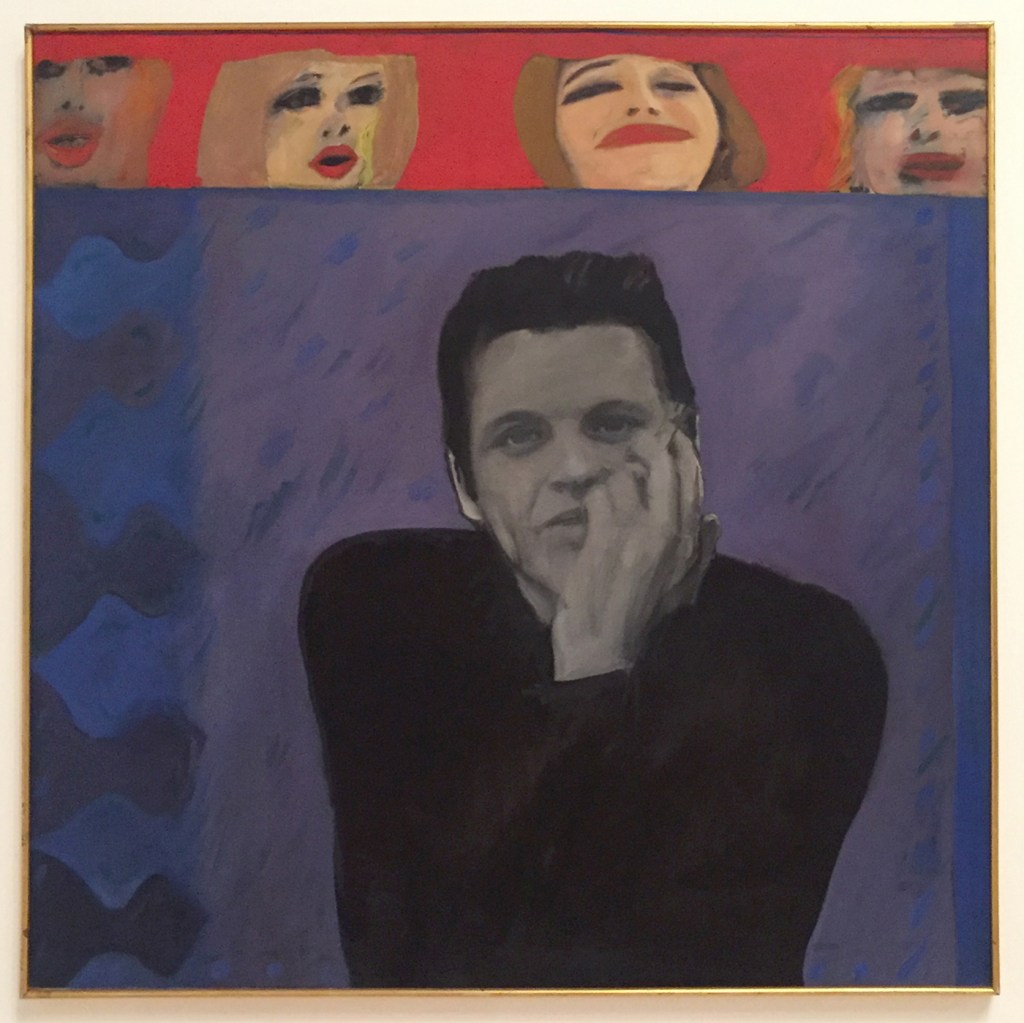
Capturing the Moment exhibition, including Boty’s “Portrait of Derek Marlowe with Unknown Ladies”, opens at Tate Modern on 13 June

Pauline Boty, “Portrait of Derek Marlowe with Unknown Ladies”, oil on canvas, 1963

Subtitled A journey through painting and photography the exhibition runs from 13 June – 28 April 2024. The Tate website explains its subject further, as follows:

“The arrival of photography changed the course of painting forever. In this unique exhibition, we explore the dynamic relationship between the two mediums through some of the most iconic artworks of recent times.

From the expressive paintings of Pablo Picasso and Paula Rego, to striking photographs by Hiroshi Sugimoto and Jeff Wall, you will see how these two distinct mediums have shaped each other over time.

You will also discover how artists have blurred the boundaries between painting and photography, creating new and exciting forms of art, such as Pauline Boty’s pop paintings, Andy Warhol’s silkscreen prints, the photorealist works of Gerhard Richter, or Andreas Gursky’s large-scale panoramic photographs.

In an open-ended conversation between some of the greatest painters and photographers of the modern era, we explore how the brush and the lens have been used to capture moments in time.

The exhibition is realised in collaboration with the YAGEO Foundation, Taiwan. The YAGEO Foundation was founded by Taiwanese collector, entrepreneur, and philanthropist Pierre Chen in 1999.”

As well as Boty, other artists and photographers featured in Capturing The Moment include Michael Armitage, Francis Bacon, Georg Baselitz, Lisa Brice, Cecily Brown, Miriam Cahn, George Condo, Njideka Akunyili Crosby, John Currin, Peter Doig, Marlene Dumas, Jana Euler, Lucian Freud, Andreas Gursky, Richard Hamilton, David Hockney, Candida Höfer, Dorothea Lange, Louise Lawler, Marwan (Marwan Kassab-Bachi), Alice Neel, Paulina Olowska, Laura Owens, Pablo Picasso, Pushpamala N., Christina Quarles, Robert Rauschenberg, Paula Rego, Gerhard Richter, Wilhelm Sasnal, Joan Semmel, Lorna Simpson, Thomas Struth, Hiroshi Sugimoto, Salman Toor, Luc Tuymans, Jeff Wall and Andy Warhol

This is Dr. Sue Tate’s assessment of the exhibition: “Still time to catch Capturing the Moment at Tate Modern before it closes on April 28th and see how unquestionably Pauline Boty’s work holds its own in company with major figures Gerhard Richter and Andy Warhol.
As you pass Richter’s Aunt Marianne, 1965, Boty’s Portrait of Derek Marlowe with Unknown Ladies will be in your sight line in the next room. With their shared use of monochrome photorealist reproduction of existing photographs yet very divergent meanings, they are in an equal dialogue. At the far end of the Pop art wall, Andy Warhol’s photo-screen printed Self Portrait echoes the Marlowe portrait. Boty, however, goes further than simple portrayal to offer a complex mix of gender critique (those poor unknown ladies) and object of desire.
Wonderful to see Boty’s work taking and holding its due place in the pantheon of 20th century art.”

Further information, including how to book tickets, is available here: [link]

Talk on the legacy of Pauline Boty to be held at Gazelli Art House with Ali Smith and Sue Tate

Gazelli Art House, Dover Street, London

The talk will take place at Gazelli Art House on February 22nd, 6:00 – 8:00 pm (GMT) to accompany the “Oh, Marilyn!” exhibition currently being held at the gallery.

The panel discussion will draw on the history of art during the 60s wave of female emancipation in the UK and US and its impact on the arts, specifically the legacy of exhibiting artist Pauline Boty. Panellists include Ali Smith (CBE FRSL award-winning author, whose work Autumn features Boty as a central figure) and Dr Sue Tate (author of the biography Pauline Boty: Pop artist and Woman and co-curator of the associated retrospective which ran at both Wolverhampton Art Gallery and Pallant House Gallery in the UK).

You can join either at the gallery or online (audio only)
Click here to join at the gallery [limited places]: [link]
Click here to hear the talk live online: [link]

Further information about the exhibition is available here [link]

Gazelli Art House
39 Dover Street
London W1S 4NN
+44 207 491 8816

“Oh, Marilyn!” group exhibition at Gazelli Art House, London includes Boty’s works

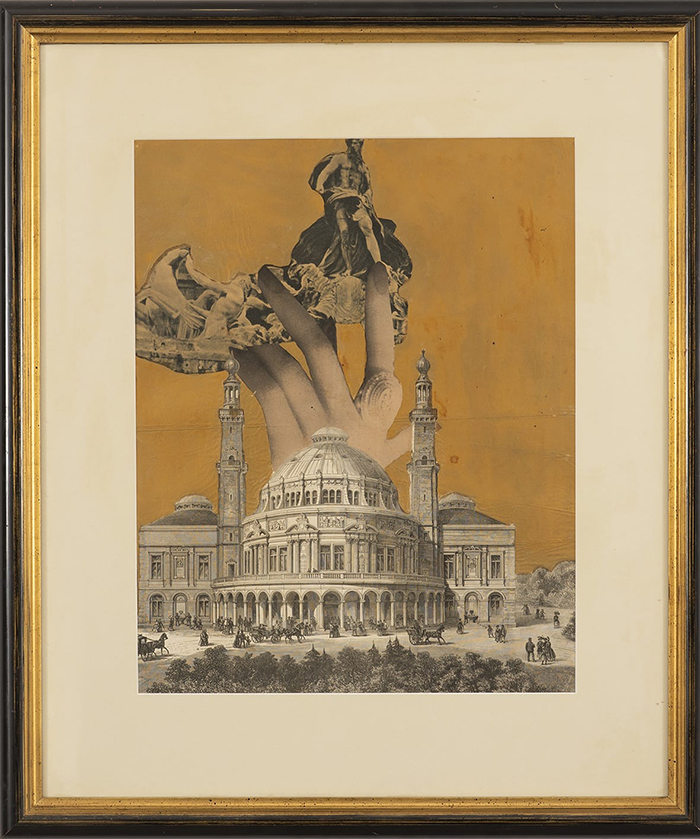
Pauline Boty, A Big Hand, collage with gold gilt paint, 1961

Running from 21 January to 12 March 2022, the exhibition is dedicated to the 60s wave of female emancipation in the UK and US and features Pauline Boty together with Judy Chicago, Penny Slinger and Jann Haworth.

“Showing for the second time at the gallery, Pauline Boty (1938–1966) was a founder of the British pop art and Britain’s most notable pop art painter. Her paintings and collage work often made references to female sexuality as well as current affairs, criticising the nature of the “man’s world.” On display in the exhibition is Angel (60s) and A Big Hand (ca. 1961), a collage work depicting a female hand holding sculptural figures from Rome’s Trevi Fountain above a Victorian park scene.

Gallery artist Jann Haworth (b. 1942) moved to London from Los Angeles in 1961 to study at the Slade School of Fine Art, becoming a pioneer of soft sculptures that led her to challenge the notion of female form serving as a muse or object of desire. Exhibited works include the Pom Pom Girl (1964-65), China Cabinet (1963–1964), Dog (1962), Linder Doll (1965), Still Life Marble Fabric ( 1962) and Rhinestones (1963–64).

Penny Slinger (b. 1947) explores feminism and eroticism through work including photography, film and sculpture. On display are a series of vintage black and white photographs from the artist’s subversive Bride Book (1973) and works from her 1973 series Mouthpieces.

Multidisciplinary artist Judy Chicago was a trailblazing pioneer the feminist movement in the 1960s and ’70s; for decades, she has made work that celebrates the multiplicity of female identity. The exhibition features And She Vomited up the Sun and the Moon and then the night had its Own Light (1981) and her pyrotechnic Atmospheres series.

The exhibition title draws on the 60th death anniversary of Marilyn Monroe, whose death represented a departure point for female empowerment. A portion of proceeds will be donated to Women’s Aid.” [from the Gazelli Art House website]

Gazell Art House,
39 Dover Street,
London W1S 4NN
Tel: +44 207 491 8816
Link to exhibition website: [link]

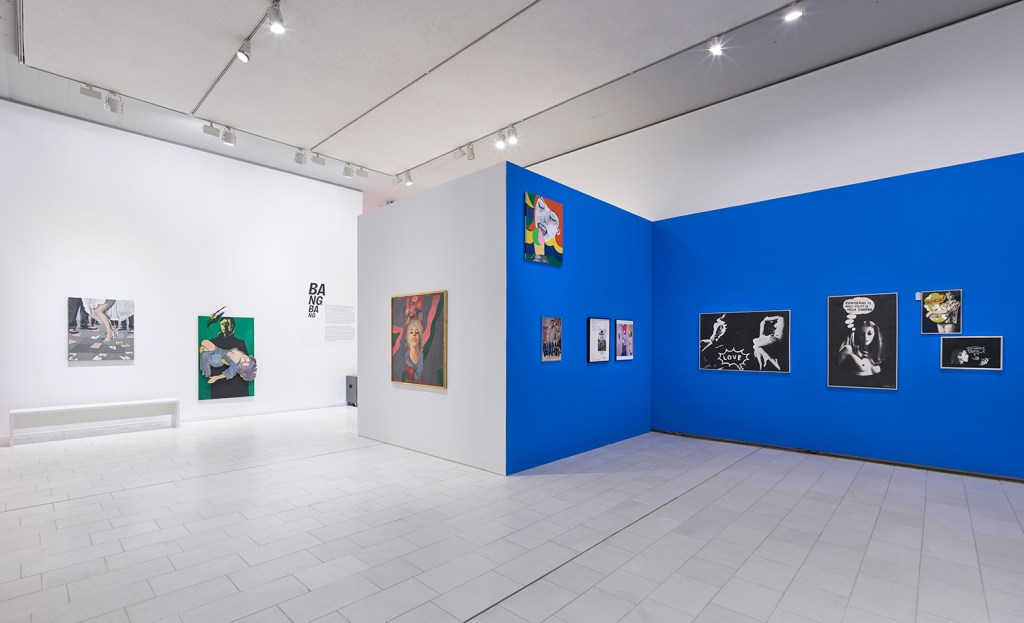
“Amazons of Pop!” exhibition in Kiel includes Pauline Boty’s “Colour Her Gone”

Installation shot 2021 © Kunsthalle zu Kiel, Photo: Helmut Kunde

From 2 October 2021 to 6 March 2022, “Amazons of Pop! Women artists, superheroines, icons 1961-1973” at Kunsthalle zu Kiel aims to address the diverse Pop art of a generation of women from Europe and North America who constitute the less-well-known side of the movement.

“Amazons of Pop! shows women who fight for their own emancipation with determination and actively champion political and social issues. They transgress boundaries in the art of their time, which was dominated by men, and test new and unusual materials such as plastic. Play with fictive characters, personalities and heroines from the big screen pervades the work of these artists, who demonstrate a great passion for experimentation, fantasy, intrepidness and a sense of strategy, conscious of the tense geopolitical and social circumstances of their time all the while. Amazons of Pop! features approximately 100 pieces from the fields of painting, installation, performance, sculpture and film and invites visitors to delve into the world of pop and a period of awakening: the 1960s and the beginning of the 1970s.” [from the Kunsthalle zu Kiel website]

The exhibition features: Evelyne Axell, Barbarella, Brigitte Bardot, Marion Baruch, Pauline Boty, Martine Canneel, Lourdes Castro, Judy Chicago, Chryssa, France Cristini, Christa Dichgans, Jane Fonda, Ruth Francken, Ángela García, Jann Haworth, Dorothy Iannone, Jodelle, Sister Corita Kent, Kiki Kogelnik, Kay Kurt, Nicola L., Ketty La Rocca, Milvia Maglione, Lucia Marcucci, Marie Menken, Marilyn Monroe, Isabel Oliver Cuevas, Yoko Ono, Ulrike Ottinger, Emma Peel, Pravda La Survireuse, Martha Rosler, Niki de Saint Phalle, Carolee Schneemann, Marjorie Strider, Sturtevant, Valentina Terechkova and May Wilson.

Organized by the MAMAC Nice in collaboration with Kunsthalle zu Kiel and Kunsthaus Graz, as well as support from Manifesto Expo.

Kunsthalle zu Kiel,
Christian-Albrechts-Universität,
Düsternbrooker Weg 1,
24105 Kiel,
Germany
Tel: +49 431 88057-56;
Link to exhibition website: [link]


New book and exhibition dedicated to Peter Blake’s collages

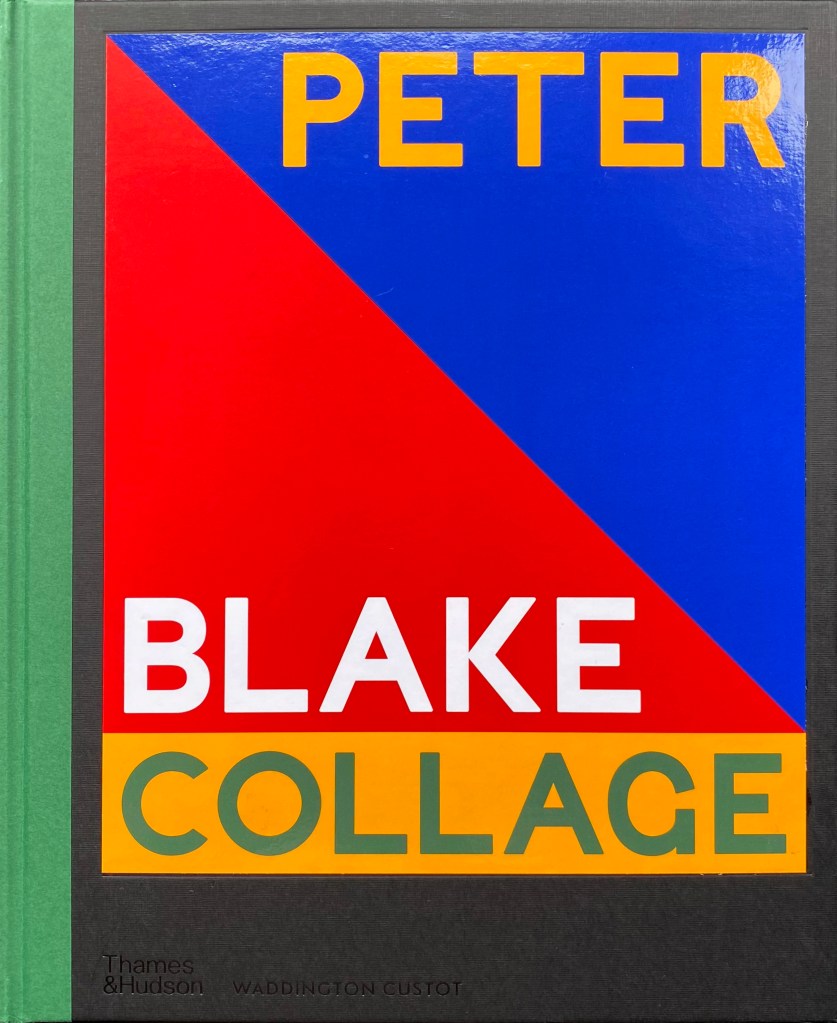
“Peter Blake: Collage” published by Waddington Custot in partnership with Thames & Hudson

This first complete overview of collage by Peter Blake, from his early assemblages to his most recent work has been published by Waddington Custot in partnership with Thames & Hudson.

The publication coincides with the opening of “Peter Blake: Time Traveller”, a new exhibition at Waddington Custot [until 13 August] charting the development of Blake’s approach to collage-making, beginning with his layering of subject matter in early painted compositions and experiments with collaged paper after encountering work by Kurt Schwitters in the 1950s. From here, the exhibition travels via Blake’s rise to prominence as the ‘Godfather of British Pop art’ to his current, self-proclaimed Late Period. From his found object constructions to his most recent digital print photo-collages, Blake has broadened the scope of what collage can comprise and what it can communicate. Peter Blake: Time Traveller includes works from Blake’s Alphabet and Museum of Black and White series, as well as pieces made in homage to fellow artists Sonia Delaunay, Kurt Schwitters and Robert Rauschenberg. Clowns, wrestlers and Icons are shown alongside work around souvenirs and holiday postcards. [from the Waddington Custot website].

Works from “Joseph Cornell’s Holiday” at Waddington Custot in the exhibition “Peter Blake: Time Traveller”

Boty makes an appearance in both the book and the exhibition, including within Blake’s recent collage series Joseph Cornell’s Holiday.

EXHIBITION DETAILS

Peter Blake: Time Traveller
18 June–13 August 2021
Waddington Custot, 11 Cork Street, London W1S 3LT

Time slots for the exhibition can be booked here: [link]

BOOK SPECIFICATIONS

Title: Peter Blake: Collage
Publisher: Waddington Custot in partnership with Thames & Hudson
Format: Hardback without Jacket
Dimensions: 300 x 250mm
Pages: 316 pp
ISBN: 9780500971123
Price: £50

The book is available to buy here: [link]