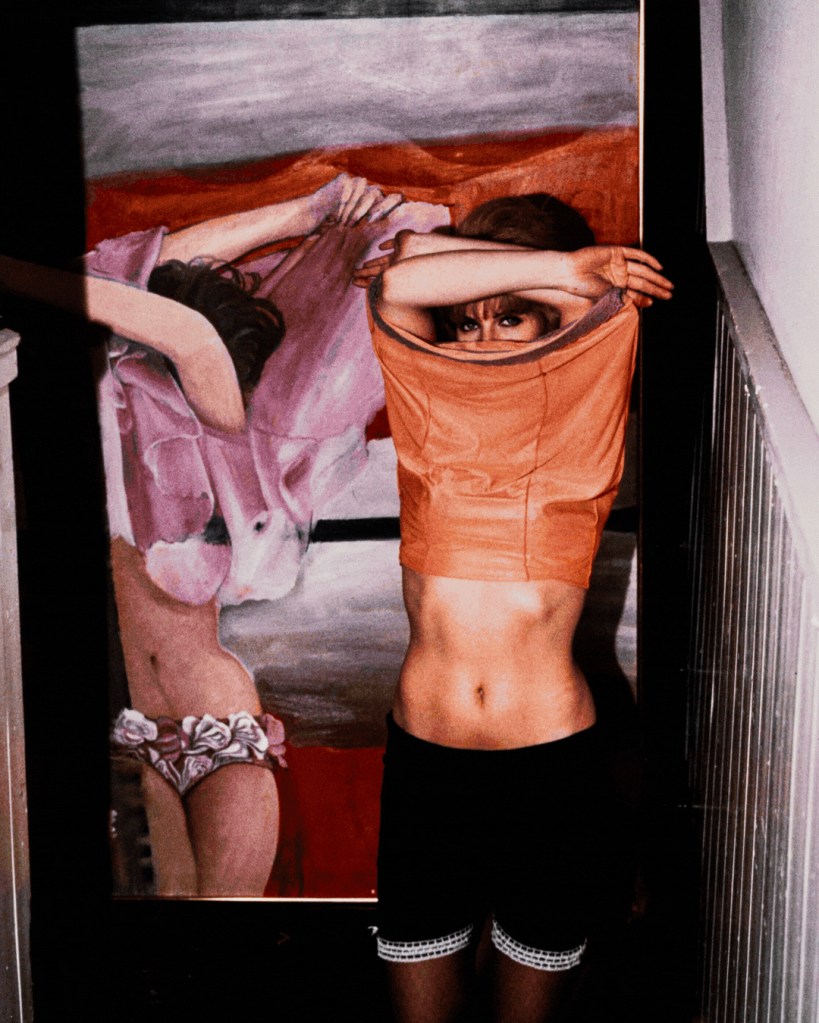
Micheal Ward, “Untitled (Pauline Boty with Painting ‘Tom’s Dream’)”, 1963/2023. Coloured C-print. The Museum of Contemporary Art, Los Angeles. Gift of Gail and Tony Ganz. Copyright The Artist.
Gazelli Art House released the following statement yesterday:
“On the occasion of Pauline Boty’s birthday, we are pleased to announce that a selection of five portrait photographs of Pauline Boty by photographer Micheal Ward are now in the collection of MOCA, LA. Pauline Boty was also photographed by, among others, David Bailey, Lewis Morley, Michael Seymour and Roger Mayne and Ward’s images undoubtedly number amongst her best and most well-known portraits.
‘Pauline Boty lingers intensely in the minds of those who knew her. She exhibited with all the leading figures of British Pop, held a well-received solo exhibition in London in 1963 and created a vibrant, innovative body of work that enriches Pop Art from a female perspective …The mores of that time dictated that, as a woman, you could be either sexual or serious and most women artists, needing a footing in the male dominated art world, hoped the fact they were women would not be noticed. Boty rejected that binary choice and refused to relinquish either her ambition as a serious artist or her right to an female identity and sexuality …Finding form to express a proactive, autonomous, female sexuality, she encoded her own orgasm in one work and in 5-4-3-2-1 celebrates dancing to pop music and the sexual anticipation that it brought: a banner declares ‘Oh for a FU…’.
Having reached full cultural visibility, Boty and her work are available to speak to the concerns of a current audience negotiating an ever more media saturated and pornified landscape. How to seize life, relishing mass cultural pleasures while also maintaining a steady critique of its negative effects.’– Pauline Boty: A Portrait (extracts).”
Further information
Gazell Art House, 39 Dover Street, London W1S 4NN Tel: +44 207 491 8816 Gallery website: [link]
Despite Pauline Boty’s painting 5-4-3-2-1 sharing the same title as the Manfred Mann theme tune to the weekly 1960s music show “Ready Steady Go!” it seems almost beyond doubt that the two are unconnected.
And this also despite the work including its seemingly “Cathy McGowanesque” figure and Boty dancing with Derek Boshier at the recording of the programme on numerous occasions.
The new page featuring further information along with timelines for the painting, song, programme, presenter and more can be accessed here: [link]
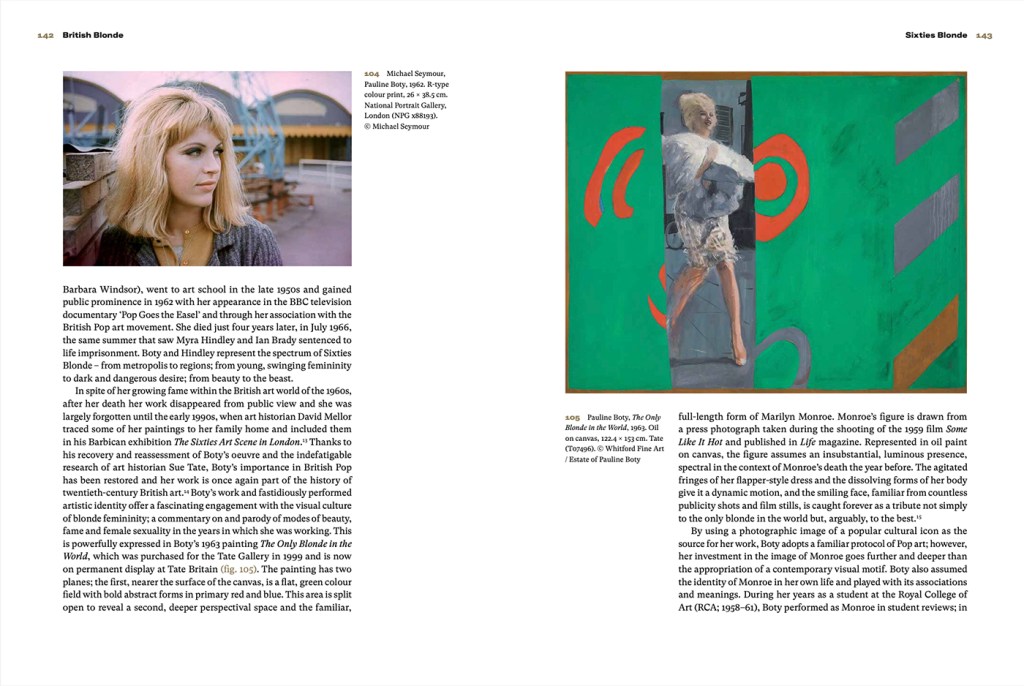
Published on 9th September, British Blonde: Women, Desire and the Image in Post-War Britain by Lynda Nead gives “a vivid account of the atmosphere and culture of postwar Britain, explored through the image of the British Blonde.” The book is published by the Paul Mellon Centre.
From the Yale University Press website: “In the 1950s, American glamour swept into a war-torn Britain as part of a broader transatlantic exchange of culture and commodities. But in this process, the American ideal of the blonde became uniquely British—Marilyn Monroe transformed into Diana Dors.
British Blonde examines postwar Britain through the changing ideals of femininity that reflected the nation’s evolving concerns in the twenty-five years following the Second World War. At its heart are four iconic women whose stories serve as prompts for broader accounts of social and culture change: Diana Dors, the quintessential blonde bombshell; Ruth Ellis, the last woman to be hanged in Britain; Barbara Windsor, star of the Carry On films; and the Pop artist Pauline Boty. Together, they reveal how class, social aspiration, and desire reshaped the cultural atmosphere of the 1950s and 1960s, complicating gender roles and visual culture in the process.
Spread from“British Blonde: Women, Desire and the Image in Post-War Britain” by Lynda Nead.
Richly illustrated with paintings, photography, film stills, and advertisements, this interdisciplinary and engagingly written study offers a highly original perspective on an era that transformed Britain’s visual and cultural identity.”
Lynda Nead will be giving a talk at the Victoria and Albert Museum on 23 October. Further information is available here: [link]
Imprint: Paul Mellon Centre Format: Hardback ISBN: 9781913107499 Dimensions: 254 x 190mm Pages: 240 Illustrations: 143 colour + b-w Price: £30 Further information on the book is available here: [link]
POP MODELS will run until 28 September at Museum MORE,Gorssel, Netherlands, who have announced the following about the exhibition:
“Advertisements, comic strips, bold colours – and women: these are defining elements of Pop Art in the 1960s and early 1970s. The role of women in Pop Art was twofold, perhaps even ambiguous. They embodied a stereotypical, desirable ideal, while also emerging as symbols of liberation. Women were at once supermodels and role models. In POP MODELS, Museum MORE becomes the first museum to put women in Pop Art at centre stage. As both muses and makers. The exhibition focuses on Europe, where the movement was often more outspoken and socially engaged than its American counterpart. This major exhibition at MORE presents an extensive selection of paintings, collages and objects by well-known artists such as Niki de Saint Phalle, Yves Klein and Richard Hamilton, alongside exciting discoveries like Ketty La Rocca and Jana Želibská.
Website for POP MODELS, Museum MORE, Gorssel, featuring Evelyne Axell’s “Ice Cream”, 1964
POP MODELS presents more than 70 works by nearly 60 artists from Belgium, Denmark, France, Germany, Great Britain, Iceland, Italy, the Netherlands, Poland, Portugal, Slovakia and Spain, from both museum and private collections. The exhibition was curated by guest curator Feico Hoekstra, in collaboration with Julia Dijkstra, Curator at Museum MORE.
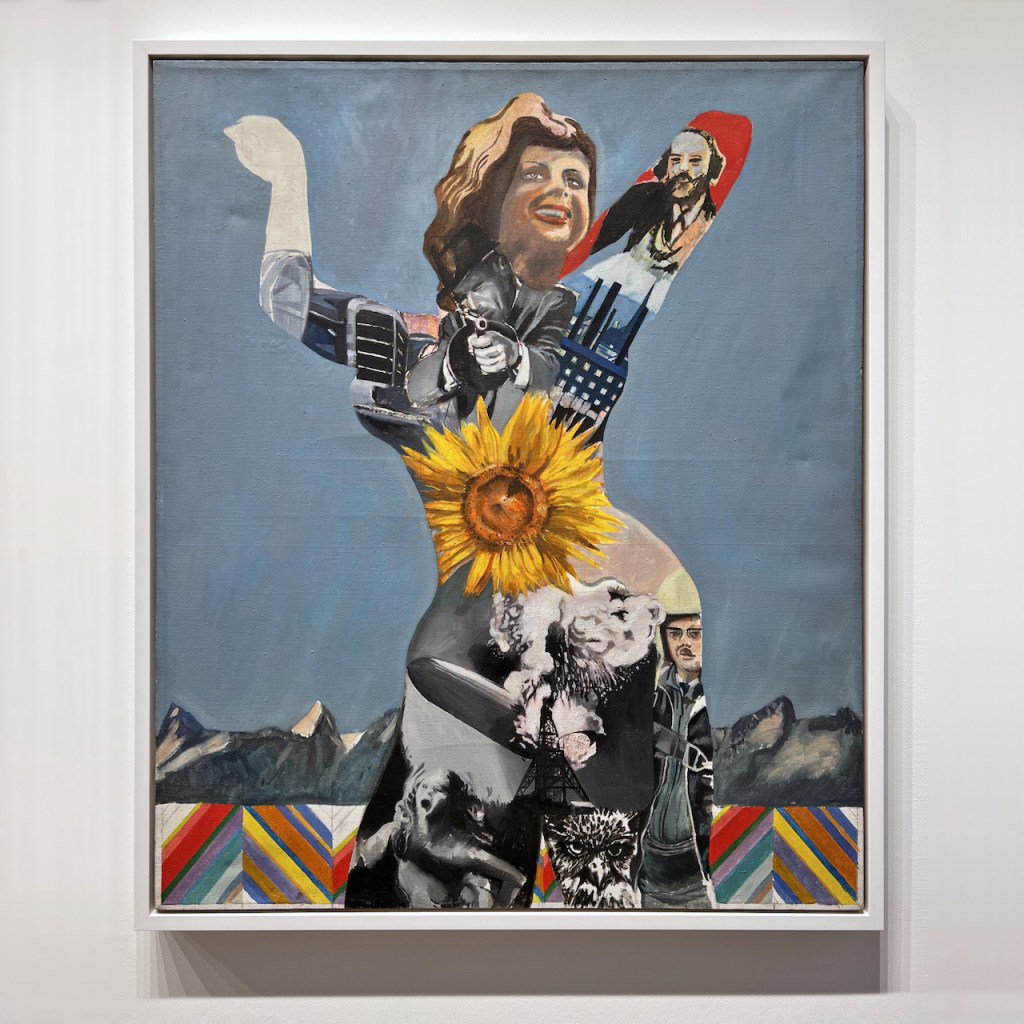
Pauline Boty, (Untitled) Sunflower Woman, 1963
The accompanying illustrated publication contains a text by Curator Julia Dijkstra and guest curator Feico Hoekstra, an essay by Maaike Meijer (Professor of Gender Studies) and Rosemarie Buikema (Professor of Art, Culture and Diversity), and Julia Dijkstra’s interview with British-American artist Jann Haworth. The book is published by WBooks and designed by Studio Mayra & Sam: 160 pages, approx. 100 images, price: € 34.95.”
Details POP MODELS Museum MORE, Hoofdstraat 28, 7213CW Gorssel, Netherlands Open Tuesday to Sunday from 10am to 5pm Tel: +31 (0) 575 760 300. Email: info@museummore.nl
Very sorry to report that after receiving a security alert on 19th May from Facebook – who also locked the account – on restoring discovered that the FacebookPage for Pauline Boty Pop artist has seemingly been wiped clean, with every single post from the past few years gone, along with over three hundred followers — whether hacked or a technical glitch remains unknown.
Frustratingly a search on e.g. “Pauline Boty Facebook” still shows that Google recognises the original page as per below, but without any way of accessing it.
News and other posts for Pauline Boty will continue to be updated on this website and at Instagram however, but with Facebook apparently uncontactable it would seem the only other option there is to look at making a fresh start.
NB: The Facebook User by the name Pauline Boty is nothing to do with this website or account incidentally, despite its lifting of the rose image above, and remains up despite repeated requests to Facebook to remove it.
The Spotify Playlist for Pauline Boty and its info page on the website have both had an update. The 32 tracks last just under two hours and as before are organised into three main sections representing their relevance in different ways – as titles or subjects of Boty’s works, as soundtracks to her appearances in TV, film and on radio, and to the collaged walls she created,
The playlist has had these songs added:
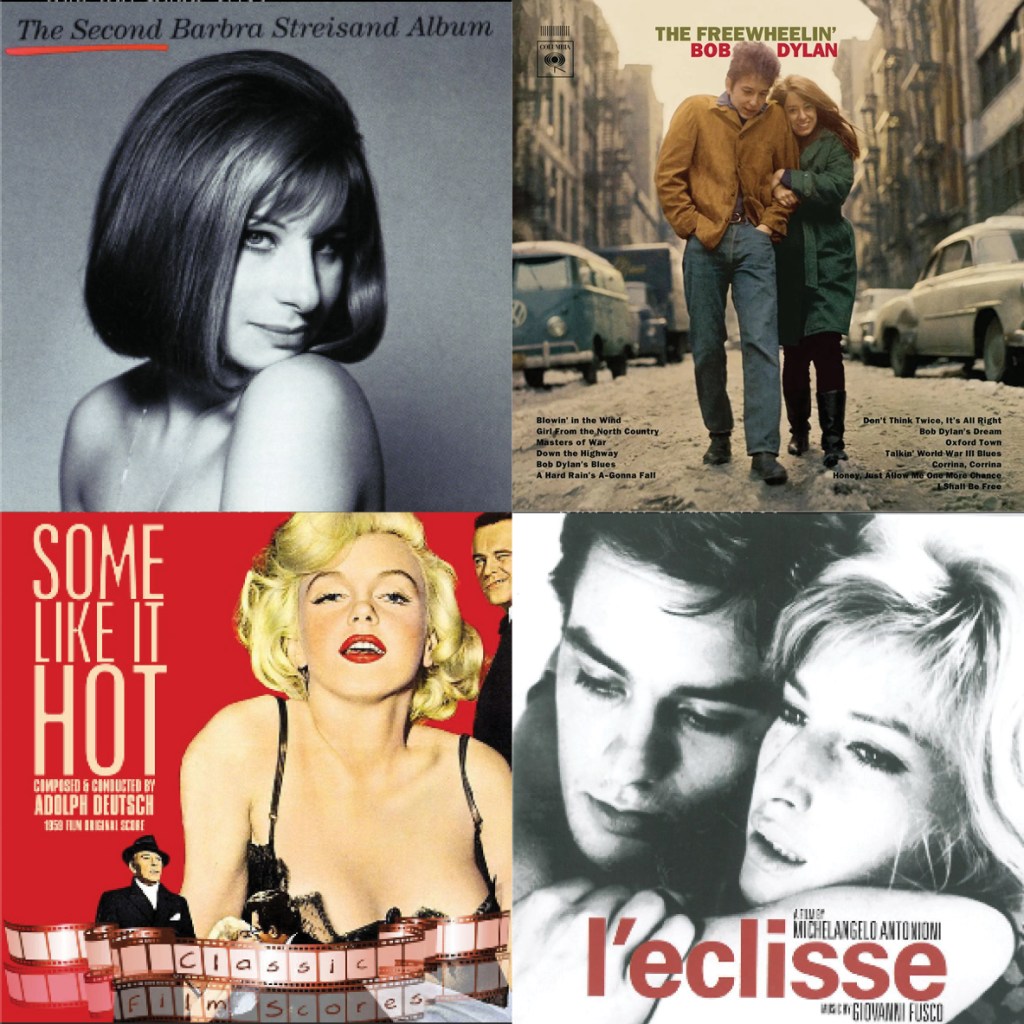
Blowin’ in the Wind by Bob Dylan Boty collected the musician from the airport in December 1962 on his first visit to the UK and escorted him around London prior to his appearance in the BBC Sunday Night Play The Madhouse on Castle Street where he performed the song
She Loves You by The Beatles The 1964 painting It’s a Man’s World I includes Ringo Starr and John Lennon. Boty also had The Beatles as guests on The Public Ear, the fortnightly BBC radio programme she hosted from 1963–64, and told best friend Natalie Gibson how much she loved the band, particularly John Lennon. The photo she used in the work was taken at Arlanda International Airport in Sweden on 23 October 1963, She Loves You having been released in the UK on 23 August 1963
The Nursery Blues by The Shake Keane Fivetet This was the theme tune to the aforementioned radio programme The Public Ear co-presented by Boty
The website’s info page for the playlist has now been more clearly divided into the different sections as well as having details on when and where the tracks for Boty appear in Pop Goes the Easel added. Also now listed (but not included on the playlist) are the songs accompanying Peter Blake, Peter Phillips and Derek Boshier in the same documentary.
Please click here to go to the playlist info page and its link to Spotify [link]
Pauline Boty, “Red Manoeuvre”, 1962, oil on board. Image courtesy of Gazelli Art House
The Way Forward: Derek Boshier and the Sixties will run from 25 April – 6 June at Gazelli Art House, with works by Peter Blake, Derek Boshier, Pauline Boty, Patrick Caulfield, David Hockney, Allen Jones, R.B. Kitaj, Peter Phillips, Richard Smith and Joe Tilson.
“Gazelli Art House London is pleased to present The Way Forward: Derek Boshier and the Sixties, the first posthumous solo exhibition dedicated to Derek Boshier (1937—2024). Curated with renowned art historian Marco Livingstone, the exhibition focuses on works from the 1960s and charts the transformations in Boshier’s worldview and visual style, in parallel to wider changes in society. This landmark presentation revisits Boshier’s pivotal transition from pioneering Pop figuration to bold geometric abstraction, a shift catalysed by his travels to India in 1962 under a Commonwealth scholarship.
Together with fellow RCA students David Hockney, Allen Jones, Peter Phillips and R. B. Kitaj, he participated in the landmark Young Contemporaries exhibition at R.B.A. Galleries London in 1962, which propelled Pop Art to public prominence. Among the first exponents of British Pop Art, Boshier distinguished himself from contemporaries such as Peter Blake and Pauline Boty through his unique brand of satirical social commentary. Two important paintings from this formative student period of Boshier’s work, Special K (1961) and W for Euthanasia (1962), represent twin poles of this art, though both combine narrative elements, references to moral dilemmas and to the human predicament as reflected in the news, advertising, consumerism and popular culture. Special K, one of Boshier’s key Pop works, takes its striking central motif from a popular American breakfast cereal manufactured by the multinational company Kellogg’s and combines it with a prescient reference to James Bond predating the first Bond film by a year – and the Thunderball movie by four years – and to the American-Russian space race in the rockets firing upwards into the letter ‘K’. Euthanasia, painted within living memory of the Nazi death camps active during the artist’s own early childhood, presents a sequence of generic figures alongside portraits of men protecting themselves with gas masks, as a caustic perspective on a subject that remains just as contentious today in the discussions now taking place about assisted dying.
As early as 1963 Boshier had developed a distinctive approach to abstraction, embracing shaped canvases and vibrant geometric compositions. Moving away from his earlier more figurative Pop works, Boshier began employing dynamic colour contrasts and layered forms to create spatial ambiguity and a sense of movement. Although aligned with the aesthetics of post-painterly abstraction in the US by artists such as Kenneth Noland and Ellsworth Kelly, Boshier’s pieces are infused with his experiences when travelling in India, alongside the British Pop iconography he was so instrumental in shaping.
Boshier’s journey to India was transformative — his immersion in Hindu mythology and street iconography informed a strikingly new visual language. He encountered imagery woven into everyday life, from temple icons to barbershop posters, shaping a body of work that blended Pop sensibilities with symbolic motifs. His return to the UK marked a decisive shift: his compositions became bolder, more architectural and attuned to the mechanics of visual perception.
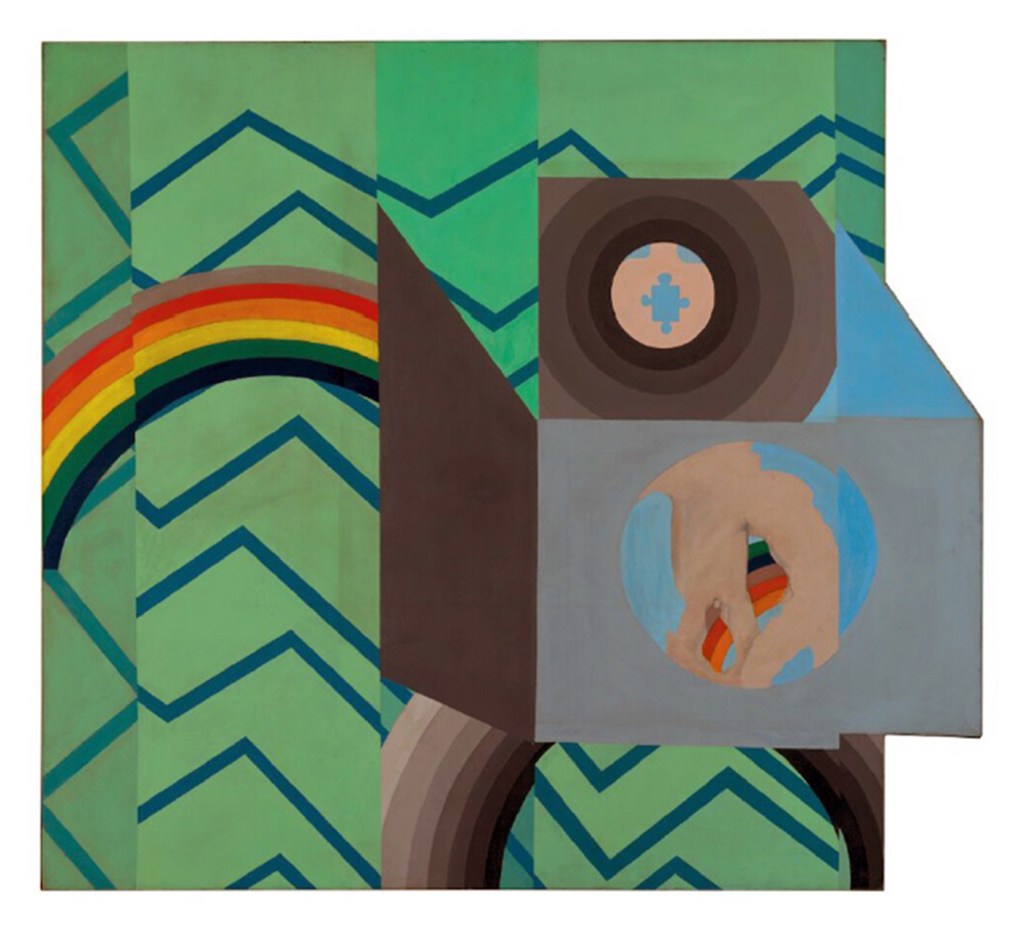
Derek Boshier, “Viewer”, 1965, Image courtesy of Gazelli Art House
The painting Viewer (1963) is a pivotal work in Boshier’s formal evolution. It contains figures depicted through viewfinder or window-like shapes and rainbow motifs, but departs from a rectangular canvas format through the asymmetric shaped support, reinforcing the illusion of depth in the composition. This work speaks to Boshier’s enduring fascination with how media, advertising and urban space influence perception.
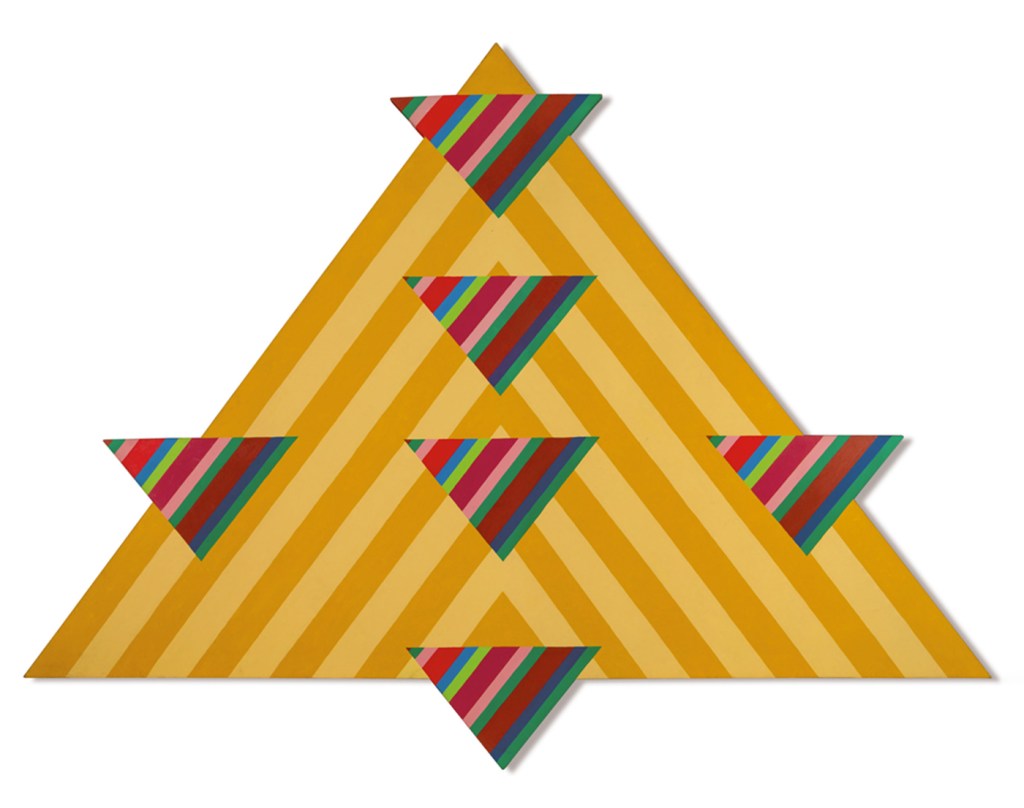
Paintings from this period were showcased in the seminal New Generation exhibition at Whitechapel Art Gallery (1964) and at Robert Fraser Gallery (1965). They interrogate perception and representation through complex spatial arrangements and optical interplay. This experimentation led to bold, structured abstractions that shared affinities with the architectural rhythms of urban space. Shaped canvases such as Highlights (1966), with its dramatic array of inverted triangles, explore the illusion of depth through geometric fragmentation.
Reflecting on his own practice, Boshier once remarked: ‘I like to think of them as Pop abstraction. I looked at neon signs and that’s where it came out. India changed my life. I became a much more tolerant person. And I became a fatalist. Fatalists are optimists.’
The latter half of the 1960s saw Boshier increasingly engage with conceptual and political currents in art. Questioning the function of painting in an era of mass-media saturation, he expanded his practice to incorporate ready-made materials, film and text-based works, aligning himself with socially engaged artmaking. His active participation in political movements — campaigning against the Vietnam War, nuclear armament and systemic racism — underscored his commitment to art as a tool for cultural critique.
Derek Boshier, “Highlights”, 1966. Image courtesy of Gazelli Art House
Gazelli artist and contemporary of Boshier, Jann Haworth, describes these paintings as ‘a conversation stopper… no pigeonholing into Op or Pop; the painting is silent vision. A space at the heart of art town, a time and place to indulge in just looking, taking a long moment.’ They embody Boshier’s ability to balance precision with raw energy, a visual dynamism that continues to resonate today.
Complementing the presentation of Boshier’s paintings from the 1960s in the gallery’s main space will be a selection of works by artists who were also part of the contingent at the Royal College of Art associated with the rise of Pop Art in Britain: from the 1959 intake with Boshier are R. B. Kitaj, David Hockney, Allen Jones and Peter Phillips; Pauline Boty, who began her studies a year earlier in the Stained Glass department and became a fast friend; Patrick Caulfield, who arrived at the College a year after Boshier; and three artists, Peter Blake, Joe Tilson and Richard Smith, who had completed their studies at the College in the mid-1950s but who became friends, mentors, and sources of inspiration to the younger artists including Boshier himself. Ken Russell’s celebrated BBC film Pop Goes the Easel, which introduced Pop Art to the general public, featured Boshier alongside Blake, Boty, and Phillips.
The exhibition also features key works by these artists, each shaping the trajectory of British Pop Art. David Hockney’s 3 Snakes (1962) subverts abstraction with coded homoerotic imagery, blending illusionism and flatness in a playful challenge to formalist painting. Pauline Boty’s Red Manoeuvre (1962) captures the energy of the Swinging Sixties, using bold colours and a red-uniformed figure to explore female sexuality and cultural iconography. Peter Blake’s Sammy Davis Jnr (1957—1960) reflects his fascination with celebrity culture, while Joe Tilson’s Page 16: Ecology, Air, Earth, Fire, Water (1969) merges screenprint and wood relief to address countercultural politics and his exploration of the Four Elements. Peter Phillips’s One Five Times/ Sharpshooter (1960) embodies the graphic dynamism of Pop, and Patrick Caulfield’s Pony (1964) marks his shift toward a refined, hard-edged style. Allen Jones’ Cockpit (1963) extends his fascination with the canvas as object previously seen in his bus paintings of 1962 and with the fusion of figuration with languages of abstraction. Richard Smith’s A Whole Year a Half a Day VIII (1966), one of a series of twelve three-dimensional paintings referencing the calendar months and the hours on a clock, provides abstract equivalents for the prosaic objects they reference, taking Pop concerns into more minimalist territory. Together, these works highlight the breadth of Pop Art’s experimentation, from figuration to abstraction, capturing a movement deeply attuned to the cultural pulse of its time.
Boshier’s 1960s abstractions cement his position within a transatlantic dialogue of formal experimentation while remaining deeply personal in their conceptual rigour. His ability to synthesise the energy of advertising culture with the concerns of abstraction speaks to his enduring relevance. The Way Forward: Derek Boshier and the Sixties offers a vital reconsideration of his artistic legacy.”
Further information
Gazell Art House, 39 Dover Street, London W1S 4NN Tel: +44 207 491 8816 Gallery website: [link]
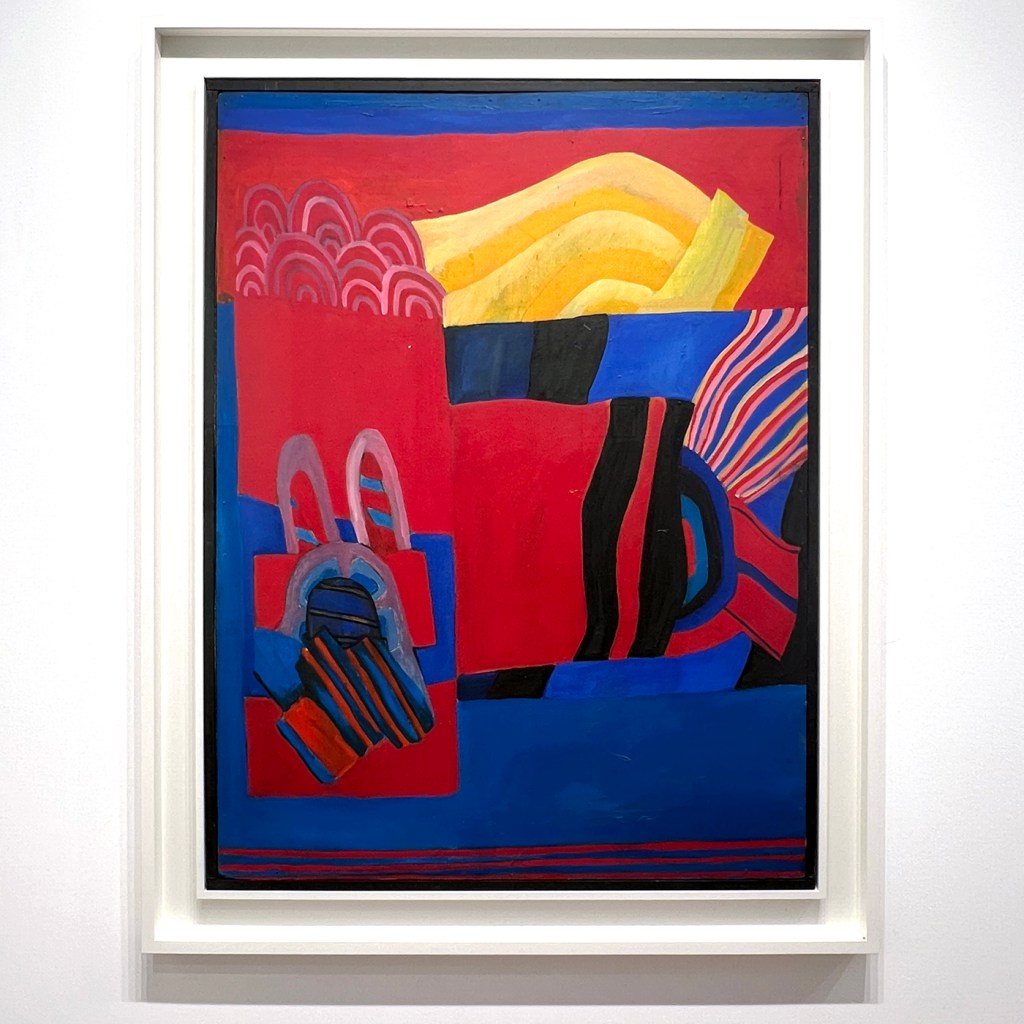
Pauline Boty, “Untitled (red yellow blue abstract”), 1961, Oil on board. Photo by paulineboty.org
Dallas Art Fair 2025 will run from 10 – 13 April at the Fashion Industry Gallery in the Dallas Arts District. Gazelli Art House (Booth A5) have announced the following about their attendance:
”Derek Boshier, Pauline Boty, Harold Cohen and Jann Haworth: Gazelli Art House is delighted to announce its debut at the Dallas Art Fair 2025, presenting a selection of works by pioneering artists Derek Boshier (1937—2024), Pauline Boty (1938—1966), Harold Cohen (1928—2016) and Jann Haworth (b. 1942). The artworks brought together highlight the importance of Dallas and Texas in the careers of major British Post-War artists—with some of them having lived there, while others were exhibited and collected by major Texan institutions.
Central to the selection will be Post-War AI pioneer Harold Cohen’s rarely exhibited large-scale figurative paintings, presented alongside early AARON drawings and a work from his Painting Machine series. These works offer a unique perspective on Cohen’s groundbreaking fusion of art and code, tracing his transition from traditional painting to computational creativity. Developed in the 1970s at Stanford’s Artificial Intelligence Laboratory, AARON is one of the earliest AI programs for autonomous art-making, capable of making intricate compositions without direct human intervention. Cohen’s research into machine-generated imagery established him as a foundational figure in generative art, influencing subsequent waves of artists working at the intersection of technology and aesthetics. His legacy continues to shape contemporary digital art, with recent institutional recognition including exhibitions at LACMA, the Whitney Museum, and Tate Modern’s Electric Dreams: Art and Technology Before the Internet (On view until June 2025).
An intimate selection of works by Derek Boshier also features. Taken from his Texas series, painted during his years living in Houston in the 1980s and early 1990s, these include pieces such as Fashion Victim in the Snow (1987) and Sea Visitor (Boat) (1987) which reflect Boshier’s engagement with pop culture iconography, filtered through his sharp wit and European perspective. The thick impasto and exaggerated gestures create a sense of both physical and conceptual tension, and are indicative of Boshier’s critical yet playful commentary on identity, spectacle, and cultural mythmaking.
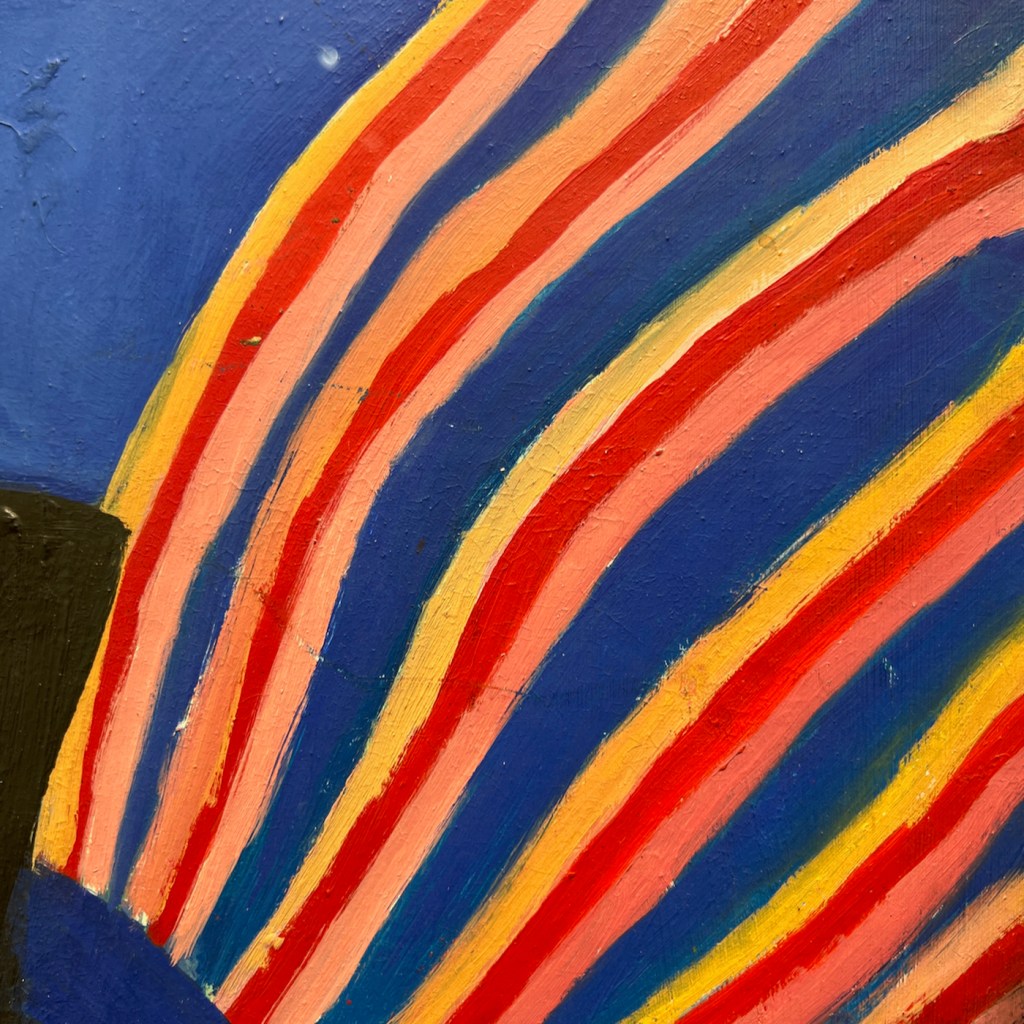
Pauline Boty, “Untitled (red yellow blue abstract”), [detail], 1961, Oil on board. Photo by paulineboty.org
Pauline Boty’s Untitled (Red Yellow Blue Abstract) (1961) is one of only four abstract paintings the charismatic artist made in a career that was tragically cut short at the age of 28. Executed just after her graduation from the Royal College of Art, the work captures the dynamism of the Swinging Sixties through its bold colour interplay and shows a dialogue with the work of friends and peers such as David Hockney and Derek Boshier. Complementing this is Boty’s rarely exhibited portrait of mafia boss Big Jim Colosimo (c.1963), rendered in her signature photorealistic black-and-white style and framed within a playful fairground-inspired border. The resurgence of interest in Pauline Boty’s work is evident in exhibitions such as Pauline Boty, A Portrait at Gazelli Art House (2023/4), Capturing the Moment at Tate Modern (2023), and the landmark solo show Pauline Boty: Pop Artist and Woman at Wolverhampton Art Gallery (2013), reaffirming her significance within the Pop Art movement and beyond.
Pauline Boty, “Big Jim Colosimo”, Oil on canvas, 1963
The booth will also showcase several key works by Pop Art icon Jann Haworth, including the delicate work on paper The Bead (1964), a study for her celebrated Beads and Background (1963—64) sculpture, which is in the collection of Tate. Alongside this will sit an early ‘soft sculpture’ piece titled Dog (1962), first exhibited at the Institute of Contemporary Art in London in 1963. Haworth’s works during this period recontextualised craft as a means of challenging the masculine aesthetics of the Pop Art movement. Throughout the 1960s, she developed a series of cloth-based works which disrupted and complicated depictions of the female form in much of the art of the time, positioning her among the leading figures of British Pop alongside Richard Hamilton and her then-husband, Peter Blake. Haworth’s impact on contemporary art continues to be recognised globally, with several major institutional exhibitions currently on view. Pop Forever at the Fondation Louis Vuitton in Paris, Counterpoint at the BYU Museum of Art in Utah, Pattern: Rhythm and Repetition at Pallant House Gallery in the UK, Iconic: Portraiture from Francis Bacon to Andy Warhol at the Holburne Museum, UK, and Mapping the 60s at mumok, Austria all prominently feature her work. Earlier this year she presented her Work in Progress mural—co-created with collage artist Liberty Blake—as part of the Arts and Culture Programme at the World Economic Forum in Davos, reinforcing her ongoing engagement with themes of representation and social history.
Marking an exciting milestone for Gazelli Art House, this inaugural participation at Dallas Art Fair underscores the gallery’s commitment to championing artists who have challenged artistic boundaries and shaped contemporary discourse from the 1960s to the present day.” . Further information
DALLAS ART FAIR October 9 – 13 2024 Fashion Industry Gallery, 1807 Ross Avenue, Dallas, Texas 75201 Dallas Art Fair website: [link] Tickets are available to buy here: [link]
Gazell Art House, 39 Dover Street, London W1S 4NN Tel: +44 207 491 8816 Gallery website: [link]
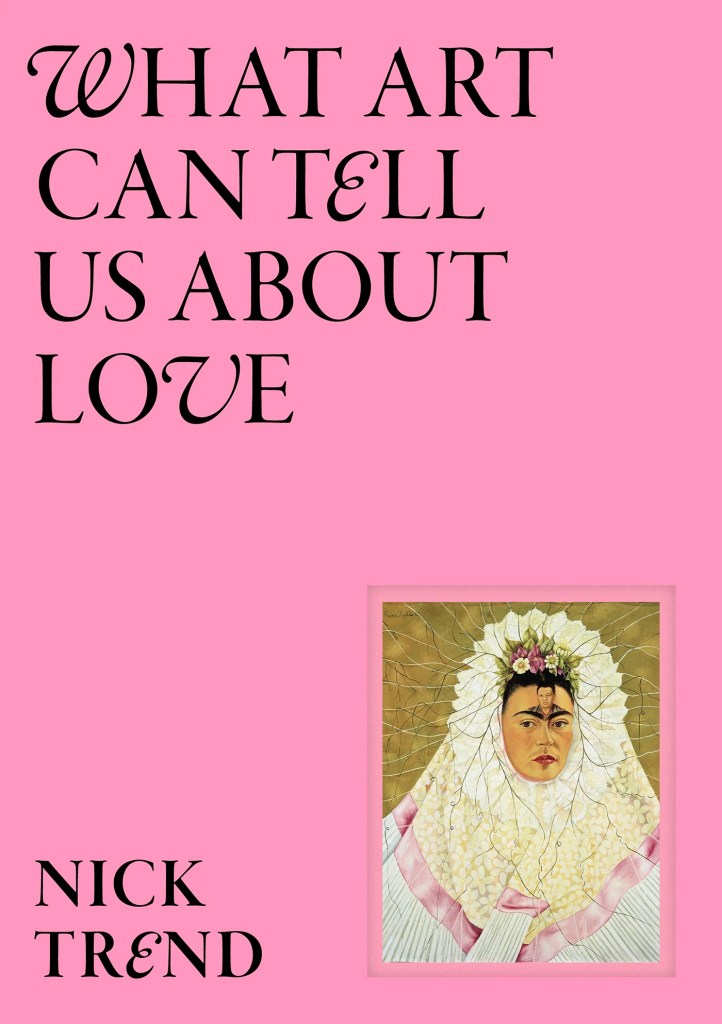
“What Art Can Tell Us About Love” by Nick Trend, published by Laurence King
Written by Nick Trend, publisher Laurence King describes the new book as follows: “Whether in the throes of passion, enduring the pain of an unrequited love or basking in the joy of a wonderfully supportive friendship, this book explores how love influenced artists and the work they created.
Beautifully illustrated with full-colour photographs of more than 70 artworks, this guide looks at how artists have painted, sketched and modelled their lovers, and how the theme of love has found its way into an array of subjects – from landscapes to still-life and self-portraits.
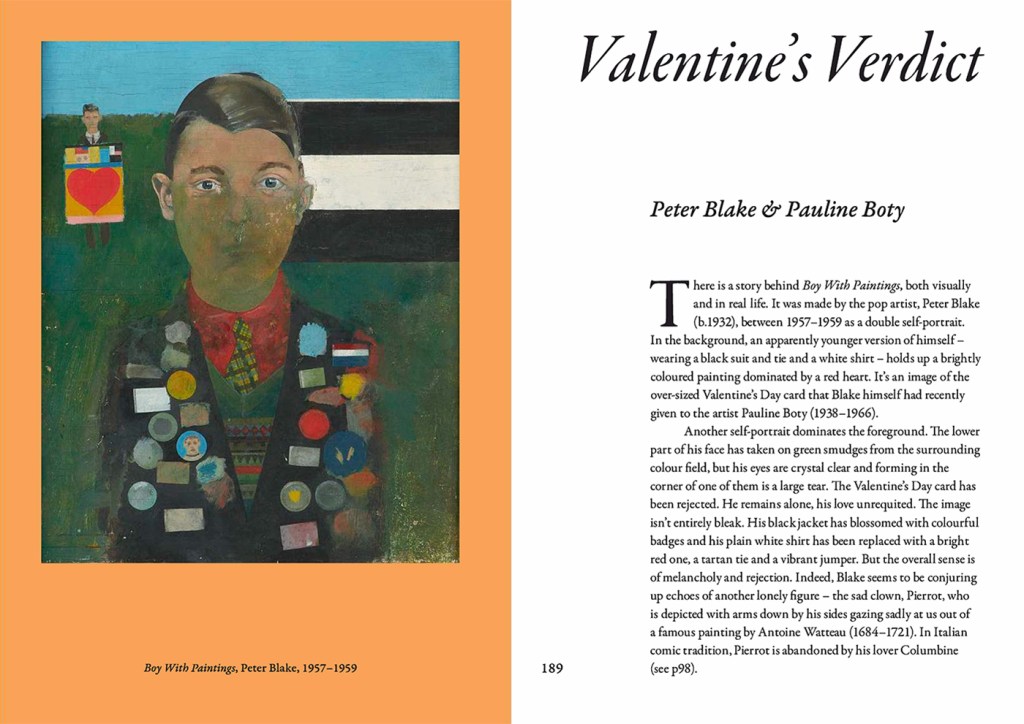
“Boy With Paintings”, 1957–1959 by Peter Blake in “What Art Can Tell Us About Love”
Other artists include: Caravaggio, Georgia O’Keefe, Sarah Bernhardt, Picasso, Rembrandt, Frida Kahlo, Tamara de Lempicka, Clifford Prince-King, Chagall, Lotte Laserstein and Niki de Saint Phalle.
Due to be published on 13 March, What Art Can Tell Us About Love is a new and accessible way to understand art, through the passions that inspired the world’s greatest masterpieces.”
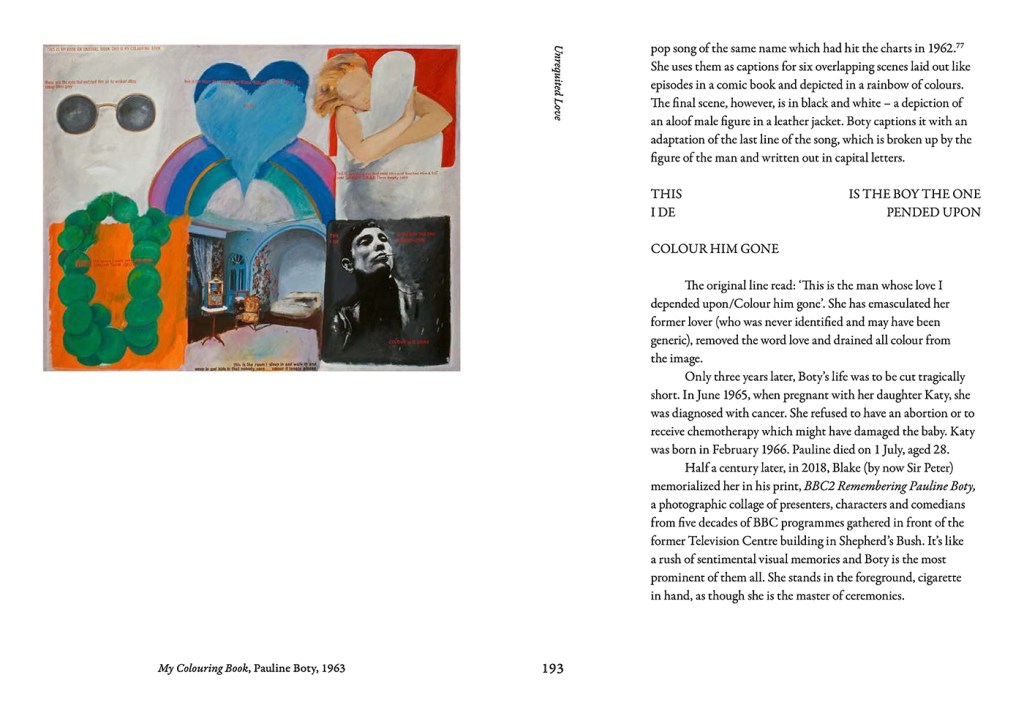
Sections in the book include Enduring Love, Serial Lovers, Soul Mates, Burning Passions, Secret Affairs, Love Triangles and Unrequited Love.
The first screening on TV of BOTY: I am the Sixties, the new documentary film from Mono Media Films and Channel X, has been confirmed as 10:00pm on BBC4 on Monday 3rd March, then available on iPlayer.
Further info here from its creators: “The first TV documentary of the Pop Art sensation PaulineBoty; Boty: I Am The Sixties tracks the artist’s original contribution to British art, her feminism and unique take on the nascent celebrity culture of the 1960’s. Ahead of her time in so many ways, Boty’s story ends with her tragic early death at 28 in 1966 and the subsequent revival of interest in her work in the last decade.
Packed full of original photographs and art work, this 60 minute film calls on an array of family, friends, art critics and famous fans to lead us through the Boty story. Contributors include Pop Art titan Sir Peter Blake, comedian and artist Jim Moir, critic Kate Bryan, best friend and Print Designer Natalie Gibson MBE, Celia Birtwell CBE, musicians Corrine Drewery and Tanita Tikaram and TV presenter Ronnie Archer Morgan amongst many other notable friends and fans of the British female Pop Art pioneer Pauline Boty.
A Mono Media Films and Channel X Production; Boty: I Am The Sixties is Directed by Lee Cogswell, Written and produced by Vinny Rawding and Mark Baxter, Executive Producers are: Alan Marke, Jim Reid, Natalie Gibson MBE, Executive Producer for the BBC is Mark Bell.”








 Pauline Boty